Lippia multiflora
Lippia multiflora · Accepted scientific name
Scientific literature: Very Sparse (36 studies) · ★☆☆☆☆
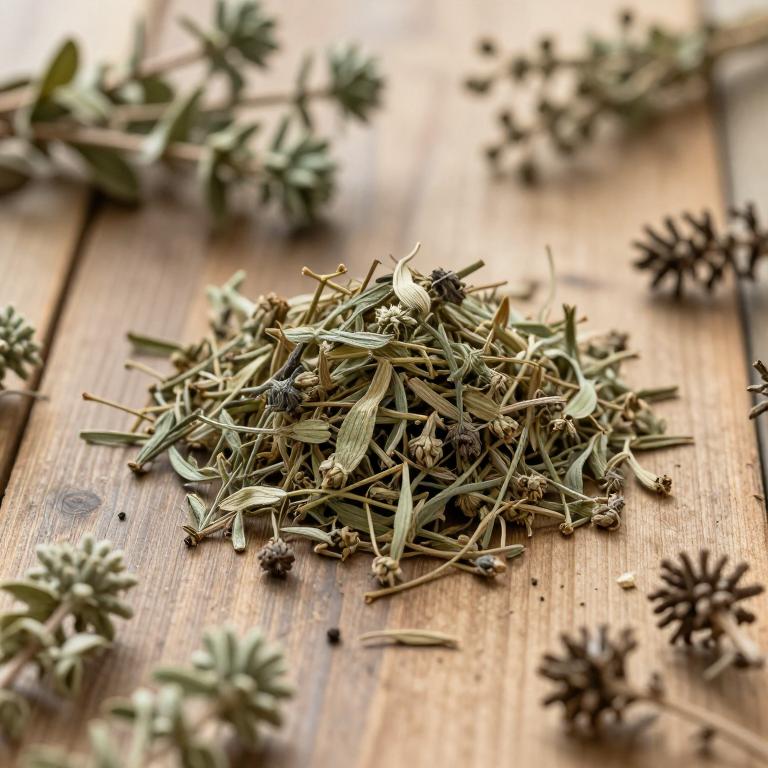
, scientifically known as Lippia multiflora, is a versatile shrub widely recognized for its significant medicinal properties. Commonly used in traditional African medicine, it possesses potent antimicrobial, anti-inflammatory, and antioxidant qualities. This aromatic plant serves as a natural remedy for treating various ailments, ranging from digestive issues to skin infections.
- Family
- Verbenaceae
- Native range
- Africa
- Parts used
- Leaf
- Common names
- Not available
- Scientific synonyms
- Not available
Names and Synonyms
Scientific Names
Accepted name
Lippia multifloraSources: Wikidata, Catalogue of Life
Taxonomical Classification
This plant belongs to the kingdom Plantae within the phylum Streptophyta and the class Equisetopsida. Under the subclass Magnoliidae, it is classified under the order Lamiales and the family Verbenaceae. Finally, it is identified by the genus Lippia, specifically as the species Lippia multiflora.
| Rank | Classification |
|---|---|
| Kingdom | Plantae |
| Phylum | Streptophyta |
| Class | Equisetopsida |
| Subclass | Magnoliidae |
| Order | Lamiales |
| Family | Verbenaceae |
| Genus | Lippia |
Sources: The World Checklist of Vascular Plants (WCVP)
Distribution
This plant is widely distributed across several nations within the West Tropical Africa region. Specifically, it can be found growing in the landscapes of Benin and Burkina. Its presence also extends to the coastal and inland areas of Gambia. Furthermore, the species is documented to inhabit parts of Ghana. Finally, its geographical range includes the country of Guinea.
| Region | Area |
|---|---|
| West Tropical Africa | Benin |
| West Tropical Africa | Burkina |
| West Tropical Africa | Gambia |
| West Tropical Africa | Ghana |
| West Tropical Africa | Guinea |
| West Tropical Africa | Ivory Coast |
| West Tropical Africa | Liberia |
| West Tropical Africa | Nigeria |
| West Tropical Africa | Sierra Leone |
| West Tropical Africa | Togo |
Sources: The World Checklist of Vascular Plants (WCVP)
Botanical Identification
Life history
The life history of Lippia multiflora is characterized by its status as a perennial organism, allowing it to persist through multiple growing seasons and maintain a stable presence within its ecological niche. Its structural development is defined by its life forms, exhibiting characteristics of both phanerophytes, which allow for significant vertical growth through woody stems, and chamaephyte tendencies, where some parts of the plant remain close to the soil surface. This dual life form strategy enables the species to adapt to varying environmental stressors, balancing robust structural height with resilient, low-growing components.
- Life form :
- chamaephyte
- Life form :
- phanerophyte
- Lifecycle :
- perennial
Morphology
The morphology of Lippia multiflora is characterized by its growth form as a woody shrub. This plant functions as a self-supporting, independent organism, meaning it is neither a parasite nor an epiphyte, as it maintains a terrestrial lifestyle. In terms of its physical dimensions, the species typically reaches an average plant height of 2.5 m, though it can grow to a maximum height of approximately 3.6576 m.
- Climber :
- self-supporting
- Epiphyte :
- terrestrial
- Growth form :
- shrub
- Parasite :
- independent
- Plant height max:
- 3.657644477 m
- Plant height mean:
- 2.5 m
- Woodiness :
- woody
Physiology
The physiology of Lippia multiflora is characterized by its metabolic efficiency and nutrient acquisition strategies. The plant utilizes a C3 photosynthetic pathway, which involves the direct fixation of carbon dioxide through the Calvin cycle within the mesophyll cells, a mechanism typical of many woody shrubs in its family. Regarding its nitrogen metabolism, the species is not a nitrogen fixer, meaning it lacks the symbiotic relationship with rhizobia or other diazotrophic bacteria required to convert atmospheric nitrogen into a bioavailable form; instead, it relies on the uptake of inorganic nitrogen sources, such as nitrates and ammonium, from the soil through its root system.
- Nitrogen fixer :
- no
- Photosynthetic pathway :
- C3
Reproduction
Reproduction in Lippia multiflora is facilitated through the production of seeds that exhibit highly consistent physical characteristics. The reproductive output of the plant is characterized by a precise seed mass, with the mean seed mass recorded at 0.00027 g. This uniformity is reflected in the extreme narrowness of its weight distribution, as both the maximum and minimum seed mass values are identical at 0.00027 g. Such consistent seed mass suggests a highly regulated developmental process during seed maturation, ensuring that each individual propagule maintains a standardized weight for dispersal and germination.
- Seed mass mean:
- 0.00027 g
Sources: Global Inventory of Floras and Traits (GIFT)
Plant Parts
Lippia multiflora has 1 reported plant parts identified across 4 scientific publications and several other databases that are studied for medicinal purposes. The most consistently reported plant part include leaf.
| Plant part | Supporting sources | Consensus |
|---|---|---|
| Leaf | 4 supporting sources | ★★☆☆☆ |
Leaf
- L'Encephale
- Phytomedicine : international journal of phytotherapy and phytopharmacology
- Phytochemistry
- Food chemistry
Chemicals
Lippia multiflora has 9 reported phytochemicals identified across 4 scientific publications and several other databases. The most consistently reported chemicals include CARVACROL, Flavonoids, Isonuomioside A, Luteolin 7-O-glucuronide, Nuomioside A.
| Chemical | Supporting sources | Consensus |
|---|---|---|
| CARVACROL | 1 supporting sources | ★☆☆☆☆ |
| Flavonoids | 1 supporting sources | ★☆☆☆☆ |
| Isonuomioside A | 1 supporting sources | ★☆☆☆☆ |
| Luteolin 7-O-glucuronide | 1 supporting sources | ★☆☆☆☆ |
| Nuomioside A | 1 supporting sources | ★☆☆☆☆ |
| Tannins | 1 supporting sources | ★☆☆☆☆ |
| Terpineol | 1 supporting sources | ★☆☆☆☆ |
| Verbascoside | 1 supporting sources | ★☆☆☆☆ |
| isoverbascoside | 1 supporting sources | ★☆☆☆☆ |
CARVACROL
- Phytomedicine : international journal of phytotherapy and phytopharmacology
Flavonoids
- Heliyon
Isonuomioside A
- Food chemistry
Luteolin 7-O-glucuronide
- Food chemistry
Nuomioside A
- Food chemistry
Tannins
- Heliyon
Terpineol
- Journal of ethnopharmacology
Verbascoside
- Food chemistry
isoverbascoside
- Food chemistry
Activities
Lippia multiflora has 8 reported activities identified across 4 scientific publications and several other databases. The most consistently reported activities include Antidepressant, Antiepileptic, Antifungal, Antimicrobial, Antioxidant.
| Activity | Supporting sources | Consensus |
|---|---|---|
| Antidepressant | 1 supporting sources | ★☆☆☆☆ |
| Antiepileptic | 1 supporting sources | ★☆☆☆☆ |
| Antifungal | 1 supporting sources | ★☆☆☆☆ |
| Antimicrobial | 1 supporting sources | ★☆☆☆☆ |
| Antioxidant | 1 supporting sources | ★☆☆☆☆ |
| Antispasmodic | 1 supporting sources | ★☆☆☆☆ |
| Cytotoxic | 1 supporting sources | ★☆☆☆☆ |
| Tranquilizer | 1 supporting sources | ★☆☆☆☆ |
Antidepressant
- Heliyon
Antiepileptic
- Heliyon
Antifungal
- Heliyon
Antimicrobial
- Phytomedicine : international journal of phytotherapy and phytopharmacology
Antioxidant
- Heliyon
Antispasmodic
- Heliyon
Cytotoxic
- Phytomedicine : international journal of phytotherapy and phytopharmacology
Tranquilizer
- L'Encephale
Conditions
Lippia multiflora has 9 reported investigations on conditions identified across 4 scientific publications and several other databases. The most consistently reported conditions include Plasmodium falciparum, abdominal cramps, antidepressant, antioxidant, antispasmodic.
| Condition | Supporting sources | Consensus |
|---|---|---|
| Plasmodium falciparum | 1 supporting sources | ★☆☆☆☆ |
| Abdominal cramps | 1 supporting sources | ★☆☆☆☆ |
| Antidepressant | 1 supporting sources | ★☆☆☆☆ |
| Antioxidant | 1 supporting sources | ★☆☆☆☆ |
| Antispasmodic | 1 supporting sources | ★☆☆☆☆ |
| Epilepsy | 1 supporting sources | ★☆☆☆☆ |
| Malaria | 1 supporting sources | ★☆☆☆☆ |
| Seizures | 1 supporting sources | ★☆☆☆☆ |
| Status epilepticus | 1 supporting sources | ★☆☆☆☆ |
Plasmodium falciparum
- Phytochemistry
Abdominal cramps
- L'Encephale
Antidepressant
- Heliyon
Antioxidant
- Heliyon
Antispasmodic
- Heliyon
Epilepsy
- Heliyon
Malaria
- Phytomedicine : international journal of phytotherapy and phytopharmacology
Seizures
- Heliyon
Status epilepticus
- Heliyon
Preparations
Lippia multiflora has 9 reported preparations identified across 4 scientific publications and several other databases. The most consistently reported preparations include 20% v/v preparation of lippia oil, conventional tea decoction, dichloromethane extract, essential oil, herbal infusion.
| Preparation | Supporting sources | Consensus |
|---|---|---|
| 20% v/v preparation of lippia oil | 1 supporting sources | ★☆☆☆☆ |
| Conventional tea decoction | 1 supporting sources | ★☆☆☆☆ |
| Dichloromethane extract | 1 supporting sources | ★☆☆☆☆ |
| Essential oil | 1 supporting sources | ★☆☆☆☆ |
| Herbal infusion | 1 supporting sources | ★☆☆☆☆ |
| Hexane extract | 1 supporting sources | ★☆☆☆☆ |
| Lippia oil | 1 supporting sources | ★☆☆☆☆ |
| Methanol extract | 1 supporting sources | ★☆☆☆☆ |
| Methanol extracts | 1 supporting sources | ★☆☆☆☆ |
20% v/v preparation of lippia oil
- Journal of ethnopharmacology
Conventional tea decoction
- L'Encephale
Dichloromethane extract
- Phytomedicine : international journal of phytotherapy and phytopharmacology
Essential oil
- Phytochemistry
Herbal infusion
- Food chemistry
Hexane extract
- Phytomedicine : international journal of phytotherapy and phytopharmacology
Lippia oil
- Journal of ethnopharmacology
Methanol extract
- Phytomedicine : international journal of phytotherapy and phytopharmacology
Methanol extracts
- Phytomedicine : international journal of phytotherapy and phytopharmacology