Lemon bush
Lippia javanica · Accepted scientific name
Scientific literature: Extensive (193 studies) · ★★★★☆
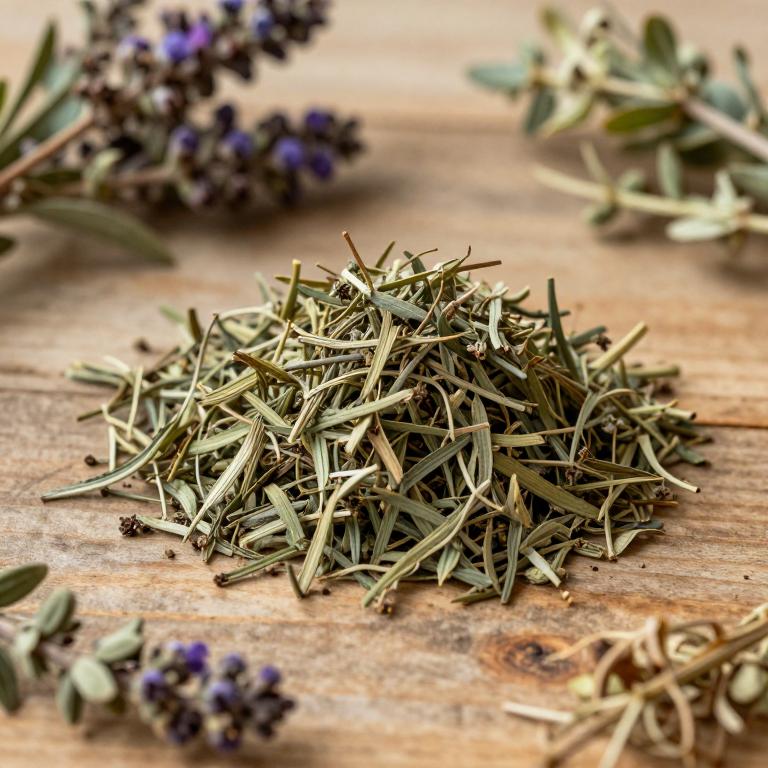
Lemon bush, scientifically known as Lippia javanica, is a resilient, aromatic shrub native to Southern Africa. Renowned for its potent medicinal properties, it is widely utilized in traditional healing to treat respiratory ailments, digestive issues, and skin infections. Its refreshing citrus scent and bioactive compounds make it a versatile botanical.
Names and Synonyms
Common Names
- lemonbush
- Fever Tea
- Fever Tree
- Lippia
- Wild Tea
- Wild-Tea
Scientific Names
Accepted name
Lippia javanicaSynonyms
- Blairia javanica
- Lippia whytei
- Lantana galpiniana
- Lippia indica
- Lantana lavandulacea
- Lippia scabra
- Lippia capensis
- Phyla javanica
- Zappania javanica
- Zappania odoratissima
- Verbena javanica
- Verbena capensis
Sources: Wikidata, Catalogue of Life
Taxonomical Classification
This plant, known scientifically as Lippia javaica, belongs to the kingdom Plantae and the phylum Streptophyta. It is classified under the class Equisetopsida and the subclass Magnoliidae within the order Lamiales. Finally, it is a member of the family Verbenaceae and falls under the genus Lippia.
| Rank | Classification |
|---|---|
| Kingdom | Plantae |
| Phylum | Streptophyta |
| Class | Equisetopsida |
| Subclass | Magnoliidae |
| Order | Lamiales |
| Family | Verbenaceae |
| Genus | Lippia |
Sources: The World Checklist of Vascular Plants (WCVP)
Distribution
This plant exhibits a broad distribution across several key regions of the African continent. Within West-Central Tropical Africa, its presence is noted in both the Central African Republic and the DR Congo. Moving toward the northeast, the species is also found in Ethiopia. Its range extends further into East Tropical Africa, where it inhabits Kenya. Finally, the plant is documented as being native to Tanzania.
| Region | Area |
|---|---|
| West-Central Tropical Africa | Central African Republic |
| West-Central Tropical Africa | DR Congo |
| Northeast Tropical Africa | Ethiopia |
| East Tropical Africa | Kenya |
| East Tropical Africa | Tanzania |
| East Tropical Africa | Uganda |
| South Tropical Africa | Angola |
| South Tropical Africa | Malawi |
| South Tropical Africa | Mozambique |
| South Tropical Africa | Zambia |
Sources: The World Checklist of Vascular Plants (WCVP)
Botanical Identification
Ecology
The ecology of Lippia javanica is characterized by a broad environmental adaptability, allowing it to occupy a diverse range of ecosystems across varying altitudes. It thrives in a wide elevational gradient, ranging from as low as 5 m AMSL to a maximum altitude of 1920 m AMSL. Its preferred habitats are varied, encompassing scrub bushland, grassy rocky hillsides, and specific vegetation types such as Brachystegia and Combretum woodlands. Additionally, the species is frequently found in forest clearings and plantations, and it exhibits opportunistic growth patterns as a weed in derived rangelands.
- Elevational range max:
- 1920 m AMSL
- Elevational range min:
- 5 m AMSL
- Habitat :
- scrub bushland, grassy rocky hillsides, Brachystegia, Combretum woodland, forest clearings and plantations, weed in derived rangelands
Life history
The life history of Lippia javaica is characterized by its classification as a perennial species, allowing it to persist across multiple growing seasons. In terms of its structural growth habit and ecological positioning, it exhibits characteristics of both nanophanerophyte and phanerophyte life forms, reflecting its capacity to maintain woody or semi-woody structures that support its developmental stages over time.
- Life form :
- nanophanerophyte
- Life form :
- phanerophyte
- Lifecycle :
- perennial
Morphology
The morphology of Lippia javanica is characterized by a woody growth form, functioning as a self-supporting shrub. It is a terrestrial plant that operates independently, without parasitic or epiphytic tendencies. In terms of stature, the plant exhibits significant variability in size, with a height ranging from a minimum of 0.69 m to a maximum of 5 m.
- Aquatic :
- terrestrial
- Climber :
- self-supporting
- Epiphyte :
- terrestrial
- Growth form :
- shrub
- Parasite :
- independent
- Plant height max:
- 5 m
- Plant height min:
- 0.69 m
- Woodiness :
- woody
Physiology
The physiology of Lippia javaica is characterized by its metabolic efficiency and adaptation to specific environmental stressors. A fundamental aspect of its physiological makeup is its photosynthetic pathway, which follows the C3 mechanism. This C3 pathway involves the direct fixation of carbon dioxide by the enzyme RuBisCO during the Calvin cycle, a process that dictates the plant's water-use efficiency and its response to varying light intensities and temperature fluctuations. Through this metabolic route, the plant converts solar energy into chemical energy, driving the synthesis of organic compounds necessary for growth and the production of its characteristic secondary metabolites. This carbon assimilation process is closely integrated with the plant's transpiration rates and nutrient uptake, allowing it to maintain cellular homeostasis within its native ecological niches.
- Photosynthetic pathway :
- C3
Reproduction
The reproduction of Lippia javaica is characterized by the production of minute seeds that exhibit specific weight variations. The seed mass within this species shows a mean value of 0.000492 g, indicating a highly lightweight seed structure typical of many members of the Verbenaceae family. Detailed measurements of these seeds reveal a range of mass, with the smallest recorded seed weighing 0.00035 g and the largest reaching a maximum of 0.00074 g. This distribution of seed mass suggests a level of variability in nutrient provisioning or size during the developmental stages of the embryo.
- Seed mass max:
- 0.00074 g
- Seed mass mean:
- 0.000492 g
- Seed mass min:
- 0.00035 g
Sources: Global Inventory of Floras and Traits (GIFT)
Plant Parts
Lippia javanica has 3 reported plant parts identified across 7 scientific publications and several other databases that are studied for medicinal purposes. The most consistently reported plant part include leaf, flower, stem.
| Plant part | Supporting sources | Consensus |
|---|---|---|
| Leaf | 5 supporting sources | ★★★☆☆ |
| Flower | 1 supporting sources | ★☆☆☆☆ |
| Stem | 1 supporting sources | ★☆☆☆☆ |
Leaf
- Scientific reports
- BMC complementary medicine and therapies
- Journal of ethnopharmacology
- Evidence-based complementary and alternative medicine : eCAM
- Phytochemistry
Flower
- Phytochemistry
Stem
- Phytochemistry
Chemicals
Lippia javanica has 38 reported phytochemicals identified across 7 scientific publications and several other databases. The most consistently reported chemicals include Flavonoids, 7-Epi-12-hydroxyjasmonic acid, Catechin 7-glucoside, Myrcenone, apigenin.
| Chemical | Supporting sources | Consensus |
|---|---|---|
| Flavonoids | 3 supporting sources | ★★☆☆☆ |
| 7-Epi-12-hydroxyjasmonic acid | 2 supporting sources | ★☆☆☆☆ |
| Catechin 7-glucoside | 2 supporting sources | ★☆☆☆☆ |
| Myrcenone | 2 supporting sources | ★☆☆☆☆ |
| apigenin | 2 supporting sources | ★☆☆☆☆ |
| 3-O-Methylkaempferol | 1 supporting sources | ★☆☆☆☆ |
| 4-ethyl-nonacosane | 1 supporting sources | ★☆☆☆☆ |
| Caryophyllene | 1 supporting sources | ★☆☆☆☆ |
| Caryoptosidic acid | 1 supporting sources | ★☆☆☆☆ |
| Cirsimaritin | 1 supporting sources | ★☆☆☆☆ |
Flavonoids
- BMC complementary medicine and therapies
- Journal of ethnopharmacology
- Experimental biology and medicine (Maywood, N.J.)
7-Epi-12-hydroxyjasmonic acid
- Plants (Basel, Switzerland)
- Experimental biology and medicine (Maywood, N.J.)
Catechin 7-glucoside
- Plants (Basel, Switzerland)
- Life (Basel, Switzerland)
Myrcenone
- Dr. Duke
- Natural product research
apigenin
- Natural product research
- Plants (Basel, Switzerland)
3-O-Methylkaempferol
- Plants (Basel, Switzerland)
4-ethyl-nonacosane
- Natural product research
Caryophyllene
- Dr. Duke
Caryoptosidic acid
- Plants (Basel, Switzerland)
Cirsimaritin
- Natural product research
Activities
Lippia javanica has 120 reported activities identified across 7 scientific publications and several other databases. The most consistently reported activities include Antioxidant, ACE-Inhibitor, Acaricide, Aldose-Reductase-Inhibitor, Allergenic.
| Activity | Supporting sources | Consensus |
|---|---|---|
| Antioxidant | 3 supporting sources | ★★☆☆☆ |
| ACE-Inhibitor | 1 supporting sources | ★☆☆☆☆ |
| Acaricide | 1 supporting sources | ★☆☆☆☆ |
| Aldose-Reductase-Inhibitor | 1 supporting sources | ★☆☆☆☆ |
| Allergenic | 1 supporting sources | ★☆☆☆☆ |
| Analgesic | 1 supporting sources | ★☆☆☆☆ |
| Anesthetic | 1 supporting sources | ★☆☆☆☆ |
| Antiacetylcholinesterase | 1 supporting sources | ★☆☆☆☆ |
| Antiacne | 1 supporting sources | ★☆☆☆☆ |
| Antiallergic | 1 supporting sources | ★☆☆☆☆ |
Antioxidant
- Dr. Duke
- BMC complementary medicine and therapies
- Pharmacognosy magazine
ACE-Inhibitor
- Dr. Duke
Acaricide
- Dr. Duke
Aldose-Reductase-Inhibitor
- Dr. Duke
Allergenic
- Dr. Duke
Analgesic
- Dr. Duke
Anesthetic
- Dr. Duke
Antiacetylcholinesterase
- Dr. Duke
Antiacne
- Dr. Duke
Antiallergic
- Dr. Duke
Conditions
Lippia javanica has 16 reported investigations on conditions identified across 7 scientific publications and several other databases. The most consistently reported conditions include Mycobacterium tuberculosis, inflammation, Bacillus subtilis, Escherichia coli, Mycobacterium smegmatis.
| Condition | Supporting sources | Consensus |
|---|---|---|
| Mycobacterium tuberculosis | 2 supporting sources | ★☆☆☆☆ |
| Inflammation | 2 supporting sources | ★☆☆☆☆ |
| Bacillus subtilis | 1 supporting sources | ★☆☆☆☆ |
| Escherichia coli | 1 supporting sources | ★☆☆☆☆ |
| Mycobacterium smegmatis | 1 supporting sources | ★☆☆☆☆ |
| Plasmodium falciparum | 1 supporting sources | ★☆☆☆☆ |
| Staphylococcus aureus | 1 supporting sources | ★☆☆☆☆ |
| Chest pain | 1 supporting sources | ★☆☆☆☆ |
| Common cold | 1 supporting sources | ★☆☆☆☆ |
| Cough | 1 supporting sources | ★☆☆☆☆ |
Mycobacterium tuberculosis
- Natural product research
- Evidence-based complementary and alternative medicine : eCAM
Inflammation
- Journal of ethnopharmacology
- Inflammopharmacology
Bacillus subtilis
- Phytochemistry
Escherichia coli
- Phytochemistry
Mycobacterium smegmatis
- Evidence-based complementary and alternative medicine : eCAM
Plasmodium falciparum
- Phytochemistry
Staphylococcus aureus
- Phytochemistry
Chest pain
- Pharmacognosy magazine
Common cold
- Pharmacognosy magazine
Cough
- Pharmacognosy magazine
Preparations
Lippia javanica has 10 reported preparations identified across 7 scientific publications and several other databases. The most consistently reported preparations include leaf extracts, 80% ethanol, Methanol and water extracts, acetone extract, aqueous extract.
| Preparation | Supporting sources | Consensus |
|---|---|---|
| Leaf extracts | 2 supporting sources | ★☆☆☆☆ |
| 80% ethanol | 1 supporting sources | ★☆☆☆☆ |
| Methanol and water extracts | 1 supporting sources | ★☆☆☆☆ |
| Acetone extract | 1 supporting sources | ★☆☆☆☆ |
| Aqueous extract | 1 supporting sources | ★☆☆☆☆ |
| Crude plant extracts | 1 supporting sources | ★☆☆☆☆ |
| Dried leaves | 1 supporting sources | ★☆☆☆☆ |
| Plant extracts | 1 supporting sources | ★☆☆☆☆ |
| Volatile oil | 1 supporting sources | ★☆☆☆☆ |
| Water | 1 supporting sources | ★☆☆☆☆ |
Leaf extracts
- Scientific reports
- Journal of ethnopharmacology
80% ethanol
- BMC complementary medicine and therapies
Methanol and water extracts
- Inflammopharmacology
Acetone extract
- Pharmacognosy magazine
Aqueous extract
- Pharmacognosy magazine
Crude plant extracts
- Life (Basel, Switzerland)
Dried leaves
- Evidence-based complementary and alternative medicine : eCAM
Plant extracts
- Experimental biology and medicine (Maywood, N.J.)
Volatile oil
- Phytochemistry
Water
- BMC complementary medicine and therapies