Lippia grata
Lippia grata · Accepted scientific name
Scientific literature: Very Sparse (5 studies) · ★☆☆☆☆
Lippia gratia, scientifically known as Lippia gratia, is a versatile medicinal shrub native to tropical regions. Renowned for its aromatic properties, it is widely utilized in traditional medicine to treat digestive ailments and skin inflammations. Its potent bioactive compounds offer significant therapeutic potential for modern pharmacological research and natural healing.
- Family
- Verbenaceae
- Native range
- Southern America
- Parts used
- Leaf
- Common names
- Not available
- Scientific synonyms
- Lippia Laxibracteata · Lippia Hickenii · 1 more
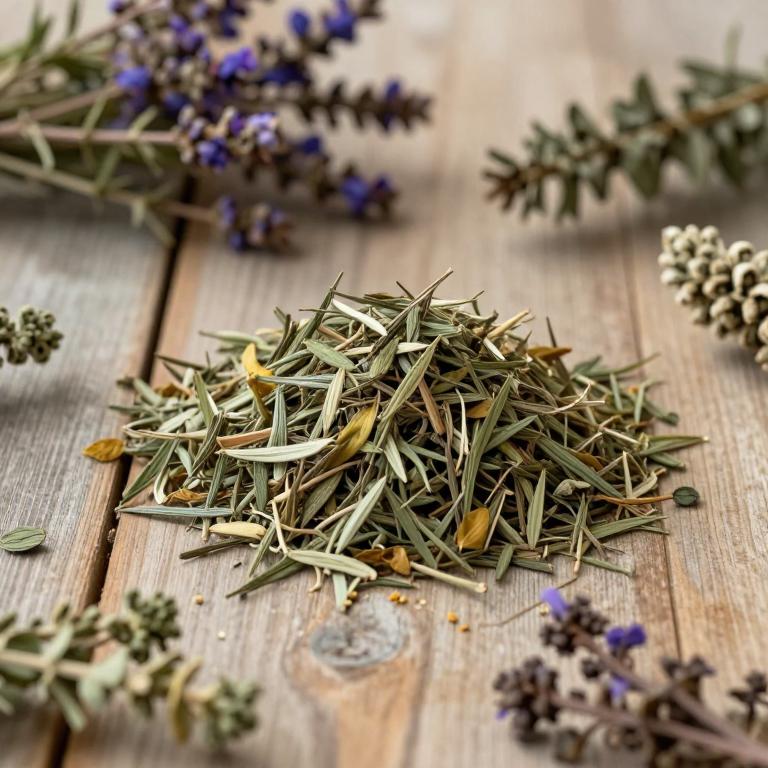
Names and Synonyms
Scientific Names
Accepted name
Lippia grataSynonyms
- Lippia laxibracteata
- Lippia hickenii
- Lippia dumetorum
Sources: Wikidata
Taxonomical Classification
This plant belongs to the kingdom Plantae and the phylum Streptophyta, falling under the class Equisetopsida and subclass Magnoliidae. It is categorized within the order Lamiales and the family Verbenaceae. Finally, its specific taxonomic classification is defined by the genus Lippia.
| Rank | Classification |
|---|---|
| Kingdom | Plantae |
| Phylum | Streptophyta |
| Class | Equisetopsida |
| Subclass | Magnoliidae |
| Order | Lamiales |
| Family | Verbenaceae |
| Genus | Lippia |
Sources: The World Checklist of Vascular Plants (WCVP)
Distribution
This plant exhibits a diverse range of habitats across the South American continent. In Northern South America, its presence is specifically noted within Venezuela. Its distribution extends to Western South America, where it can be found in Bolivia. Within Brazil, the species is widely spread across the West-Central region. Furthermore, it inhabits both the Northeast and Southeast regions of Brazil.
| Region | Area |
|---|---|
| Northern South America | Venezuela |
| Western South America | Bolivia |
| Brazil | Brazil West-Central |
| Brazil | Brazil Northeast |
| Brazil | Brazil Southeast |
| Brazil | Brazil North |
| Southern South America | Argentina Northeast |
| Southern South America | Argentina Northwest |
| Southern South America | Paraguay |
Sources: The World Checklist of Vascular Plants (WCVP)
Botanical Identification
Ecology
The ecology of Lippia grata is characterized by its adaptability to diverse Brazilian biomes, specifically thriving within the Caatinga (stricto sensu), Campo Rupestre, and Cerrado (latto sensu) habitats. This species occupies a broad altitudinal gradient, establishing itself in environments ranging from lowlands to higher elevations. Its distribution spans an elevational range starting at a minimum of 300 m AMSL and reaching a maximum altitude of 1600 m AMSL, allowing it to inhabit a variety of ecological niches across these distinct vegetation types.
- Elevational range max:
- 1600 m AMSL
- Elevational range min:
- 300 m AMSL
- Habitat :
- Caatinga (stricto sensu), Campo Rupestre, Cerrado (lato sensu)
Life history
The life history of Lippia gratia is characterized by its status as a perennial organism, allowing it to persist through multiple growing seasons. In terms of its structural growth strategies and ecological positioning, the species exhibits distinct life forms, manifesting as both a phanerophyte, where its elevating shoots extend well above the ground level, and a nanophanerophyte, reflecting a compact growth habit with relatively short woody stems.
- Life form :
- nanophanerophyte
- Life form :
- phanerophyte
- Lifecycle :
- perennial
Morphology
The morphology of Lippia gratia is characterized by a woody growth form, specifically manifesting as a self-supporting shrub. It is a terrestrial plant that functions as an independent organism, meaning it does not exhibit parasitic behavior. In terms of its structural habit, the plant is non-climbing and does not require external support, as it is categorized as self-supporting rather than a liana or vine. Furthermore, it is not an epiphyte, maintaining a strictly terrestrial existence rather than growing as a holoepiphyte, hemiepiphyte, or facultative epiphyte. Its vegetative structure is defined by its woodiness, which distinguishes its robust, shrubby architecture from herbaceous or graminoid forms.
- Aquatic :
- terrestrial
- Climber :
- self-supporting
- Epiphyte :
- terrestrial
- Growth form :
- shrub
- Parasite :
- independent
- Woodiness :
- woody
Sources: Global Inventory of Floras and Traits (GIFT)
Plant Parts
Lippia grata has 1 reported plant parts identified across 1 scientific publications and several other databases that are studied for medicinal purposes. The most consistently reported plant part include leaf.
| Plant part | Supporting sources | Consensus |
|---|---|---|
| Leaf | 1 supporting sources | ★☆☆☆☆ |
Leaf
- Biomedicine & pharmacotherapy = Biomedecine & pharmacotherapie
Chemicals
Lippia grata has 1 reported phytochemicals identified across 1 scientific publications and several other databases. The most consistently reported chemicals include THYMOL.
| Chemical | Supporting sources | Consensus |
|---|---|---|
| THYMOL | 1 supporting sources | ★☆☆☆☆ |
THYMOL
- ACS chemical neuroscience
Conditions
Lippia grata has 2 reported investigations on conditions identified across 1 scientific publications and several other databases. The most consistently reported conditions include Depression, neurological disorders.
| Condition | Supporting sources | Consensus |
|---|---|---|
| Depression | 1 supporting sources | ★☆☆☆☆ |
| Neurological disorders | 1 supporting sources | ★☆☆☆☆ |
Depression
- ACS chemical neuroscience
Neurological disorders
- ACS chemical neuroscience
Preparations
Lippia grata has 3 reported preparations identified across 1 scientific publications and several other databases. The most consistently reported preparations include essential oil, LG-βCD, essential oil (EOLg).
| Preparation | Supporting sources | Consensus |
|---|---|---|
| Essential oil | 2 supporting sources | ★☆☆☆☆ |
| Lg-βcd | 1 supporting sources | ★☆☆☆☆ |
| Essential oil (eolg) | 1 supporting sources | ★☆☆☆☆ |
Essential oil
- ACS chemical neuroscience
- Biomedicine & pharmacotherapy = Biomedecine & pharmacotherapie
Lg-βcd
- Biomedicine & pharmacotherapy = Biomedecine & pharmacotherapie
Essential oil (eolg)
- ACS chemical neuroscience