Aztec Sweet Herb
Lippia dulcis · Accepted scientific name
Scientific literature: Very Extensive (230 studies) · ★★★★★
Aztec Sweet Herb, scientifically known as Lippia dulcis, is a fragrant, aromatic shrub native to Mexico and Central America. Renowned for its distinctively sweet, citrusy scent, this versatile plant is traditionally used in herbal medicine to treat digestive issues, respiratory ailments, and skin irritations, offering both therapeutic and culinary benefits.
- Family
- Verbenaceae
- Native range
- Northern America
- Parts used
- Leaf · Flower
- Common names
- Aztec Sweet Herb
- Scientific synonyms
- Lippia Dulcis Var. Mexicana · Zappania Scaberrima · 2 more
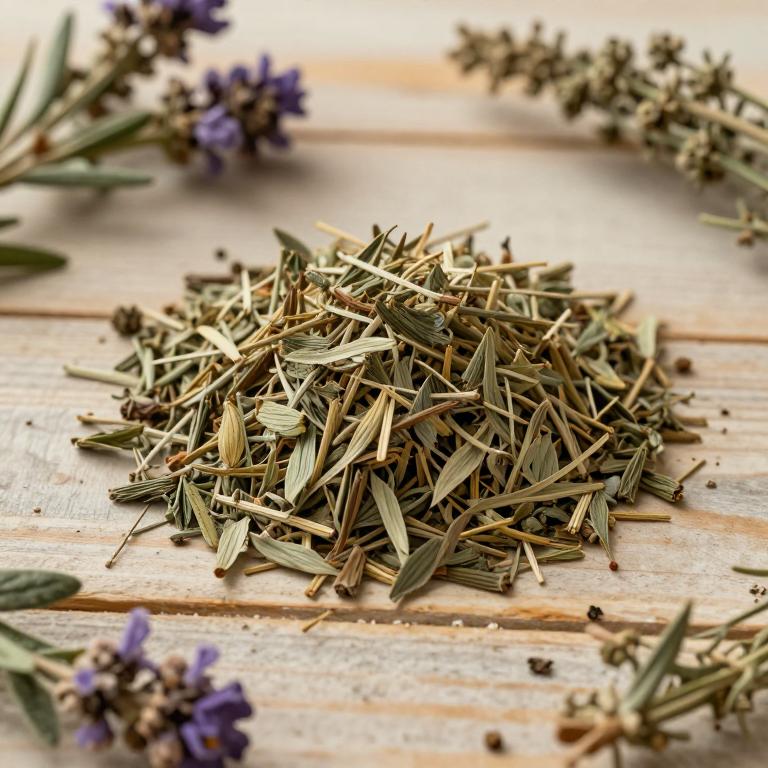
Names and Synonyms
Common Names
- Aztec Sweet Herb
Scientific Names
Accepted name
Lippia dulcisSynonyms
- Lippia dulcis var. mexicana
- Zappania scaberrima
- Phyla scaberrima
- Phyla dulcis
Regional and Traditional Names
Spanish:
- Orozul
- Orozuz
- Orozús
German:
- Aztekisches Süßkraut
Sources: Wikidata, Catalogue of Life
Taxonomical Classification
This plant, known scientifically as Lippia dulcis, belongs to the kingdom Plantae and the phylum Streptophyta. It is classified under the class Equisetopsida and subclass Magnoliidae, falling within the order Lamiales. Finally, it is a member of the family Verbenaceae and is situated within the genus Lippia.
| Rank | Classification |
|---|---|
| Kingdom | Plantae |
| Phylum | Streptophyta |
| Class | Equisetopsida |
| Subclass | Magnoliidae |
| Order | Lamiales |
| Family | Verbenaceae |
| Genus | Lippia |
Sources: The World Checklist of Vascular Plants (WCVP)
Distribution
This plant is native to several diverse regions throughout the country of Mexico. Its presence is widely documented across Mexico Central, where it thrives in various local ecosystems. Additionally, the species can be found extending into Mexico Northeast and throughout the coastal areas of Mexico Gulf. It also inhabits the landscapes of Mexico Southwest, showing significant adaptability to different climates. Finally, the geographical range of this medicinal species reaches into the tropical environments of Mexico Southeast.
| Region | Area |
|---|---|
| Mexico | Mexico Central |
| Mexico | Mexico Northeast |
| Mexico | Mexico Gulf |
| Mexico | Mexico Southwest |
| Mexico | Mexico Southeast |
| Central America | Belize |
| Central America | Costa Rica |
| Central America | El Salvador |
| Central America | Guatemala |
| Central America | Honduras |
Sources: The World Checklist of Vascular Plants (WCVP)
Botanical Identification
Ecology
The ecology of Lippia dulcis is defined by a broad altitudinal adaptability, allowing it to colonize diverse topographical landscapes. This species thrives across a significant vertical gradient, occupying habitats ranging from sea level up to an elevation of 2000 m AMSL. This extensive elevational range suggests a high degree of ecological plasticity, enabling the plant to persist in both lowland tropical environments and higher-altitude montane ecosystems. Such a wide distribution implies that the species can tolerate varying atmospheric pressures and temperature fluctuations associated with changing elevations, provided the underlying soil and moisture conditions remain suitable for its growth.
- Elevational range max:
- 2000 m AMSL
- Elevational range min:
- 0 m AMSL
Life history
The life history of Lippia dulcis is characterized by its classification as a perennial plant, allowing it to persist through multiple growing seasons rather than completing its life cycle within a single year. In terms of its structural development and survival strategy, it is categorized under the life form of a chamaephyte, a designation that indicates its buds and growth points are located close to the soil surface, often protected by leaf litter or ground cover. This specific growth habit as a chamaephyte helps the plant navigate its environmental conditions, ensuring its longevity as a perennial species within its natural habitat.
- Life form :
- chamaephyte
- Lifecycle :
- perennial
Morphology
The morphology of Lippia dulcis is characterized by its growth form as a shrubby herb that typically reaches a mean height of approximately 2 meters. As a terrestrial species, it does not exhibit aquatic or semi-aquatic tendencies, nor does it function as an epiphyte, maintaining a strictly terrestrial existence. The plant is self-supporting in its structure, lacking the climbing mechanisms associated with vines or lianas, and it functions as an independent organism rather than a parasite. In terms of its physical composition, the plant is classified as non-woody, contributing to its specific shrubby-herbaceous habit.
- Aquatic :
- terrestrial
- Climber :
- self-supporting
- Epiphyte :
- terrestrial
- Growth form :
- herb
- Growth form :
- shrub
- Parasite :
- independent
- Plant height mean:
- 2 m
- Woodiness :
- non-woody
Physiology
The physiology of Lippia dulcis is characterized by its specialized metabolic pathways and structural adaptations suited for its native environments. As a member of the Verbenaceae family, the plant exhibits robust photosynthetic activity, utilizing C3 carbon fixation to convert light energy into chemical energy. Its metabolic profile is particularly notable for the biosynthesis of secondary metabolites, including essential oils and phenolic compounds, which serve as defense mechanisms against herbivory and environmental stressors. In terms of nutrient cycling and soil interaction, the plant does not function as a nitrogen fixer; it lacks the symbiotic relationship with diazotrophic bacteria, such as Rhizobium, required to convert atmospheric nitrogen into bioavailable forms. Consequently, its physiological growth and nitrogen assimilation are entirely dependent on the uptake of nitrates and ammonium from the surrounding soil substrate.
- Nitrogen fixer :
- no
Reproduction
The reproduction of Lippia dulcis is characterized by a biotic pollination syndrome, relying on living organisms rather than abiotic factors like wind or water to facilitate genetic exchange. This reproductive strategy is primarily driven by insect pollination, which serves as the central mechanism for transferring pollen between flowers. Specifically, the plant engages with a diverse array of insect pollinators, including bees, butterflies, and other various insect species, to ensure successful fertilization. By utilizing these biotic vectors, the plant optimizes its reproductive success through targeted animal-mediated pollen dispersal.
- Pollination syndrome :
- insect
- Pollination syndrome :
- biotic
Sources: Global Inventory of Floras and Traits (GIFT)
Plant Parts
Lippia dulcis has 2 reported plant parts identified across 3 scientific publications and several other databases that are studied for medicinal purposes. The most consistently reported plant part include leaf, flower.
| Plant part | Supporting sources | Consensus |
|---|---|---|
| Leaf | 2 supporting sources | ★☆☆☆☆ |
| Flower | 1 supporting sources | ★☆☆☆☆ |
Leaf
- Journal of natural products
- Natural product communications
Flower
- Journal of natural products
Chemicals
Lippia dulcis has 19 reported phytochemicals identified across 3 scientific publications and several other databases. The most consistently reported chemicals include Hernandulcin, camphor, (+)-Hernandulcin, (-)-Epihernandulcin, 6-METHYL-5-HEPTEN-2-ONE.
| Chemical | Supporting sources | Consensus |
|---|---|---|
| Hernandulcin | 3 supporting sources | ★★☆☆☆ |
| camphor | 2 supporting sources | ★☆☆☆☆ |
| (+)-Hernandulcin | 1 supporting sources | ★☆☆☆☆ |
| (-)-Epihernandulcin | 1 supporting sources | ★☆☆☆☆ |
| 6-METHYL-5-HEPTEN-2-ONE | 1 supporting sources | ★☆☆☆☆ |
| BETA-CARYOPHYLLENE | 1 supporting sources | ★☆☆☆☆ |
| DELTA-CADINENE | 1 supporting sources | ★☆☆☆☆ |
| Epilippidulcines B | 1 supporting sources | ★☆☆☆☆ |
| Flavonoids | 1 supporting sources | ★☆☆☆☆ |
| Peroxyepilippidulcine B | 1 supporting sources | ★☆☆☆☆ |
Hernandulcin
- Natural product communications
- Plant cell reports
- Journal of ethnopharmacology
camphor
- Dr. Duke
- Journal of ethnopharmacology
(+)-Hernandulcin
- Journal of natural products
(-)-Epihernandulcin
- Journal of natural products
6-METHYL-5-HEPTEN-2-ONE
- Journal of natural products
BETA-CARYOPHYLLENE
- Natural product communications
DELTA-CADINENE
- Natural product communications
Epilippidulcines B
- Journal of natural products
Flavonoids
- Journal of natural products
Peroxyepilippidulcine B
- Journal of natural products
Activities
Lippia dulcis has 191 reported activities identified across 3 scientific publications and several other databases. The most consistently reported activities include 11B-HSD-Inhibitor, 5-Lipoxygenase-Inhibitor, ATPase-Inhibitor, Aldehyde-Oxidase-Inhibitor, Aldose-Reductase-Inhibitor.
| Activity | Supporting sources | Consensus |
|---|---|---|
| 11B-HSD-Inhibitor | 1 supporting sources | ★☆☆☆☆ |
| 5-Lipoxygenase-Inhibitor | 1 supporting sources | ★☆☆☆☆ |
| ATPase-Inhibitor | 1 supporting sources | ★☆☆☆☆ |
| Aldehyde-Oxidase-Inhibitor | 1 supporting sources | ★☆☆☆☆ |
| Aldose-Reductase-Inhibitor | 1 supporting sources | ★☆☆☆☆ |
| Allelochemic | 1 supporting sources | ★☆☆☆☆ |
| Allelopathic | 1 supporting sources | ★☆☆☆☆ |
| Allergenic | 1 supporting sources | ★☆☆☆☆ |
| Analgesic | 1 supporting sources | ★☆☆☆☆ |
| Anesthetic | 1 supporting sources | ★☆☆☆☆ |
11B-HSD-Inhibitor
- Dr. Duke
5-Lipoxygenase-Inhibitor
- Dr. Duke
ATPase-Inhibitor
- Dr. Duke
Aldehyde-Oxidase-Inhibitor
- Dr. Duke
Aldose-Reductase-Inhibitor
- Dr. Duke
Allelochemic
- Dr. Duke
Allelopathic
- Dr. Duke
Allergenic
- Dr. Duke
Analgesic
- Dr. Duke
Anesthetic
- Dr. Duke
Conditions
Lippia dulcis has 4 reported investigations on conditions identified across 3 scientific publications and several other databases. The most consistently reported conditions include bronchitis, coughs, diarrhea, gastrointestinal disorders.
| Condition | Supporting sources | Consensus |
|---|---|---|
| Bronchitis | 1 supporting sources | ★☆☆☆☆ |
| Coughs | 1 supporting sources | ★☆☆☆☆ |
| Diarrhea | 1 supporting sources | ★☆☆☆☆ |
| Gastrointestinal disorders | 1 supporting sources | ★☆☆☆☆ |
Bronchitis
- Journal of ethnopharmacology
Coughs
- Journal of ethnopharmacology
Diarrhea
- Revista de gastroenterologia del Peru : organo oficial de la Sociedad de Gastroenterologia del Peru
Gastrointestinal disorders
- Journal of ethnopharmacology
Preparations
Lippia dulcis has 4 reported preparations identified across 3 scientific publications and several other databases. The most consistently reported preparations include Decoction or infusion, Essential oil from leaves, cell suspensions, ethanolic extracts.
| Preparation | Supporting sources | Consensus |
|---|---|---|
| Decoction or infusion | 1 supporting sources | ★☆☆☆☆ |
| Essential oil from leaves | 1 supporting sources | ★☆☆☆☆ |
| Cell suspensions | 1 supporting sources | ★☆☆☆☆ |
| Ethanolic extracts | 1 supporting sources | ★☆☆☆☆ |
Decoction or infusion
- Revista de gastroenterologia del Peru : organo oficial de la Sociedad de Gastroenterologia del Peru
Essential oil from leaves
- Natural product communications
Cell suspensions
- Chemistry & biodiversity
Ethanolic extracts
- Journal of ethnopharmacology