Lothrian Flax
Linum leonii · Accepted scientific name
Scientific literature: Very Sparse (6 studies) · ★☆☆☆☆
Lothrian Flax, scientifically known as Linum leonii, is a rare medicinal perennial prized for its unique therapeutic properties. Native to specific highland ecosystems, this plant contains potent bioactive compounds used in traditional healing to reduce inflammation and support digestive health, making it a significant subject of botanical research.
- Family
- Linaceae
- Native range
- Europe
- Parts used
- Root
- Common names
- Lothrian Flax
- Scientific synonyms
- Linum Austriacum Subsp. Loreyi · Adenolinum Leonii · 7 more
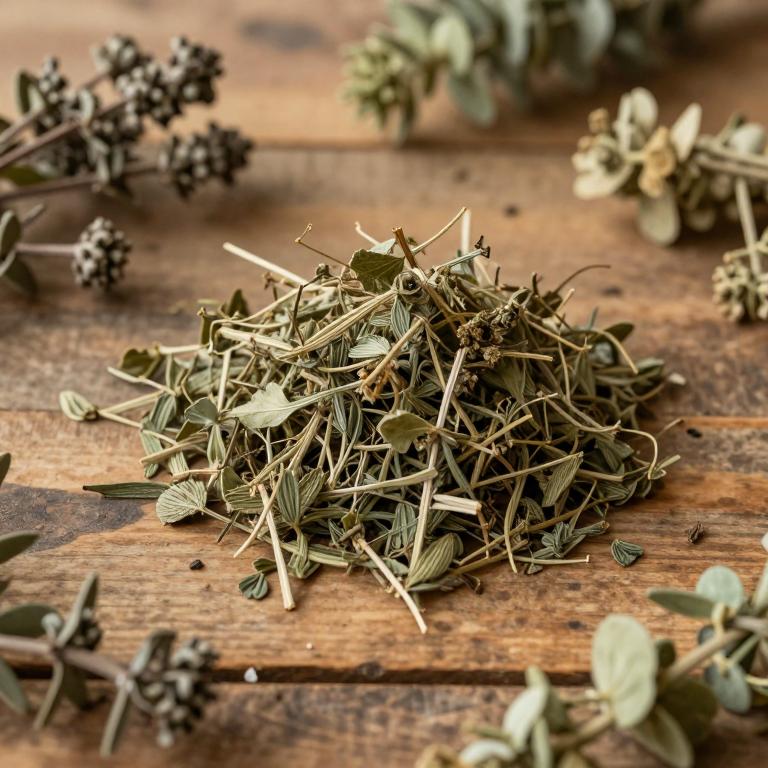
Names and Synonyms
Common Names
- Lothrian Flax
Scientific Names
Accepted name
Linum leoniiSynonyms
- Linum austriacum subsp. loreyi
- Adenolinum leonii
- Linum loreyi
- Linum petryi
- Linum austriacum var. loreyi
- Linum laeve subsp. anglicum
- Linum alpinum subsp. anglicum
- Linum alpinum subsp. leonii
- Linum alpinum var. collinum
Regional and Traditional Names
German:
- Lothringer Lein
- lothringer Lein
French:
- Lin de Léo
- Lin de France
- Lin de Léo
- Lin français
Sources: Wikidata, Catalogue of Life
Taxonomical Classification
This plant belongs to the kingdom Plantae and is classified under the phylum Streptophyta within the class Equisetopsida. As a member of the subclass Magnoliidae and the order Malpighiales, it is situated in the family Linaceae. It is specifically identified by the genus Linum, with the species name leonii.
| Rank | Classification |
|---|---|
| Kingdom | Plantae |
| Phylum | Streptophyta |
| Class | Equisetopsida |
| Subclass | Magnoliidae |
| Order | Malpighiales |
| Family | Linaceae |
| Genus | Linum |
Sources: The World Checklist of Vascular Plants (WCVP)
Distribution
This plant exhibits a specific geographical range across the European continent. In Middle Europe, its presence is noted within the borders of Germany. Moving towards the south, it can also be found throughout Southwestern Europe. Specifically, the species is documented to grow within France. Consequently, its distribution is concentrated in these particular European regions.
| Region | Area |
|---|---|
| Middle Europe | Germany |
| Southwestern Europe | France |
Sources: The World Checklist of Vascular Plants (WCVP)
Botanical Identification
Life history
The life history of Linum leonii is characterized by its status as a perennial plant, allowing it to persist through multiple growing seasons. Functionally, it is classified as a hemicryptophyte, a life form where the perennating buds are located at the soil surface, protected by leaf litter or organic matter. This species exhibits a deciduous nature, shedding its foliage as part of its seasonal cycle.
- Deciduousness :
- deciduous
- Life form :
- hemicryptophyte
- Lifecycle :
- perennial
Morphology
The morphology of Linum leonii is characterized by its growth form as a non-woody herb. This species is a self-supporting plant that does not exhibit climbing behavior and functions as an independent organism rather than a parasite. In terms of stature, the plant is relatively diminutive, with a height that ranges from a minimum of 0.05 m to a maximum of 0.15 m, maintaining an average plant height of approximately 0.15 m.
- Climber :
- self-supporting
- Growth form :
- herb
- Parasite :
- independent
- Plant height mean:
- 0.15 m
- Plant height min:
- 0.05 m
- Woodiness :
- non-woody
Physiology
The physiology of Linum leonii is characterized by its specialized metabolic processes, most notably its utilization of the C3 photosynthetic pathway. Under this mechanism, the plant performs carbon fixation through the enzyme Rubisco, which reacts carbon dioxide with ribulose-1,5-bisphosphate to produce 3-phosphoglycerate as the first stable intermediate. This C3 pathway dictates the plant's gas exchange patterns and water-use efficiency, as it relies on the opening of stomata during daylight hours to facilitate CO2 uptake, thereby making its physiological performance sensitive to variations in light intensity, temperature, and moisture availability within its specific ecological niche.
- Photosynthetic pathway :
- C3
Reproduction
The reproduction of Linum leonii is characterized by a combination of biotic pollination mechanisms and autonomous seed dispersal. The plant utilizes a biotic pollination syndrome, specifically relying on insects to facilitate the transfer of pollen. While it is capable of cross-pollination via these insect vectors, self-fertilization is also present, providing a reproductive safeguard. Once fertilization is successful, the plant employs an autochorous dispersal syndrome, meaning it utilizes an autochorous mechanism to disperse its seeds. These seeds are notably small, with an average seed mass of approximately 0.001288 g.
- Dispersal syndrome :
- autochorous
- Pollination syndrome :
- insect
- Pollination syndrome :
- biotic
- Seed mass mean:
- 0.001288 g
- Self fertilization :
- present
Sources: Global Inventory of Floras and Traits (GIFT)
Plant Parts
Linum leonii has 1 reported plant parts identified across 1 scientific publications and several other databases that are studied for medicinal purposes. The most consistently reported plant part include root.
| Plant part | Supporting sources | Consensus |
|---|---|---|
| Root | 1 supporting sources | ★☆☆☆☆ |
Root
- Journal of natural products
Activities
Linum leonii has 1 reported activities identified across 1 scientific publications and several other databases. The most consistently reported activities include Cytotoxic.
| Activity | Supporting sources | Consensus |
|---|---|---|
| Cytotoxic | 1 supporting sources | ★☆☆☆☆ |
Cytotoxic
- Journal of natural products
Preparations
Linum leonii has 4 reported preparations identified across 1 scientific publications and several other databases. The most consistently reported preparations include Calli, Callus, hairy root cultures, hairy roots.
| Preparation | Supporting sources | Consensus |
|---|---|---|
| Calli | 1 supporting sources | ★☆☆☆☆ |
| Callus | 1 supporting sources | ★☆☆☆☆ |
| Hairy root cultures | 1 supporting sources | ★☆☆☆☆ |
| Hairy roots | 1 supporting sources | ★☆☆☆☆ |
Calli
- Journal of natural products
Callus
- Journal of natural products
Hairy root cultures
- Journal of natural products
Hairy roots
- Journal of natural products