Lindera pulcherrima
Lindera pulcherrima · Accepted scientific name
Scientific literature: Very Sparse (5 studies) · ★☆☆☆☆
Lindra pulcherrima, scientifically known as Lindra pulcherrima, is a remarkable medicinal plant native to specific subtropical regions. Renowned for its unique phytochemical profile, this species is traditionally utilized in holistic healing practices. Its bioactive compounds offer significant therapeutic potential, making it a subject of growing interest in ethnopharmacology.
- Family
- Lauraceae
- Native range
- Asia-Temperate
- Parts used
- Not available
- Common names
- Not available
- Scientific synonyms
- Benzoin Pulcherrimum · Daphnidium Pulcherrimum
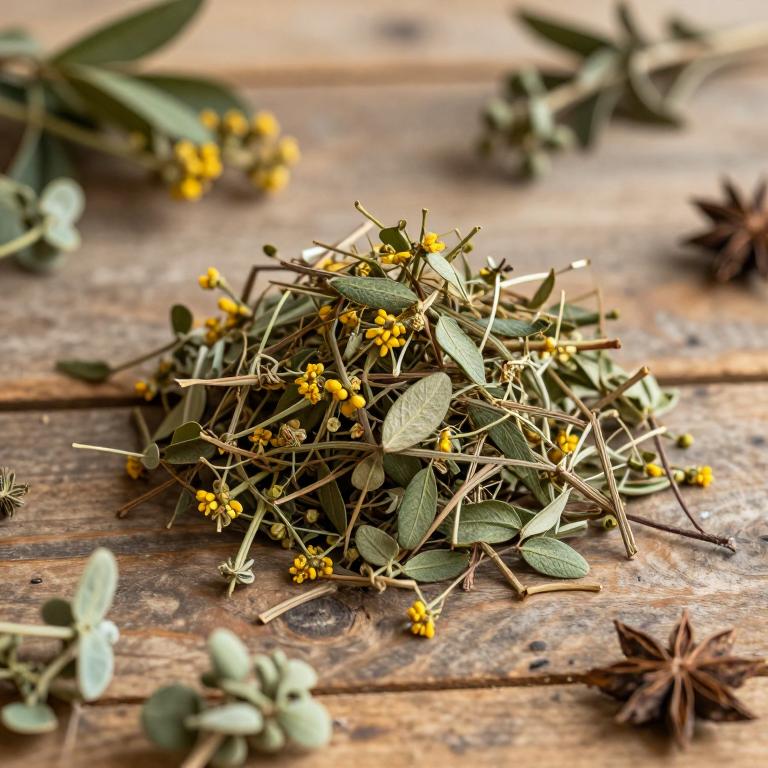
Names and Synonyms
Scientific Names
Accepted name
Lindera pulcherrimaSynonyms
- Benzoin pulcherrimum
- Daphnidium pulcherrimum
Sources: Wikidata, Catalogue of Life
Taxonomical Classification
This plant belongs to the kingdom Plantae and is classified within the phylum Streptophyta and the class Equisetopsida. Under the subclass Magnoliidae, it is situated in the order Laurales and the family Lauraceae. Ultimately, it is identified by the genus Lindra and the specific species name Lindra pulcherrima.
| Rank | Classification |
|---|---|
| Kingdom | Plantae |
| Phylum | Streptophyta |
| Class | Equisetopsida |
| Subclass | Magnoliidae |
| Order | Laurales |
| Family | Lauraceae |
| Genus | Lindera |
Sources: The World Checklist of Vascular Plants (WCVP)
Distribution
This plant exhibits a broad geographical distribution across several diverse regions of Asia. In China, its presence is recorded extensively throughout the South-Central, North-Central, and Southeast territories. Additionally, the species can be found growing within the high-altitude terrain of Tibet. Beyond Chinese borders, it extends into the Indian Subcontinent, specifically inhabiting the Assam region. Together, these locations highlight the wide ecological range of Lindera pulcherrima.
| Region | Area |
|---|---|
| China | China South-Central |
| China | China North-Central |
| China | China Southeast |
| China | Tibet |
| Indian Subcontinent | Assam |
| Indian Subcontinent | East Himalaya |
| Indian Subcontinent | Nepal |
| Indian Subcontinent | West Himalaya |
| Indo-China | Myanmar |
| Indo-China | Vietnam |
Sources: The World Checklist of Vascular Plants (WCVP)
Botanical Identification
Ecology
The ecology of Lindeira pulcherrima is characterized by its distribution across high-altitude environments, where it occupies a broad vertical niche within its native habitat. This species thrives across a significant altitudinal gradient, with its presence recorded from a minimum elevation of 1400 m AMSL to a maximum peak of 3650 m AMSL. The ecological center of its distribution is found at a mean elevation of 2925 m AMSL, suggesting that the plant is particularly well-adapted to the climatic conditions, soil compositions, and atmospheric pressures typical of high-montane or alpine ecosystems.
- Elevational range max:
- 3650 m AMSL
- Elevational range mean:
- 2925 m AMSL
- Elevational range min:
- 1400 m AMSL
Life history
The life history of Lindera pulcherrima is characterized by its status as a perennial species, allowing it to persist through multiple growing seasons and maintain a stable presence within its ecological niche. As an evergreen plant, it retains its foliage throughout the year, providing continuous photosynthetic activity and structural stability regardless of seasonal changes.
- Deciduousness :
- evergreen
- Lifecycle :
- perennial
Morphology
The morphology of Lindea pulcherrima is characterized by its growth form as a woody tree, which functions as an independent organism rather than a parasite or epiphyte. As a terrestrial species, it does not exhibit aquatic or semiaquatic tendencies. The plant is self-supporting in its structure, lacking the climbing habits of a vine or liana. In terms of stature, it reaches significant heights, with a minimum height of 7 m, a mean height of 8.5 m, and a maximum height of up to 10 m.
- Aquatic :
- terrestrial
- Climber :
- self-supporting
- Epiphyte :
- terrestrial
- Growth form :
- tree
- Parasite :
- independent
- Plant height max:
- 10 m
- Plant height mean:
- 8.5 m
- Plant height min:
- 7 m
- Woodiness :
- woody
Physiology
The physiological characteristics of the foliage in Lindea pulcherrima are defined by specific morphological dimensions that govern its photosynthetic surface area and water regulation capabilities. The leaf structure exhibits a notable range in size, with leaf lengths typically averaging 10.5 cm, though they can fluctuate between a minimum of 8 cm and a maximum of 13 cm. Complementing this longitudinal variation is a distinct breadth in the leaves, which maintain a mean width of 3.25 cm. The width of the leaves is subject to significant physiological adaptation or developmental variance, ranging from a minimum of 2 cm to a maximum width of 4.5 cm. These specific dimensions in length and width collectively dictate the plant's canopy density and its overall efficiency in light interception and gas exchange.
- Leaf length max:
- 13 cm
- Leaf length mean:
- 10.5 cm
- Leaf length min:
- 8 cm
- Leaf width max:
- 4.5 cm
- Leaf width mean:
- 3.25 cm
- Leaf width min:
- 2 cm
Sources: Global Inventory of Floras and Traits (GIFT)
Activities
Lindera pulcherrima has 2 reported activities identified across 0 scientific publications and several other databases. The most consistently reported activities include Antibacterial, Antioxidant.
| Activity | Supporting sources | Consensus |
|---|---|---|
| Antibacterial | 1 supporting sources | ★☆☆☆☆ |
| Antioxidant | 1 supporting sources | ★☆☆☆☆ |
Antibacterial
- Pharmacognosy research
Antioxidant
- Pharmacognosy research
Conditions
Lindera pulcherrima has 3 reported investigations on conditions identified across 0 scientific publications and several other databases. The most consistently reported conditions include cold, cough, fever.
| Condition | Supporting sources | Consensus |
|---|---|---|
| Cold | 1 supporting sources | ★☆☆☆☆ |
| Cough | 1 supporting sources | ★☆☆☆☆ |
| Fever | 1 supporting sources | ★☆☆☆☆ |
Cold
- Pharmacognosy research
Cough
- Pharmacognosy research
Fever
- Pharmacognosy research