Olive-leaved Sea-lavender
Limonium virgatum · Accepted scientific name
Scientific literature: Very Sparse (3 studies) · ★☆☆☆☆
Olive-leaved Sea-lavender, scientifically known as Limonium virgatum, is a resilient perennial herb native to coastal wetlands. Characterized by its silvery-green foliage and airy clusters of violet blooms, it thrives in saline soils. This hardy plant plays a vital role in stabilizing coastal ecosystems and attracting diverse pollinators.
- Family
- Plumbaginaceae
- Native range
- Europe
- Parts used
- Not available
- Common names
- Olive-Leaved Sea-Lavender
- Scientific synonyms
- Statice Cosyrensis Subsp. Melia · Statice Viminea · 9 more
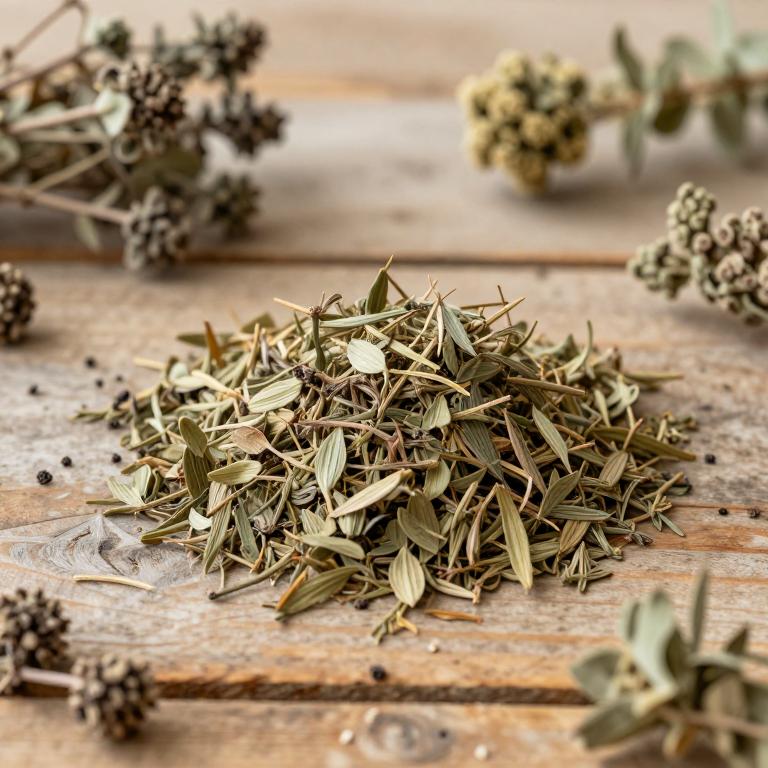
Names and Synonyms
Common Names
- Olive-leaved Sea-lavender
Scientific Names
Accepted name
Limonium virgatumSynonyms
- Statice cosyrensis subsp. melia
- Statice viminea
- Limonium tenium
- Limonium melium
- Statice virgata
- Taxanthema vimineum
- Statice smithii
- Statice virgata var. smithii
- Statice taubertii
- Statice virgata var. tenia
- Taxanthema virgatum
Regional and Traditional Names
Spanish:
- Canadillo real
German:
- Echter Strandflieder
French:
- Limonium en baguette
- Statice raide
Sources: Wikidata, Catalogue of Life
Taxonomical Classification
This plant, Limonium virgatum, belongs to the kingdom Plantae and the phylum Streptophyta. It is classified under the class Equisetopsida and the subclass Magnoliidae within the order Caryophyllales. Finally, it is a member of the family Plumbaginaceae and falls under the genus Limonium.
| Rank | Classification |
|---|---|
| Kingdom | Plantae |
| Phylum | Streptophyta |
| Class | Equisetopsida |
| Subclass | Magnoliidae |
| Order | Caryophyllales |
| Family | Plumbaginaceae |
| Genus | Limonium |
Sources: The World Checklist of Vascular Plants (WCVP)
Distribution
This plant, known as Limonium virgatum, exhibits a specific geographical distribution across several regions of Southwestern Europe. It can be found growing within the Balearic Islands, which are part of the Baleares archipelago. Its range also extends to the island of Corsica and the territory of Sardinia. Additionally, this species is documented in the coastal areas of Portugal. Finally, its presence is well-established throughout various parts of Spain.
| Region | Area |
|---|---|
| Southwestern Europe | Baleares |
| Southwestern Europe | Corse |
| Southwestern Europe | Portugal |
| Southwestern Europe | Sardegna |
| Southwestern Europe | Spain |
| Southeastern Europe | Albania |
| Southeastern Europe | Greece |
| Southeastern Europe | Italy |
| Southeastern Europe | Kriti |
| Southeastern Europe | Sicilia |
Sources: The World Checklist of Vascular Plants (WCVP)
Botanical Identification
Life history
The life history of Limonium virgatum is characterized by its classification as a perennial plant, allowing it to persist through multiple growing seasons. Structurally, its life form is identified as a chamaephyte, a growth habit where the majority of the plant's vegetative organs are located close to the soil surface, often protected by accumulated litter or snow. This specific life form, categorized both as a chamaephyte and within the broader botanical framework of chamaephytes, enables the species to thrive in its specific ecological niche by maintaining a low-growing, resilient stature.
- Life form :
- chamaephyte
- Lifecycle :
- perennial
Morphology
The morphology of Limonium virgatum is characterized by its structural adaptations to diverse environmental niches, functioning across a spectrum of habitats including aquatic, semiaquatic, and terrestrial zones. The plant typically exhibits a perennial growth habit with a robust root system designed to anchor it in varied substrates ranging from moist soils to saturated wetlands. Its foliage consists of basal clusters of leaves that are often fleshy or salt-tolerant, supporting its ability to thrive in saline or waterlogged conditions. The reproductive structures are prominent, featuring branched, wiry inflorescences that rise above the foliage, bearing small, delicate flowers arranged in dense cymes. As a non-parasitic organism, Limonium virgatum is biologically independent, meaning it does not rely on a host for nutrients and functions as an independent autotroph, utilizing its own physiological processes to sustain growth and development across its specified ecological range.
- Aquatic :
- terrestrial
- Parasite :
- independent
Sources: Global Inventory of Floras and Traits (GIFT)
Chemicals
Limonium virgatum has 1 reported phytochemicals identified across 0 scientific publications and several other databases. The most consistently reported chemicals include polyphenols.
| Chemical | Supporting sources | Consensus |
|---|---|---|
| polyphenols | 1 supporting sources | ★☆☆☆☆ |
polyphenols
- The Journal of pharmacy and pharmacology
Activities
Limonium virgatum has 1 reported activities identified across 0 scientific publications and several other databases. The most consistently reported activities include Antimicrobial.
| Activity | Supporting sources | Consensus |
|---|---|---|
| Antimicrobial | 1 supporting sources | ★☆☆☆☆ |
Antimicrobial
- The Journal of pharmacy and pharmacology
Preparations
Limonium virgatum has 1 reported preparations identified across 0 scientific publications and several other databases. The most consistently reported preparations include methanolic extracts.
| Preparation | Supporting sources | Consensus |
|---|---|---|
| Methanolic extracts | 1 supporting sources | ★☆☆☆☆ |
Methanolic extracts
- The Journal of pharmacy and pharmacology