Limonium scoparium
Limonium scoparium · Accepted scientific name
Scientific literature: Very Sparse (4 studies) · ★☆☆☆☆
Limonium scoparium, scientifically known as Limonium scoparium, is a resilient perennial herb valued for its unique medicinal properties. Often found in coastal or rocky habitats, this plant is traditionally utilized in various folk remedies to treat inflammation and skin ailments, offering a natural approach to holistic wellness and healing.
- Family
- Plumbaginaceae
- Native range
- Europe
- Parts used
- Not available
- Common names
- Not available
- Scientific synonyms
- Taxanthema Scoparium · Limonium Meyeri · 9 more
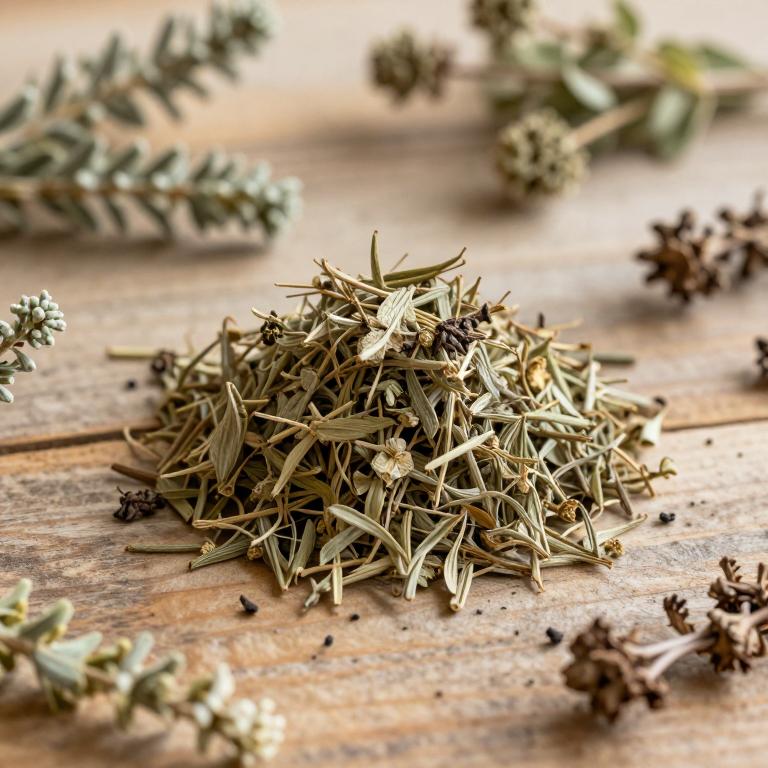
Names and Synonyms
Scientific Names
Accepted name
Limonium scopariumSynonyms
- Taxanthema scoparium
- Limonium meyeri
- Statice scoparia
- Limonium neoscoparium
- Statice gmelini var. scoparia
- Limonium obovatum
- Statice gmelini var. laxiflora
- Statice laxiflora
- Limonium scoparium var. meyeri
- Statice obovata
- Statice meyeri
Sources: Wikidata
Taxonomical Classification
This plant belongs to the kingdom Plantae and the phylum Streptophyta, falling under the class Equisetopsida and subclass Magnoliidae. Within the order Caryophyllales, it is classified under the family Plumbaginaceae. Finally, it is identified by its genus, Limonium.
| Rank | Classification |
|---|---|
| Kingdom | Plantae |
| Phylum | Streptophyta |
| Class | Equisetopsida |
| Subclass | Magnoliidae |
| Order | Caryophyllales |
| Family | Plumbaginaceae |
| Genus | Limonium |
Sources: The World Checklist of Vascular Plants (WCVP)
Distribution
This plant exhibits a wide-ranging geographical distribution across several distinct regions. In Southeastern Europe, it can be found growing within the borders of Bulgaria. Its presence extends into Eastern Europe, where it is native to both Crimea and Ukraine. The species also reaches into Northern Africa, specifically inhabiting the territory of Egypt. Finally, its range stretches into Central Asia, where it is recorded in Kazakhstan.
| Region | Area |
|---|---|
| Southeastern Europe | Bulgaria |
| Eastern Europe | Krym |
| Eastern Europe | Ukraine |
| Northern Africa | Egypt |
| Central Asia | Kazakhstan |
| Central Asia | Turkmenistan |
| Central Asia | Uzbekistan |
| Caucasus | North Caucasus |
| Caucasus | Transcaucasus |
| Western Asia | Cyprus |
Sources: The World Checklist of Vascular Plants (WCVP)
Botanical Identification
Ecology
The ecology of Limonium scoparium is characterized by its remarkable adaptability to diverse aquatic and semi-aquatic environments, demonstrating a broad tolerance for varying moisture levels and salinity gradients. It is commonly found colonizing the margins of lakes and rivers, where it integrates into the riparian zone, as well as in lush meadows that provide stable soil conditions. A defining ecological feature of this species is its ability to thrive in saline places, including coastal shores and marine environments, where it manages high salt concentrations that would be lethal to many other plants. This ability to occupy both freshwater habitats and salt-influenced coastal ecosystems allows it to play a significant role in the biological structure of diverse wetland and seaside landscapes.
- Habitat :
- lakes, meadows, rivers, saline places, sea, shores
Life history
The life history of Limonium scoparium is characterized by its status as a perennial plant, allowing it to persist through multiple growing seasons. As a long-lived species, it establishes a stable presence within its ecological niche, often developing robust root systems that support its continuous growth cycles. Throughout its life, the plant undergoes seasonal transitions, emerging from dormancy to engage in vegetative development and eventual reproductive phases. Its perennial nature ensures that it can withstand environmental fluctuations, providing a consistent biological presence that distinguishes it from annual or biennial species that complete their life cycles in a single or double season.
- Lifecycle :
- perennial
Morphology
The morphology of Limonium scoparium is characterized by its growth form as a herb, exhibiting a non-woody structure throughout its development. The plant typically reaches a height ranging from a minimum of 0.4 m to a maximum of 1.5 m, establishing a stature consistent with its herbaceous nature.
- Growth form :
- herb
- Plant height max:
- 1.5 m
- Plant height min:
- 0.4 m
- Woodiness :
- non-woody
Reproduction
The reproduction of Limonium scoparium is characterized by a specific seasonal flowering window that facilitates its reproductive cycle. The flowering period typically begins in July and continues through the late summer months, reaching its conclusion in September. This temporal pattern ensures that the plant's reproductive efforts are concentrated during these specific months, providing a consistent timeframe for pollination and subsequent seed development.
- Flowering time :
- Jul
- Flowering time :
- Sep
Sources: Global Inventory of Floras and Traits (GIFT)
Chemicals
Limonium scoparium has 4 reported phytochemicals identified across 0 scientific publications and several other databases. The most consistently reported chemicals include 2-HEXENAL, Flavonoids, Phenols, quercetin.
| Chemical | Supporting sources | Consensus |
|---|---|---|
| 2-HEXENAL | 1 supporting sources | ★☆☆☆☆ |
| Flavonoids | 1 supporting sources | ★☆☆☆☆ |
| Phenols | 1 supporting sources | ★☆☆☆☆ |
| quercetin | 1 supporting sources | ★☆☆☆☆ |
2-HEXENAL
- Scientific reports
Flavonoids
- Scientific reports
Phenols
- Scientific reports
quercetin
- Scientific reports