Sea lavender
Limonium axillare · Accepted scientific name
Scientific literature: Very Sparse (6 studies) · ★☆☆☆☆
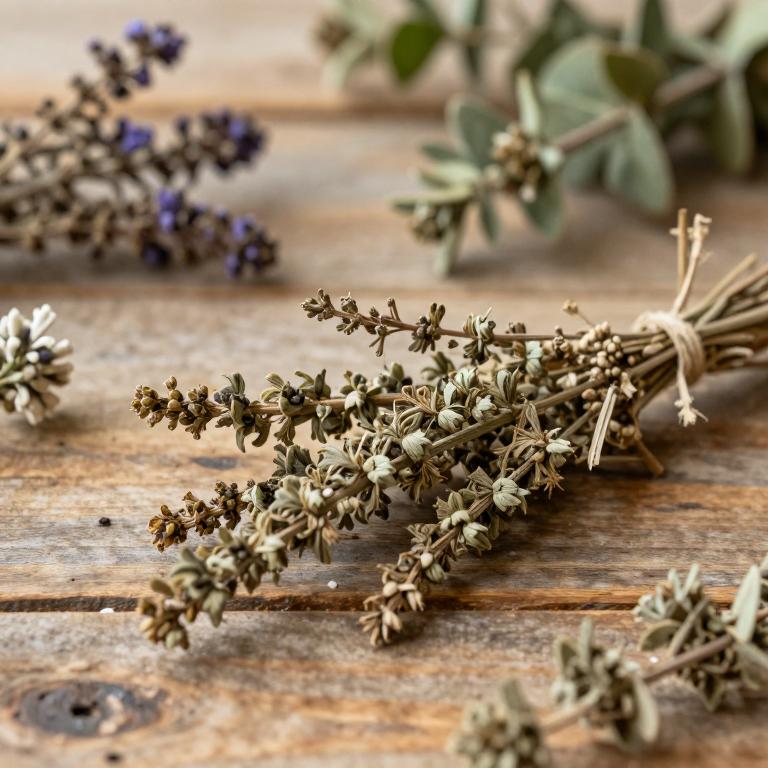
Sea lavender, scientifically known as Limonium axillare, is a resilient coastal perennial prized for its delicate, colorful blooms. Thriving in saline environments, this hardy plant holds significant ethnobotanical value. Traditionally used in various cultures, it offers potential therapeutic properties, making it a subject of interest in modern herbal medicine.
- Family
- Plumbaginaceae
- Native range
- Africa
- Parts used
- Leaf · Root
- Common names
- Not available
- Scientific synonyms
- Statice Axillaris · Limonium Somalorum · 7 more
Names and Synonyms
Scientific Names
Accepted name
Limonium axillareSynonyms
- Statice axillaris
- Limonium somalorum
- Statice arabica
- Statice attenuata
- Statice somalorum
- Limonium arabicum
- Eurychiton adensis
- Statice adensis
- Statice bovei
Regional and Traditional Names
Spanish:
- Lavanda de Mar
Sources: Wikidata, Catalogue of Life
Taxonomical Classification
This plant belongs to the kingdom Plantae and the phylum Streptophyta, falling under the class Equisetopsida and subclass Magnoliidae. Within the order Caryophyllales and the family Plumbaginaceae, it is classified under the genus Limonium.
| Rank | Classification |
|---|---|
| Kingdom | Plantae |
| Phylum | Streptophyta |
| Class | Equisetopsida |
| Subclass | Magnoliidae |
| Order | Caryophyllales |
| Family | Plumbaginaceae |
| Genus | Limonium |
Sources: The World Checklist of Vascular Plants (WCVP)
Distribution
This plant is primarily distributed across several regions within the African continent. In Northern Africa, its presence is noted specifically within the borders of Egypt. Moving toward the Northeast Tropical Africa region, it can be found in Djibouti as well as Eritrea. The species also inhabits the territory of Somalia within this same tropical zone. Finally, its geographical range extends through the areas of both Sudan and South Sudan.
| Region | Area |
|---|---|
| Northern Africa | Egypt |
| Northeast Tropical Africa | Djibouti |
| Northeast Tropical Africa | Eritrea |
| Northeast Tropical Africa | Somalia |
| Northeast Tropical Africa | Sudan-South Sudan |
| Western Asia | Sinai |
| Arabian Peninsula | Oman |
| Arabian Peninsula | Saudi Arabia |
| Arabian Peninsula | Yemen |
| Indian Subcontinent | Pakistan |
Sources: The World Checklist of Vascular Plants (WCVP)
Botanical Identification
Ecology
The ecology of Limonium axillare is characterized by its specialized adaptation to the harsh, saline environments of the saltmarsh. As a halophyte, it thrives in these coastal wetlands where high salt concentrations and periodic tidal inundation would be lethal to most other plant species. Within the saltmarsh ecosystem, it occupies specific niches defined by soil salinity gradients and moisture availability, playing a role in stabilizing substrate and contributing to the organic matter of the coastal zone. Its physiological mechanisms are finely tuned to manage osmotic stress and handle the nutrient-poor, waterlogged conditions typical of these maritime habitats, ensuring its persistence in an environment dominated by fluctuating salinity and high solar exposure.
- Habitat :
- saltmarsh
Life history
The life history of Limonium axillare is characterized by its classification as a perennial species, allowing it to persist across multiple growing seasons. In terms of its structural growth habit and survival strategy, the plant functions as a therophyte, completing its reproductive cycles and maintaining its presence through specialized mechanisms adapted to its environment. This life form indicates that the plant's perennality is supported by a life cycle that relies on seasonal survival strategies typical of the therophyte group.
- Life form :
- therophyte
- Lifecycle :
- perennial
Morphology
The morphology of Limonium axillare is characterized by a growth form that can be described as both a shrub and a herb, exhibiting variable woodiness throughout its structure. It functions as a self-supporting plant, categorized as non-climbing, and maintains an independent life cycle without being a parasite. As a terrestrial species, it does not exhibit epiphytic behavior. In terms of stature, the plant is relatively low-growing, with a plant height ranging from a minimum of 0.1 m to a maximum of 0.5 m.
- Climber :
- self-supporting
- Epiphyte :
- terrestrial
- Growth form :
- shrub
- Growth form :
- herb
- Parasite :
- independent
- Plant height max:
- 0.5 m
- Plant height min:
- 0.1 m
- Woodiness :
- variable
Physiology
The physiology of Limonium axillare is characterized by a specialized metabolic framework adapted to its specific ecological niche, most notably through its utilization of a C3 photosynthetic pathway. As a C3 plant, the carbon fixation process begins with the direct carboxylation of ribulose-1,5-bisphosphate (RuBP) by the enzyme RuBisCO, leading to the immediate production of three-carbon molecules during the Calvin cycle. This metabolic route dictates the plant's efficiency in gas exchange and water usage, as it relies on maintaining relatively high internal CO2 concentrations to minimize photorespiration. Furthermore, the physiological resilience of this species is often supported by specialized salt-secreting glands, which manage osmotic stress and ion toxicity, allowing the C3 photosynthetic machinery to function effectively even in saline or coastal environments where moisture retention and ionic balance are critical for maintaining cellular homeostasis and metabolic continuity.
- Photosynthetic pathway :
- C3
Reproduction
The reproduction of Limonium axillare is characterized by a versatile flowering period that can fluctuate depending on environmental conditions. The flowering cycle typically commences in March, serving as the onset of its reproductive phase. This flowering period concludes in April, although the timing of these stages remains highly variable throughout the year.
- Flowering time :
- Mar
- Flowering time :
- Apr
Sources: Global Inventory of Floras and Traits (GIFT)
Plant Parts
Limonium axillare has 2 reported plant parts identified across 2 scientific publications and several other databases that are studied for medicinal purposes. The most consistently reported plant part include leaf, root.
| Plant part | Supporting sources | Consensus |
|---|---|---|
| Leaf | 1 supporting sources | ★☆☆☆☆ |
| Root | 1 supporting sources | ★☆☆☆☆ |
Leaf
- Archiv der Pharmazie
Root
- PloS one
Chemicals
Limonium axillare has 2 reported phytochemicals identified across 2 scientific publications and several other databases. The most consistently reported chemicals include Umbelliferone, myricetin.
| Chemical | Supporting sources | Consensus |
|---|---|---|
| Umbelliferone | 1 supporting sources | ★☆☆☆☆ |
| myricetin | 1 supporting sources | ★☆☆☆☆ |
Umbelliferone
- PloS one
myricetin
- PloS one
Conditions
Limonium axillare has 1 reported investigations on conditions identified across 2 scientific publications and several other databases. The most consistently reported conditions include antidiabetic.
| Condition | Supporting sources | Consensus |
|---|---|---|
| Antidiabetic | 1 supporting sources | ★☆☆☆☆ |
Antidiabetic
- PloS one
Preparations
Limonium axillare has 1 reported preparations identified across 2 scientific publications and several other databases. The most consistently reported preparations include leaves.
| Preparation | Supporting sources | Consensus |
|---|---|---|
| Leaves | 1 supporting sources | ★☆☆☆☆ |
Leaves
- Archiv der Pharmazie