Limoniastrum guyonianum
Limoniastrum guyonianum · Accepted scientific name
Scientific literature: Very Sparse (2 studies) · ★☆☆☆☆
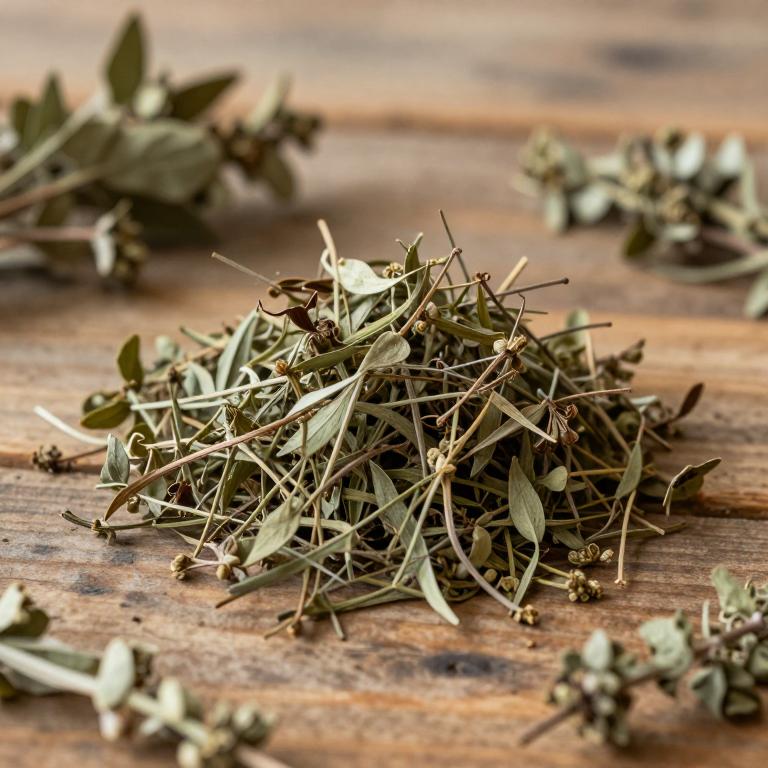
Limoniastrum guyonianum, scientifically known as Limoniastrum guyonianum, is a remarkable medicinal plant valued in traditional healing practices. Renowned for its potent bioactive compounds, it offers significant therapeutic potential. Research focuses on its antioxidant and antimicrobial properties, highlighting its importance in developing natural remedies for various health conditions.
- Family
- Plumbaginaceae
- Native range
- Africa
- Parts used
- Not available
- Common names
- Not available
- Scientific synonyms
- Limoniastrum Guyonianum Var. Ouarglense · Limoniastrum Ouarglense
Names and Synonyms
Scientific Names
Accepted name
Limoniastrum guyonianumSynonyms
- Limoniastrum guyonianum var. ouarglense
- Limoniastrum ouarglense
Sources: Wikidata
Taxonomical Classification
This plant belongs to the kingdom Plantae and the phylum Streptophyta, falling under the class Equisetopsida and subclass Magnoliidae. It is further classified within the order Caryophyllales and the family Plumbaginaceae. Ultimately, the medicinal species is identified by the genus Limoniastrum as Limoniastrum guyonianum.
| Rank | Classification |
|---|---|
| Kingdom | Plantae |
| Phylum | Streptophyta |
| Class | Equisetopsida |
| Subclass | Magnoliidae |
| Order | Caryophyllales |
| Family | Plumbaginaceae |
| Genus | Limoniastrum |
Sources: The World Checklist of Vascular Plants (WCVP)
Distribution
This plant, known scientifically as Limoniastrum guyonianum, exhibits a specific geographical range across the North African region. Its presence is documented within the borders of Algeria, where it occupies certain ecological niches. Furthermore, the species can be found distributed throughout the territory of Libya. It also extends its reach into the landscapes of Tunisia. Finally, its distribution concludes in the eastern part of the continent within Egypt.
| Region | Area |
|---|---|
| Northern Africa | Algeria |
| Northern Africa | Egypt |
| Northern Africa | Libya |
| Northern Africa | Tunisia |
Sources: The World Checklist of Vascular Plants (WCVP)
Botanical Identification
Life history
The life history of Limonia strum guyonianum is characterized by its status as a perennial species, allowing it to persist through multiple growing seasons. As a long-lived organism, it undergoes a continuous cycle of vegetative growth and reproductive phases, ensuring its establishment within its specific ecological niche. This perennial nature enables the plant to develop robust structural components over time, providing it with the resilience necessary to endure seasonal fluctuations and contribute to the stability of its habitat.
- Lifecycle :
- perennial
Morphology
The morphology of Limoniastrum guyonianum is characterized by a woody growth form, manifesting as a self-supporting shrub. As an independent organism, it does not exhibit parasitic behavior, functioning autonomously within its ecosystem. While its ecological niche can vary across different moisture gradients, its primary growth habit is classified as terrestrial, though it possesses the capacity to inhabit semiaquatic or aquatic environments. The structural integrity of the plant is maintained by its woody tissue, which supports its shrubby stature without the need for climbing mechanisms.
- Aquatic :
- terrestrial
- Climber :
- self-supporting
- Growth form :
- shrub
- Parasite :
- independent
- Woodiness :
- woody
Sources: Global Inventory of Floras and Traits (GIFT)
Chemicals
Limoniastrum guyonianum has 1 reported phytochemicals identified across 0 scientific publications and several other databases. The most consistently reported chemicals include MYRICETIN 3-O-GLUCOSIDE.
| Chemical | Supporting sources | Consensus |
|---|---|---|
| MYRICETIN 3-O-GLUCOSIDE | 1 supporting sources | ★☆☆☆☆ |
MYRICETIN 3-O-GLUCOSIDE
- Food & function
Activities
Limoniastrum guyonianum has 1 reported activities identified across 0 scientific publications and several other databases. The most consistently reported activities include Antioxidant.
| Activity | Supporting sources | Consensus |
|---|---|---|
| Antioxidant | 1 supporting sources | ★☆☆☆☆ |
Antioxidant
- Food chemistry