Wingseed Lizardfoot
Limeum pterocarpum · Accepted scientific name
Scientific literature: Very Sparse (5 studies) · ★☆☆☆☆
Wingseed Lizardfoot, scientifically known as Limeum pterocarpum, is a versatile medicinal herb widely utilized in traditional Asian medicine. Characterized by its unique winged seeds, this plant offers significant therapeutic properties, including anti-inflammatory and antioxidant effects, making it a valuable natural resource for treating various ailments and promoting wellness.
- Family
- Limeaceae
- Native range
- Africa
- Parts used
- Not available
- Common names
- Wingseed Lizardfoot
- Scientific synonyms
- Semonvillea Pterocarpa
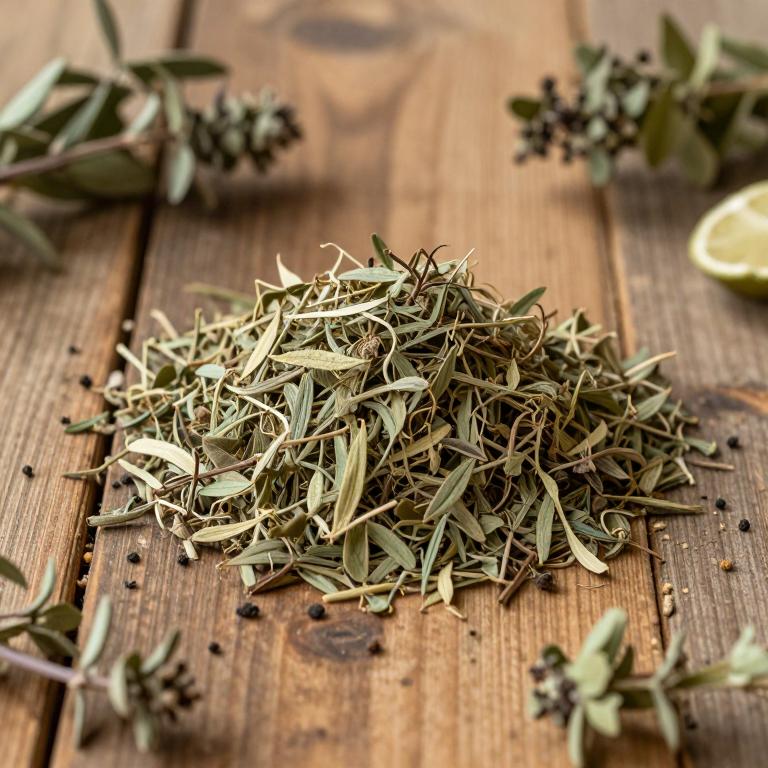
Names and Synonyms
Common Names
- Wingseed Lizardfoot
Scientific Names
Accepted name
Limeum pterocarpumSynonyms
- Semonvillea pterocarpa
Sources: Wikidata, Catalogue of Life
Taxonomical Classification
This plant, known scientifically as Limeum pterocarpum, belongs to the kingdom Plantae and the phylum Streptophyta. It is classified under the class Equisetopsida and the subclass Magnoliidae, falling within the order Caryophyllales. Furthermore, it is a member of the family Limeaceae and is categorized under the genus Limeum.
| Rank | Classification |
|---|---|
| Kingdom | Plantae |
| Phylum | Streptophyta |
| Class | Equisetopsida |
| Subclass | Magnoliidae |
| Order | Caryophyllales |
| Family | Limeaceae |
| Genus | Limeum |
Sources: The World Checklist of Vascular Plants (WCVP)
Distribution
This plant, known as Limeum pterocarpum, exhibits a specific distribution across the West Tropical Africa region. It can be found growing in the various landscapes of Burkina. Additionally, the species is documented to inhabit parts of Mali and Mauritania. Its presence also extends into the territory of Nigeria. Finally, the geographical range includes the country of Niger.
| Region | Area |
|---|---|
| West Tropical Africa | Burkina |
| West Tropical Africa | Mali |
| West Tropical Africa | Mauritania |
| West Tropical Africa | Nigeria |
| West Tropical Africa | Niger |
| West Tropical Africa | Senegal |
| Northeast Tropical Africa | Chad |
| Northeast Tropical Africa | Sudan-South Sudan |
| South Tropical Africa | Angola |
| South Tropical Africa | Zimbabwe |
Sources: The World Checklist of Vascular Plants (WCVP)
Botanical Identification
Ecology
The ecology of Limeum pterocarpum is characterized by its specific distribution within defined altitudinal gradients, typically thriving in environments found between an elevation of 441 m AMSL and a maximum of 1340 m AMSL. Within this vertical range, the plant occupies various ecological niches that support its growth and medicinal potency, adapting to the varying climatic conditions and soil compositions present across these elevations. Its presence within these specific topographical limits suggests a reliance on particular moisture levels and temperature regimes characteristic of mid-to-high altitude habitats, which dictate its spatial distribution and interaction with local biotic and abiotic factors.
- Elevational range max:
- 1340 m AMSL
- Elevational range min:
- 441 m AMSL
Life history
The life history of Limeum pterocarpum is characterized by its classification as an annual plant, completing its entire developmental cycle from germination to seed production within a single growing season. As an annual species, it follows a rapid reproductive strategy to ensure survival in its ecological niche. In terms of its structural growth habit and survival strategy, the plant is categorized as a therophyte, meaning it survives unfavorable environmental conditions primarily in the form of seeds, which remain dormant until conditions become suitable for the next generation. This life form is consistent across its botanical classification, identifying it specifically as a therophyte within the standard life form frameworks.
- Life form :
- therophyte
- Lifecycle :
- annual
Morphology
The morphology of Limium pterocarpum is characterized by its growth form as a non-woody herb, presenting a structure that is primarily terrestrial in nature rather than aquatic or epiphytic. It functions as an independent organism, lacking parasitic tendencies. This herb exhibits a relatively low stature, with a plant height ranging from a minimum of 0.07 m to a maximum of 0.6 m. Regarding its climbing habit, the plant is classified as self-supporting, rather than acting as a liana, vine, or obligatory climber.
- Aquatic :
- terrestrial
- Climber :
- self-supporting
- Epiphyte :
- terrestrial
- Growth form :
- herb
- Parasite :
- independent
- Plant height max:
- 0.6 m
- Plant height min:
- 0.07 m
- Woodiness :
- non-woody
Sources: Global Inventory of Floras and Traits (GIFT)
Chemicals
Limeum pterocarpum has 3 reported phytochemicals identified across 0 scientific publications and several other databases. The most consistently reported chemicals include Flavonoids, Tannins, polyphenols.
| Chemical | Supporting sources | Consensus |
|---|---|---|
| Flavonoids | 1 supporting sources | ★☆☆☆☆ |
| Tannins | 1 supporting sources | ★☆☆☆☆ |
| polyphenols | 1 supporting sources | ★☆☆☆☆ |
Flavonoids
- Journal of tropical medicine
Tannins
- Journal of tropical medicine
polyphenols
- Journal of tropical medicine
Conditions
Limeum pterocarpum has 2 reported investigations on conditions identified across 0 scientific publications and several other databases. The most consistently reported conditions include diarrhea, infectious diseases.
| Condition | Supporting sources | Consensus |
|---|---|---|
| Diarrhea | 1 supporting sources | ★☆☆☆☆ |
| Infectious diseases | 1 supporting sources | ★☆☆☆☆ |
Diarrhea
- Journal of tropical medicine
Infectious diseases
- Journal of tropical medicine
Preparations
Limeum pterocarpum has 1 reported preparations identified across 0 scientific publications and several other databases. The most consistently reported preparations include extracts.
| Preparation | Supporting sources | Consensus |
|---|---|---|
| Extracts | 1 supporting sources | ★☆☆☆☆ |
Extracts
- Journal of tropical medicine