the lily genus
Lilium · Accepted scientific name
Scientific literature: Very Sparse (23 studies) · ★☆☆☆☆
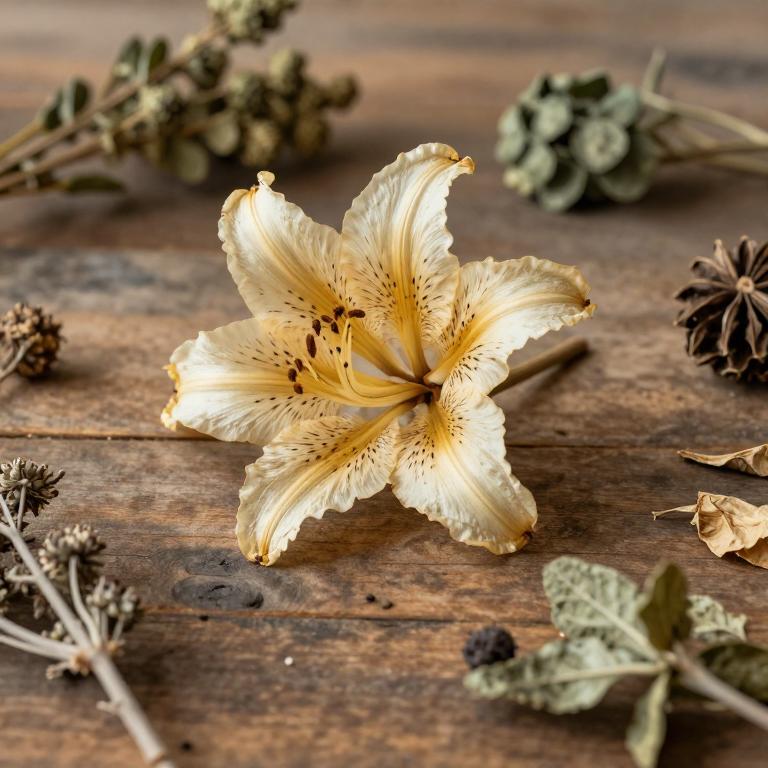
The lily genus, scientifically known as Lilium, is a diverse group of flowering plants celebrated for their striking beauty. Beyond their ornamental appeal, various species hold significant roles in traditional medicine, often utilized for their soothing properties and bioactive compounds to support overall wellness and various therapeutic healing processes.
- Family
- Liliaceae
- Native range
- Europe
- Parts used
- Not available
- Common names
- Lily · True Lilies · 1 more
- Scientific synonyms
- Nomocharis · Martagon
Names and Synonyms
Common Names
- lily
- true lilies
- Lilies
Scientific Names
Accepted name
LiliumSynonyms
- Nomocharis
- Martagon
Regional and Traditional Names
Spanish:
- azucenas
- liliáceas
- lirios
- Azucenas
- lirios verdaderos
German:
- Lilien
- Lilie
- Lilien
French:
- lys
- Lys
Sources: Wikidata, Catalogue of Life
Taxonomical Classification
This plant belongs to the kingdom Plantae and the phylum Streptophyta, falling under the class Equisetopsida and subclass Magnoliidae. Within the order Liliales, it is classified under the family Liliaceae and the genus Lilium.
| Rank | Classification |
|---|---|
| Kingdom | Plantae |
| Phylum | Streptophyta |
| Class | Equisetopsida |
| Subclass | Magnoliidae |
| Order | Liliales |
| Family | Liliaceae |
| Genus | Lilium |
Sources: The World Checklist of Vascular Plants (WCVP)
Distribution
This plant exhibits a specific geographical presence across several regions within Northern Europe. Its distribution is notable in Denmark, where it can be found in local habitats. Moving further north, the species is also documented throughout the landscapes of Finland. The plant extends its reach to the islands of Great Britain and Ireland as well. Finally, its range reaches the rugged terrains of Norway, completing its northern European footprint.
| Region | Area |
|---|---|
| Northern Europe | Denmark |
| Northern Europe | Finland |
| Northern Europe | Great Britain |
| Northern Europe | Ireland |
| Northern Europe | Norway |
| Northern Europe | Sweden |
| Middle Europe | Austria |
| Middle Europe | Belgium |
| Middle Europe | Czechia-Slovakia |
| Middle Europe | Germany |
Sources: The World Checklist of Vascular Plants (WCVP)
Chemicals
Lilium has 1 reported phytochemicals identified across 0 scientific publications and several other databases. The most consistently reported chemicals include Trypsin inhibitor.
| Chemical | Supporting sources | Consensus |
|---|---|---|
| Trypsin inhibitor | 1 supporting sources | ★☆☆☆☆ |
Trypsin inhibitor
- Planta medica
Activities
Lilium has 9 reported activities identified across 0 scientific publications and several other databases. The most consistently reported activities include Antibacterial, Antidepressant, Antioxidant, Antipyretic, Aphrodisiac.
| Activity | Supporting sources | Consensus |
|---|---|---|
| Antibacterial | 1 supporting sources | ★☆☆☆☆ |
| Antidepressant | 1 supporting sources | ★☆☆☆☆ |
| Antioxidant | 1 supporting sources | ★☆☆☆☆ |
| Antipyretic | 1 supporting sources | ★☆☆☆☆ |
| Aphrodisiac | 1 supporting sources | ★☆☆☆☆ |
| Diuretic | 1 supporting sources | ★☆☆☆☆ |
| Expectorant | 1 supporting sources | ★☆☆☆☆ |
| Galactagogue | 1 supporting sources | ★☆☆☆☆ |
| Hepatoprotective | 1 supporting sources | ★☆☆☆☆ |
Antibacterial
- Journal of ethnopharmacology
Antidepressant
- Journal of ethnopharmacology
Antioxidant
- Journal of ethnopharmacology
Antipyretic
- Journal of ethnopharmacology
Aphrodisiac
- Journal of ethnopharmacology
Diuretic
- Journal of ethnopharmacology
Expectorant
- Journal of ethnopharmacology
Galactagogue
- Journal of ethnopharmacology
Hepatoprotective
- Journal of ethnopharmacology
Conditions
Lilium has 9 reported investigations on conditions identified across 0 scientific publications and several other databases. The most consistently reported conditions include anti-oxidant, antioxidant, anxiety, asthma, burns.
| Condition | Supporting sources | Consensus |
|---|---|---|
| Anti-oxidant | 1 supporting sources | ★☆☆☆☆ |
| Antioxidant | 1 supporting sources | ★☆☆☆☆ |
| Anxiety | 1 supporting sources | ★☆☆☆☆ |
| Asthma | 1 supporting sources | ★☆☆☆☆ |
| Burns | 1 supporting sources | ★☆☆☆☆ |
| Coughs | 1 supporting sources | ★☆☆☆☆ |
| Hemostasis | 1 supporting sources | ★☆☆☆☆ |
| Lung diseases | 1 supporting sources | ★☆☆☆☆ |
| Vomiting | 1 supporting sources | ★☆☆☆☆ |
Anti-oxidant
- International journal of biological macromolecules
Antioxidant
- Journal of functional biomaterials
Anxiety
- Journal of ethnopharmacology
Asthma
- Journal of ethnopharmacology
Burns
- Journal of ethnopharmacology
Coughs
- Journal of ethnopharmacology
Hemostasis
- Journal of ethnopharmacology
Lung diseases
- Journal of ethnopharmacology
Vomiting
- Journal of ethnopharmacology
Preparations
Lilium has 1 reported preparations identified across 0 scientific publications and several other databases. The most consistently reported preparations include bulbs.
| Preparation | Supporting sources | Consensus |
|---|---|---|
| Bulbs | 1 supporting sources | ★☆☆☆☆ |
Bulbs
- Journal of ethnopharmacology