Lilium martagon
Lilium martagon · Accepted scientific name
Scientific literature: Very Sparse (0 studies) · ★☆☆☆☆
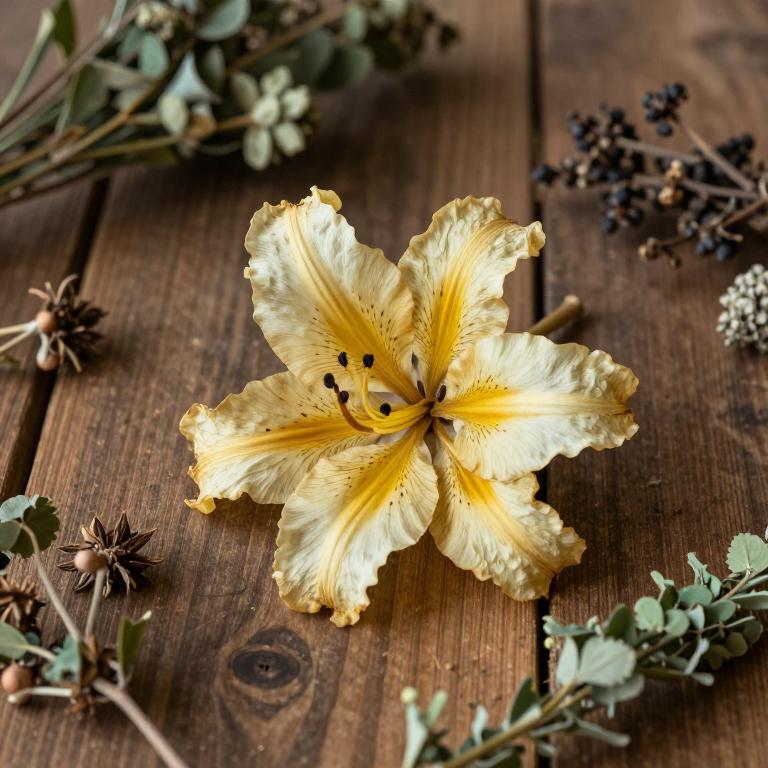
Lilium martagon, commonly known as the Martagon lily, is a striking perennial flower recognized by its elegant, recurved petals. In traditional herbal practices, specific parts of this plant are utilized for their purported therapeutic properties. Specifically, the prepared bulbs are often employed in various medicinal applications. This plant is noted for its historical use in addressing conditions related to liver diseases. Understanding its proper preparation is essential for exploring its traditional role in botanical medicine.
- Synonyms
- Not available
- Common names
- Not available
- Family
- Liliaceae
- Distribution
- Not available
- Plant Parts
- Not available
Classification
Common Names
Lilium martagon is a remarkable species known by a wide variety of regional names across different languages. In certain areas, it is affectionately referred to as Brun krollilja or Cap y Twrc. Those familiar with Slavic traditions might recognize it as Cаранка, while Italian speakers call it Giglio martagone. In the Netherlands, the plant is frequently identified as the Krans-lilje. These diverse common names reflect the widespread beauty and cultural significance of this unique lily.
Sources: Catalogue of Life (COL)
Taxonomy
Lilium martagon is a distinctive botanical specimen belonging to the kingdom Plantae. Within this vast kingdom, it is classified under the class Equisetopsida. This species is further organized into the order Liliales, showcasing its evolutionary connections. It falls under the specific genus Lilium, which defines its morphological characteristics. Finally, it is a proud member of the Liliaceae family, completing its biological hierarchy.
| Rank | Classification |
|---|---|
| Kingdom | Plantae |
| Phylum | Streptophyta |
| Class | Equisetopsida |
| Subclass | Magnoliidae |
| Order | Liliales |
| Family | Liliaceae |
| Genus | Lilium |
Sources: The World Checklist of Vascular Plants (WCVP)
Distribution
Geographic Regions
Lilium martagon exhibits a broad distribution across the Asia-Temperate region, spanning diverse and rugged landscapes. Its presence is notably established within the Caucasus and Transcaucasus, where it thrives in specific mountain ecosystems. The species also extends its reach into Central Asia, finding suitable habitats throughout Kazakhstan. In the eastern reaches of its range, the plant can be found in the Xinjiang province of China. Finally, its migratory footprint continues through the vast territories of Mongolia, marking it as a resilient inhabitant of the continent.
Sources: The World Checklist of Vascular Plants (WCVP)
Identification
Morphology
Lilium martagon is a graceful herb that thrives as a self-supporting plant in its natural habitat. This species exhibits a versatile range of sizes, with individuals typically reaching a minimum height of 0.3 meters. As the plant matures, it often establishes a more substantial presence, with many specimens measuring at least 0.471 meters tall. Under optimal growing conditions, these elegant stems can extend to a maximum height of 1.2 meters. Such structural diversity allows this species to adapt effectively to its surrounding environment.
Sources: Global Inventory of Floras and Traits (GIFT)
Biological Activities
Compounds
Conditions
Lilium martagon bulbs have a long-standing historical reputation for their medicinal efficacy. According to traditional European practices, these bulbs were specifically utilized to treat every liver disease. This therapeutic application is documented in various ethnobotanical records regarding the use of the genus. Both historical reviews and ethnopharmacognostic surveys confirm that the plant is used to address liver diseases. Consequently, the relationship between Lilium martagon and the treatment of liver ailments remains a consistent finding in the literature.
Preparations
Lilium martagon is prepared as bulbs for use in traditional Albanian phytotherapy. These specific bulb preparations are utilized within the medicinal practices of the Lepushe village in the Northern Albanian Alps. According to the ethnobotanical survey, this plant part is specifically employed to treat liver diseases. The use of these bulbs represents a documented ethnomedical practice that is being recorded for the first time in Europe. This relationship highlights how the bulbs of the species serve a functional role in local traditional medicine.