Wild Privet
Ligustrum vulgare · Accepted scientific name
Scientific literature: Sparse (94 studies) · ★★☆☆☆
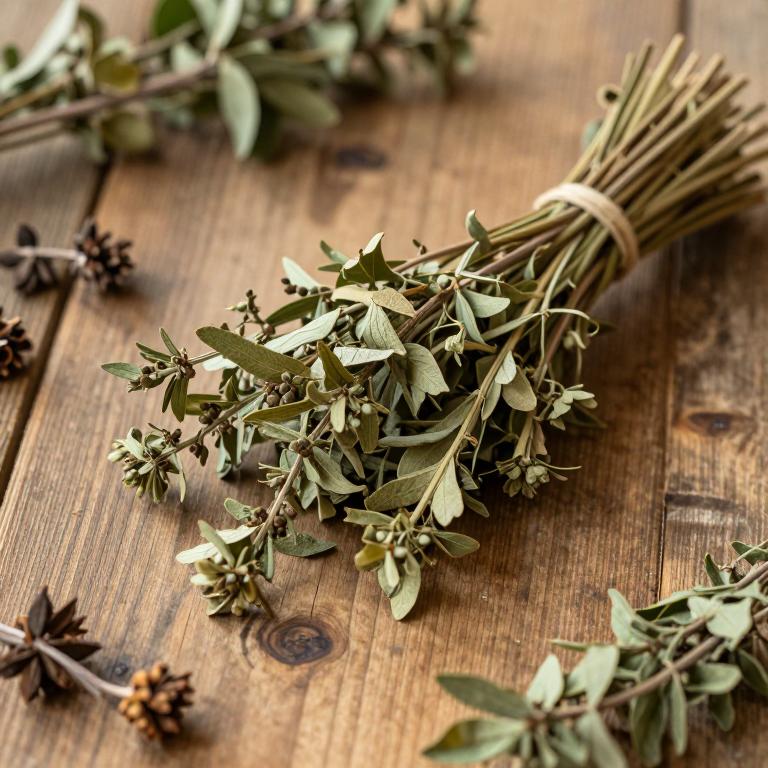
Wild Privet, scientifically known as Ligustrum vulgare, is a versatile shrub valued in traditional herbalism. Renowned for its aromatic white flowers and dark berries, it has historically been utilized for its antimicrobial and anti-inflammatory properties. This resilient plant offers significant botanical interest for its medicinal potential and ecological importance.
Names and Synonyms
Common Names
- European privet
- wild privet
- common privet
- privet
- privet-hedge
Scientific Names
Accepted name
Ligustrum vulgareSynonyms
- Ligustrum vulgare subsp. italicum
- Ligustrum vulgare var. italicum
- Ligustrum vulgare f. pendulum
- Ligustrum sempervirens
- Ligustrum vulgare f. buxifolium
- Ligustrum vulgare f. aureum
- Ligustrum vulgare f. aureovariegatum
- Ligustrum vulgare f. xanthocarpum
- Ligustrum vulgare f. chlorocarpum
- Ligustrum vulgare f. glaucum
- Ligustrum vulgare var. sempervirens
- Ligustrum vulgare var. coombei
- Ligustrum vulgare pendulum
- Ligustrum vulgare var. chlorocarpum
- Ligustrum vulgare var. insulense
- Ligustrum vulgare var. aureovariegatum
- Ligustrum vulgare var. argenteovariegatum
- Ligustrum vulgare var. leucocarpum
- Ligustrum vulgare var. buxifolium
- Ligustrum insulare
- Ligustrum vulgare var. xanthocarpum
- Ligustrum vicinum
- Ligustrum vulgare var. variegatum
- Ligustrum decipiens
- Ligustrum vulgare var. glaucum
- Ligustrum album
- Ligustrum vulgare var. auriflorum
- Ligustrum oviforme
- Ligustrum vulgare var. pendulum
- Ligustrum insulense
- Ligustrum vulgare var. pyramidale
- Ligustrum italicum
- Ligustrum vulgare var. laurifolium
- Ligustrum lodense
- Ligustrum vulgare var. atrovirens
- Ligustrum vulgare var. aureum
- Ligustrum vulgare f. nanum
- Ligustrum vulgare var. macrophyllum
- Ligustrum vulgare f. lodense
- Ligustrum vulgare var. rupicola
- Ligustrum vulgare f. rupicola
- Ligustrum vulgare f. argenteovariegatum
- Ligustrum vulgare f. leucocarpum
- Ligustrum vulgare var. densiflorum
- Ligustrum vulgare f. densiflorum
- Ligustrum vulgare f. auriflorum
- Ligustrum vulgare f. flaviflorum
- Ligustrum vulgare f. triphyllum
- Ligustrum vulgare f. microphyllum
- Ligustrum vulgare var. lactiflorum
- Ligustrum vulgare f. pyramidale
Regional and Traditional Names
Spanish:
- alheña
- Trueno euroasiático
- aligustre
German:
- Gewöhnlicher Liguster
- Liguster
- Gewöhnlicher Liguster
- Gemeiner Liguster
- Rainweide
French:
- Troène commun
- troène commun
- troène
- troène commun
- raisin de chien
- troène vulgaire
- Troene vulgaire
Sources: Wikidata, Catalogue of Life
Taxonomical Classification
This plant belongs to the kingdom Plantae within the phylum Streptophyta and the class Equisetopsida. It is further classified under the subclass Magnoliidae and the order Lamiales. Finally, it resides in the family Oleaceae and is identified by the genus Ligustrum.
| Rank | Classification |
|---|---|
| Kingdom | Plantae |
| Phylum | Streptophyta |
| Class | Equisetopsida |
| Subclass | Magnoliidae |
| Order | Lamiales |
| Family | Oleaceae |
| Genus | Ligustrum |
Sources: The World Checklist of Vascular Plants (WCVP)
Distribution
This plant exhibits a specific distribution pattern across several regions in Northern Europe. It can be found growing naturally within the borders of Denmark. Additionally, its presence extends to the islands of Great Britain and Ireland. Moving further north, the species is also established in Norway. Finally, the geographical range of this medicinal plant includes Sweden.
| Region | Area |
|---|---|
| Northern Europe | Denmark |
| Northern Europe | Great Britain |
| Northern Europe | Ireland |
| Northern Europe | Norway |
| Northern Europe | Sweden |
| Middle Europe | Austria |
| Middle Europe | Belgium |
| Middle Europe | Czechia-Slovakia |
| Middle Europe | Germany |
| Middle Europe | Hungary |
Sources: The World Checklist of Vascular Plants (WCVP)
Botanical Identification
Ecology
The ecology of Ligustrum vulgare is characterized by its ability to thrive in anthropogenic areas (Área Antrópica), where it often adapts to human-disturbed landscapes. Its distribution across varying altitudes is notable, spanning an elevational range that begins at a minimum of 400 m AMSL and reaches a maximum of 1400 m AMSL, although data regarding its mean elevation suggests a broader ecological presence reaching up to 2100 m AMSL.
- Elevational range max:
- 1400 m AMSL
- Elevational range mean:
- 2100 m AMSL
- Elevational range min:
- 400 m AMSL
- Habitat :
- Área Antrópica
Life history
The life history of Ligustrum vulgare is characterized by its status as a perennial plant, allowing it to persist through multiple growing seasons. As a phanerophyte, its regenerative buds are elevated above the ground level on woody stems, a structural trait that supports its robust growth habit. Furthermore, it exhibits a deciduous nature, shedding its foliage annually in response to seasonal changes. While it primarily functions as a phanerophyte, its growth architecture can also be classified under the nanophanerophyte category depending on the specific development of its woody structures.
- Deciduousness :
- deciduous
- Life form :
- nanophanerophyte
- Life form :
- phanerophyte
- Lifecycle :
- perennial
Morphology
The morphology of Ligustrum vulgare is characterized by a woody growth form, primarily manifesting as a self-supporting shrub. It is a terrestrial plant that functions independently, showing no parasitic or epiphytic tendencies. In terms of stature, the plant exhibits significant height variability, with individual specimens typically ranging from a minimum of 1 m to a maximum of 5 m, resulting in an average plant height of approximately 3.73 m. As a self-supporting woody species, it does not exhibit climbing behaviors such as lianas or vines, maintaining a stable, upright structure within its terrestrial habitat.
- Aquatic :
- terrestrial
- Climber :
- self-supporting
- Epiphyte :
- terrestrial
- Growth form :
- shrub
- Parasite :
- independent
- Plant height max:
- 5 m
- Plant height mean:
- 3.73333333333333 m
- Plant height min:
- 1 m
- Woodiness :
- woody
Physiology
The physiology of Ligustrum vulgare is characterized by a C3 photosynthetic pathway, indicating a standard carbon fixation process typical of many temperate woody shrubs. The plant is non-carnivorous and does not function as a nitrogen fixer, relying instead on soil nutrients for its metabolic requirements. Its foliar morphology is defined by an opposite leaf arrangement, with leaf forms described as elliptic. The leaves exhibit significant dimensional variability, with lengths ranging from a minimum of 2.5 cm to a maximum of 6 cm, while the width varies from a minimum of 0.7 cm to a maximum of 2.5 cm, resulting in a mean leaf width of 1.6 cm. The average leaf size is approximately 6.269 cm², and the plant maintains a mean Specific Leaf Area (SLA) of 111.5 cm²/g, reflecting its structural leaf mass density and resource allocation strategies.
- Carnivory :
- non-carnivorous
- Leaf arrangement :
- opposite
- Leaf form :
- elliptic
- Leaf length max:
- 6 cm
- Leaf length min:
- 2.5 cm
- Leaf size mean:
- 6.269 cm²
- Leaf width max:
- 2.5 cm
- Leaf width mean:
- 1.6 cm
- Leaf width min:
- 0.7 cm
- Nitrogen fixer :
- no
- Photosynthetic pathway :
- C3
- Specific Leaf Area (SLA) mean:
- 111.5 cm²/g
Reproduction
The reproduction of Ligustrum vulgare is driven by a biotic pollination syndrome, primarily involving insects, which facilitates the fertilization process as self-fertilization is noted to be absent. The flowering period typically occurs between June and July, featuring white flowers that range in width from 0.4 cm to 0.6 cm. These flowers are arranged in paniculate inflorescences, with lengths varying between 0.06 m and 0.08 m. Following successful pollination, the plant produces fleshy, indehiscent black berries. These fruits vary in size, with a mean length of 0.755 cm and a mean width of 0.705 cm (ranging from 0.5 cm to 0.85 cm). The seeds contained within the fruit have a mean length of 5 mm, a mean mass of approximately 0.0259 g (ranging from 0.01137 g to 0.042 g), and a consistent volume of 24 mm³. Dispersal is achieved through a zoochorous mechanism, specifically endozoochory, where animals consume the fruit to spread the seeds. Asexual reproduction is absent in this species, making sexual reproduction via these insect-pollinated flowers and animal-dispersed fruits the primary method of propagation.
- Dehiscence :
- indehiscent
- Dispersal syndrome :
- zoochorous
- Dispersal syndrome :
- endozoochorous
- Flower colour :
- white
- Flower width max:
- 0.6 cm
- Flower width min:
- 0.4 cm
- Flowering time :
- Jun
- Flowering time :
- Jul
- Fruit colour :
- black
- Fruit dryness :
- fleshy
- Fruit length mean:
- 0.755 cm
- Fruit type :
- berry
- Fruit width max:
- 0.85 cm
- Fruit width mean:
- 0.705 cm
- Fruit width min:
- 0.5 cm
- Inflorescence :
- panicle
- Inflorescence length max:
- 0.08 m
- Inflorescence length min:
- 0.06 m
- Pollination syndrome :
- insect
- Pollination syndrome :
- biotic
- Reproduction asexual :
- absent
- Seed length mean:
- 5 mm
- Seed mass max:
- 0.042 g
- Seed mass mean:
- 0.025908389 g
- Seed mass min:
- 0.01137 g
- Seed volume max:
- 24 mm³
- Self fertilization :
- absent
Sources: Global Inventory of Floras and Traits (GIFT)
Plant Parts
Ligustrum vulgare has 3 reported plant parts identified across 6 scientific publications and several other databases that are studied for medicinal purposes. The most consistently reported plant part include leaf, fruit, flower.
| Plant part | Supporting sources | Consensus |
|---|---|---|
| Leaf | 3 supporting sources | ★★☆☆☆ |
| Fruit | 2 supporting sources | ★☆☆☆☆ |
| Flower | 1 supporting sources | ★☆☆☆☆ |
Leaf
- Planta medica
- Molecules (Basel, Switzerland)
- Journal of ethnopharmacology
Fruit
- Molecules (Basel, Switzerland)
- Scientific reports
Flower
- Molecules (Basel, Switzerland)
Chemicals
Ligustrum vulgare has 18 reported phytochemicals identified across 6 scientific publications and several other databases. The most consistently reported chemicals include Flavonoids, Oleuropein, Apigenin 7-O-glucoside, Apigenin 7-O-rutinoside, Behenic acid.
| Chemical | Supporting sources | Consensus |
|---|---|---|
| Flavonoids | 2 supporting sources | ★☆☆☆☆ |
| Oleuropein | 2 supporting sources | ★☆☆☆☆ |
| Apigenin 7-O-glucoside | 1 supporting sources | ★☆☆☆☆ |
| Apigenin 7-O-rutinoside | 1 supporting sources | ★☆☆☆☆ |
| Behenic acid | 1 supporting sources | ★☆☆☆☆ |
| Echinacoside | 1 supporting sources | ★☆☆☆☆ |
| Iridoids | 1 supporting sources | ★☆☆☆☆ |
| Ligustroflavone | 1 supporting sources | ★☆☆☆☆ |
| Luteolin 7-O-glucoside | 1 supporting sources | ★☆☆☆☆ |
| Malvidin-3-glucoside | 1 supporting sources | ★☆☆☆☆ |
Flavonoids
- Planta medica
- Molecules (Basel, Switzerland)
Oleuropein
- Molecules (Basel, Switzerland)
- Phytochemical analysis : PCA
Apigenin 7-O-glucoside
- Journal of ethnopharmacology
Apigenin 7-O-rutinoside
- Journal of ethnopharmacology
Behenic acid
- Dr. Duke
Echinacoside
- Phytochemical analysis : PCA
Iridoids
- Molecules (Basel, Switzerland)
Ligustroflavone
- Journal of ethnopharmacology
Luteolin 7-O-glucoside
- Journal of ethnopharmacology
Malvidin-3-glucoside
- Dr. Duke
Activities
Ligustrum vulgare has 60 reported activities identified across 6 scientific publications and several other databases. The most consistently reported activities include Diuretic, ACE-Inhibitor, Adaptogenic, Allelopathic, Allergenic.
| Activity | Supporting sources | Consensus |
|---|---|---|
| Diuretic | 2 supporting sources | ★☆☆☆☆ |
| ACE-Inhibitor | 1 supporting sources | ★☆☆☆☆ |
| Adaptogenic | 1 supporting sources | ★☆☆☆☆ |
| Allelopathic | 1 supporting sources | ★☆☆☆☆ |
| Allergenic | 1 supporting sources | ★☆☆☆☆ |
| Analgesic | 1 supporting sources | ★☆☆☆☆ |
| Anthelmintic | 1 supporting sources | ★☆☆☆☆ |
| AntiHIV | 1 supporting sources | ★☆☆☆☆ |
| AntiReye's | 1 supporting sources | ★☆☆☆☆ |
| Antibacterial | 1 supporting sources | ★☆☆☆☆ |
Diuretic
- Dr. Duke
- Planta medica
ACE-Inhibitor
- Dr. Duke
Adaptogenic
- Dr. Duke
Allelopathic
- Dr. Duke
Allergenic
- Dr. Duke
Analgesic
- Dr. Duke
Anthelmintic
- Dr. Duke
AntiHIV
- Dr. Duke
AntiReye's
- Dr. Duke
Antibacterial
- Dr. Duke
Conditions
Ligustrum vulgare has 5 reported investigations on conditions identified across 6 scientific publications and several other databases. The most consistently reported conditions include Helicobacter pylori, diuretic, hypertension, inflammation, sore throats.
| Condition | Supporting sources | Consensus |
|---|---|---|
| Helicobacter pylori | 1 supporting sources | ★☆☆☆☆ |
| Diuretic | 1 supporting sources | ★☆☆☆☆ |
| Hypertension | 1 supporting sources | ★☆☆☆☆ |
| Inflammation | 1 supporting sources | ★☆☆☆☆ |
| Sore throats | 1 supporting sources | ★☆☆☆☆ |
Helicobacter pylori
- Helicobacter
Diuretic
- Planta medica
Hypertension
- Phytochemical analysis : PCA
Inflammation
- Phytochemical analysis : PCA
Sore throats
- Phytochemical analysis : PCA
Preparations
Ligustrum vulgare has 4 reported preparations identified across 6 scientific publications and several other databases. The most consistently reported preparations include aqueous extract, extracts, methanolic extracts of the leaves, plant extracts.
| Preparation | Supporting sources | Consensus |
|---|---|---|
| Aqueous extract | 1 supporting sources | ★☆☆☆☆ |
| Extracts | 1 supporting sources | ★☆☆☆☆ |
| Methanolic extracts of the leaves | 1 supporting sources | ★☆☆☆☆ |
| Plant extracts | 1 supporting sources | ★☆☆☆☆ |
Aqueous extract
- Planta medica
Extracts
- Phytotherapy research : PTR
Methanolic extracts of the leaves
- Journal of ethnopharmacology
Plant extracts
- Helicobacter