Ligusticopsis wallichiana
Ligusticopsis wallichiana · Accepted scientific name
Scientific literature: Very Sparse (17 studies) · ★☆☆☆☆
, scientifically known as Ligusticopsis wallichiana, is a significant medicinal shrub native to the Himalayan regions. Renowned in traditional Ayurvedic medicine, this plant possesses diverse therapeutic properties. Its various parts are frequently utilized to treat ailments ranging from digestive issues to inflammatory conditions, showcasing its profound botanical and healing importance.
- Family
- Apiaceae
- Native range
- Asia-Temperate
- Parts used
- Flower · Leaf
- Common names
- Not available
- Scientific synonyms
- Selinum Elatum · Selinum Wallichianum · 12 more
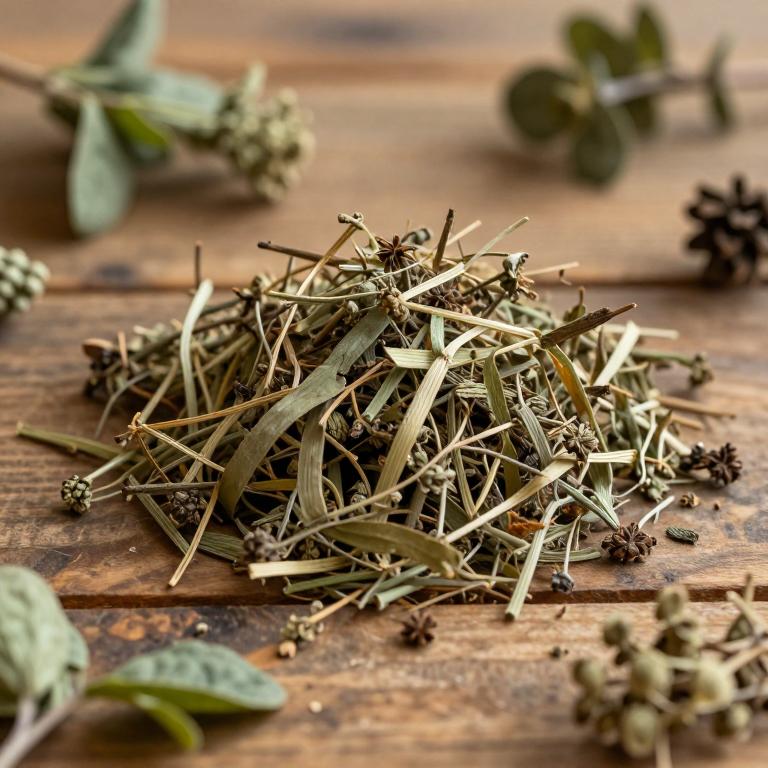
Names and Synonyms
Scientific Names
Accepted name
Ligusticopsis wallichianaSynonyms
- Selinum elatum
- Selinum wallichianum
- Cortia wallichiana
- Peucedanum wallichianum
- Selinum tenuifolium var. elatum
- Ligusticopsis coniifolia
- Ligusticum coniifolium
- Selinum coniifolium var. filicifolia
- Oreocome filicifolia
- Oreocome elata
- Laserpitium coniifolium
- Selinum wallichianum var. elatum
- Selinum filicifolium
- Selinum tenuifolium var. filicifolium
Sources: Wikidata, Catalogue of Life
Taxonomical Classification
This plant, Ligusticopsis wallichiaana, belongs to the kingdom Plantae and the phylum Streptophyta. Within the class Equisetopsida and subclass Magnoliidae, it is classified under the order Apiales. Finally, it is a member of the family Apiaceae and is situated within the genus Ligusticopsis.
| Rank | Classification |
|---|---|
| Kingdom | Plantae |
| Phylum | Streptophyta |
| Class | Equisetopsida |
| Subclass | Magnoliidae |
| Order | Apiales |
| Family | Apiaceae |
| Genus | Ligusticopsis |
Sources: The World Checklist of Vascular Plants (WCVP)
Distribution
This plant exhibits a wide geographical distribution across several key regions in Asia. Within China, it can be found specifically in the South-Central areas and the high-altitude terrain of Tibet. Its presence extends into the Indian Subcontinent, where it is documented in the state of Assam. Additionally, the species thrives in the rugged landscapes of the East Himalaya. Finally, its range encompasses the mountainous regions of Nepal, highlighting its preference for diverse Asian habitats.
| Region | Area |
|---|---|
| China | China South-Central |
| China | Tibet |
| Indian Subcontinent | Assam |
| Indian Subcontinent | East Himalaya |
| Indian Subcontinent | Nepal |
| Indian Subcontinent | Pakistan |
| Indian Subcontinent | West Himalaya |
| Indo-China | Myanmar |
Sources: The World Checklist of Vascular Plants (WCVP)
Botanical Identification
Ecology
The ecology of Ligusticopsis wallichiaana is characterized by its specialized adaptation to high-altitude montane environments, occupying a distinct niche within alpine and sub-alpine ecosystems. This species is specifically distributed across a significant vertical gradient, thriving at elevations ranging from a minimum of 2300 m AMSL to a maximum of 4800 m AMSL. Such a wide elevational range suggests a high degree of physiological plasticity, allowing the plant to endure the varying climatic stressors associated with different altitudinal belts, including fluctuations in temperature, UV exposure, and atmospheric pressure. Within this ecological zone, the plant is typically integrated into complex mountain habitats where it must contend with the unique soil compositions and moisture regimes characteristic of high-elevation terrains.
- Elevational range max:
- 4800 m AMSL
- Elevational range min:
- 2300 m AMSL
Morphology
The morphology of Ligusticopsis wallichiaana is characterized by its growth form as a non-woody herb. It functions as an independent organism, meaning it is not a parasite, and it maintains a terrestrial habit rather than being aquatic, semiaquatic, or epiphytic. Despite its herbaceous nature, its structural development follows a self-supporting pattern, categorized as both a self-supporting climber and a non-obligatory, self-supporting vine, which allows it to maintain its position without the need for external hosts or specialized climbing mechanisms.
- Aquatic :
- terrestrial
- Climber :
- self-supporting
- Epiphyte :
- terrestrial
- Growth form :
- herb
- Parasite :
- independent
- Woodiness :
- non-woody
Reproduction
The reproduction of Ligusticopsis wallichiaana is characterized by the production of small seeds that exhibit high consistency in their physical dimensions. Based on botanical data, the seed mass is highly uniform, with a measured mean value of 0.00618 g. This uniformity is absolute across the observed sample, as both the maximum and minimum recorded seed masses are identical at 0.00618 g. Such precision in seed mass suggests a highly standardized reproductive output, which is a critical factor in the plant's dispersal and establishment processes within its natural habitat.
- Seed mass mean:
- 0.00618 g
Sources: Global Inventory of Floras and Traits (GIFT)
Plant Parts
Ligusticopsis wallichiana has 4 reported plant parts identified across 4 scientific publications and several other databases that are studied for medicinal purposes. The most consistently reported plant part include flower, leaf, root, stem.
| Plant part | Supporting sources | Consensus |
|---|---|---|
| Flower | 1 supporting sources | ★☆☆☆☆ |
| Leaf | 1 supporting sources | ★☆☆☆☆ |
| Root | 1 supporting sources | ★☆☆☆☆ |
| Stem | 1 supporting sources | ★☆☆☆☆ |
Flower
- Natural product communications
Leaf
- Natural product communications
Root
- Natural product communications
Stem
- Natural product communications
Chemicals
Ligusticopsis wallichiana has 5 reported phytochemicals identified across 4 scientific publications and several other databases. The most consistently reported chemicals include 3,5-Nonadiyne, BETA-SELINENE, Germacrene D, LIMONENE, alpha-Funebrene.
| Chemical | Supporting sources | Consensus |
|---|---|---|
| 3,5-Nonadiyne | 1 supporting sources | ★☆☆☆☆ |
| BETA-SELINENE | 1 supporting sources | ★☆☆☆☆ |
| Germacrene D | 1 supporting sources | ★☆☆☆☆ |
| LIMONENE | 1 supporting sources | ★☆☆☆☆ |
| alpha-Funebrene | 1 supporting sources | ★☆☆☆☆ |
3,5-Nonadiyne
- Natural product communications
BETA-SELINENE
- Natural product communications
Germacrene D
- Natural product communications
LIMONENE
- Natural product communications
alpha-Funebrene
- Natural product communications
Conditions
Ligusticopsis wallichiana has 4 reported investigations on conditions identified across 4 scientific publications and several other databases. The most consistently reported conditions include asthma, cardiovascular diseases, mental disorders, toothache.
| Condition | Supporting sources | Consensus |
|---|---|---|
| Asthma | 1 supporting sources | ★☆☆☆☆ |
| Cardiovascular diseases | 1 supporting sources | ★☆☆☆☆ |
| Mental disorders | 1 supporting sources | ★☆☆☆☆ |
| Toothache | 1 supporting sources | ★☆☆☆☆ |
Asthma
- Drug metabolism and personalized therapy
Cardiovascular diseases
- Drug metabolism and personalized therapy
Mental disorders
- Drug metabolism and personalized therapy
Toothache
- Drug metabolism and personalized therapy