Ligularia pleurocaulis
Ligularia pleurocaulis · Accepted scientific name
Scientific literature: Very Sparse (19 studies) · ★☆☆☆☆
scientifically known as Ligularia pleurocaulis, is a versatile medicinal herb native to various regions of Asia. Renowned in traditional medicine for its anti-inflammatory and antioxidant properties, this plant is frequently utilized to treat skin ailments, digestive issues, and fever, offering a natural approach to promoting holistic wellness and healing.
- Family
- Asteraceae
- Native range
- Asia-Temperate
- Parts used
- Not available
- Common names
- Not available
- Scientific synonyms
- Senecio Pleurocaulis · Cremanthodium Pleurocaule
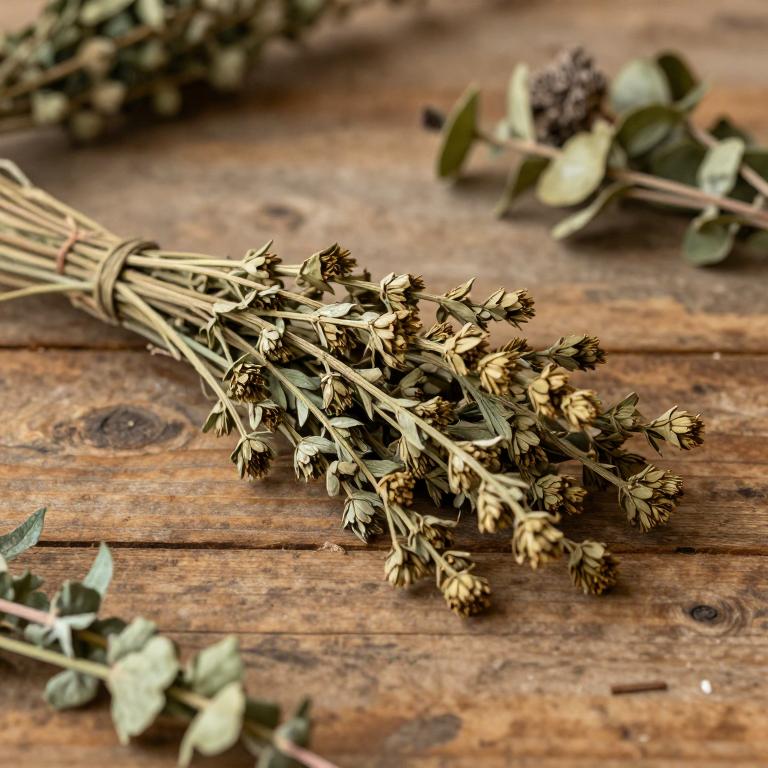
Names and Synonyms
Scientific Names
Accepted name
Ligularia pleurocaulisSynonyms
- Senecio pleurocaulis
- Cremanthodium pleurocaule
Sources: Wikidata, Catalogue of Life
Taxonomical Classification
This plant belongs to the kingdom Plantae and is classified under the phylum Streptophyta and the class Equisetopsida. Within the subclass Magnoliidae and the order Asterales, it is a member of the family Asteraceae. Specifically, it is identified by the genus Ligularia.
| Rank | Classification |
|---|---|
| Kingdom | Plantae |
| Phylum | Streptophyta |
| Class | Equisetopsida |
| Subclass | Magnoliidae |
| Order | Asterales |
| Family | Asteraceae |
| Genus | Ligularia |
Sources: The World Checklist of Vascular Plants (WCVP)
Distribution
This plant exhibits a specific geographical distribution concentrated within certain regions of East Asia. It can be found growing natively across the South-Central part of China. Additionally, the species is well-documented within the high-altitude terrains of Tibet. These two primary regions define its natural range and ecological presence. Therefore, its habitat is largely restricted to these specific Chinese territories.
| Region | Area |
|---|---|
| China | China South-Central |
| China | Tibet |
Sources: The World Checklist of Vascular Plants (WCVP)
Botanical Identification
Ecology
The ecology of Ligularia pleurocaulis is characterized by its specialization within high-altitude montane and alpine environments. This species thrives across a significant vertical gradient, occupying a broad elevational range that extends from a minimum of 3000 m AMSL to a maximum of 4700 m AMSL. Within these mountainous habitats, the plant maintains a mean elevation of approximately 3850 m AMSL, indicating its adaptation to the unique climatic pressures, such as lower temperatures and intense solar radiation, typical of these high-elevation ecosystems.
- Elevational range max:
- 4700 m AMSL
- Elevational range mean:
- 3850 m AMSL
- Elevational range min:
- 3000 m AMSL
Life history
The life history of Ligularia pleurocaulis is characterized by its status as a perennial plant, allowing it to persist through multiple growing seasons. As a long-lived herb, it typically establishes itself through seed dispersal or vegetative spread, developing a robust root system that supports its recurring growth cycles. Each year, the plant undergoes a predictable phenological progression, beginning with the emergence of large, basal leaves that facilitate photosynthesis and energy storage. This stored energy is crucial for its reproductive phase, during which it produces tall, erect flowering stalks topped with bright yellow composite flower heads. Following pollination, the plant produces numerous seeds that contribute to the next generation, while the parent plant enters a period of dormancy to survive unfavorable environmental conditions before re-emerging in the subsequent season.
- Lifecycle :
- perennial
Morphology
The morphology of Ligularia pleurocaulis is characterized by its growth form as a herb and a forb, typically presenting a non-woody structure. In terms of its physical habit, the plant is non-woody and does not exhibit climbing behavior, functioning instead as a self-supporting organism rather than an obligatory or facultative climber.
- Climber :
- self-supporting
- Growth form :
- herb
- Woodiness :
- non-woody
Physiology
The physiological development of the foliage in Ligularia pleurocaulis is characterized by significant morphological variability in leaf dimensions, reflecting its adaptive growth patterns. The leaves exhibit a broad range of longitudinal development, with minimum lengths recorded at 8 cm and mean lengths averaging approximately 19 cm, while highly vigorous specimens can reach a maximum leaf length of 30 cm. Complementing this longitudinal expansion is a corresponding lateral variation in width, where the foliage spans from a narrow minimum of 1 cm to a maximum width of 7 cm. This plasticity in leaf area, governed by the interplay between length and width, suggests a dynamic photosynthetic surface area that fluctuates according to environmental availability and developmental stages.
- Leaf length max:
- 30 cm
- Leaf length mean:
- 19 cm
- Leaf length min:
- 8 cm
- Leaf width max:
- 7 cm
- Leaf width min:
- 1 cm
Reproduction
The reproduction of Ligularia pleurocaulis is characterized by the development of specialized fruit structures that facilitate the dispersal of its progeny. The fruits produced by this species exhibit specific dimensional variations, with an average fruit length of 0.4 cm. Within a typical population, these fruits can range in size from a minimum of 0.3 cm to a maximum length of 0.5 cm. In addition to these morphological dimensions, the reproductive success of the plant is further defined by its seed characteristics, specifically maintaining a mean seed mass of 0.2052 g, which plays a crucial role in the establishment and survival of the next generation.
- Fruit length max:
- 0.5 cm
- Fruit length mean:
- 0.4 cm
- Fruit length min:
- 0.3 cm
- Seed mass mean:
- 0.2052 g
Sources: Global Inventory of Floras and Traits (GIFT)
Chemicals
Ligularia pleurocaulis has 9 reported phytochemicals identified across 0 scientific publications and several other databases. The most consistently reported chemicals include 7-methoxy-coumarin, BETA-SITOSTEROL, Daucosterol, Lupeol, OLEANOLIC ACID.
| Chemical | Supporting sources | Consensus |
|---|---|---|
| 7-methoxy-coumarin | 1 supporting sources | ★☆☆☆☆ |
| BETA-SITOSTEROL | 1 supporting sources | ★☆☆☆☆ |
| Daucosterol | 1 supporting sources | ★☆☆☆☆ |
| Lupeol | 1 supporting sources | ★☆☆☆☆ |
| OLEANOLIC ACID | 1 supporting sources | ★☆☆☆☆ |
| TIGLIC ACID | 1 supporting sources | ★☆☆☆☆ |
| caffeic acid | 1 supporting sources | ★☆☆☆☆ |
| emodin | 1 supporting sources | ★☆☆☆☆ |
| ferulic acid | 1 supporting sources | ★☆☆☆☆ |
7-methoxy-coumarin
- Yao xue xue bao = Acta pharmaceutica Sinica
BETA-SITOSTEROL
- Yao xue xue bao = Acta pharmaceutica Sinica
Daucosterol
- Yao xue xue bao = Acta pharmaceutica Sinica
Lupeol
- Yao xue xue bao = Acta pharmaceutica Sinica
OLEANOLIC ACID
- Yao xue xue bao = Acta pharmaceutica Sinica
TIGLIC ACID
- Yao xue xue bao = Acta pharmaceutica Sinica
caffeic acid
- Yao xue xue bao = Acta pharmaceutica Sinica
emodin
- Yao xue xue bao = Acta pharmaceutica Sinica
ferulic acid
- Yao xue xue bao = Acta pharmaceutica Sinica