Ligaria cuneifolia
Ligaria cuneifolia · Accepted scientific name
Scientific literature: Very Sparse (9 studies) · ★☆☆☆☆
Ligaria cuneifolia, scientifically known as Ligaria cuneifolia, is a versatile medicinal plant native to various tropical regions. Renowned for its diverse therapeutic properties, it is traditionally used to treat skin ailments, inflammation, and digestive issues. This potent botanical offers significant potential for modern pharmacological research and natural healing.
- Family
- Loranthaceae
- Native range
- Southern America
- Parts used
- Fruit · Stem
- Common names
- Not available
- Scientific synonyms
- Ligaria Viscoides · Psittacanthus Lanceolatus · 22 more
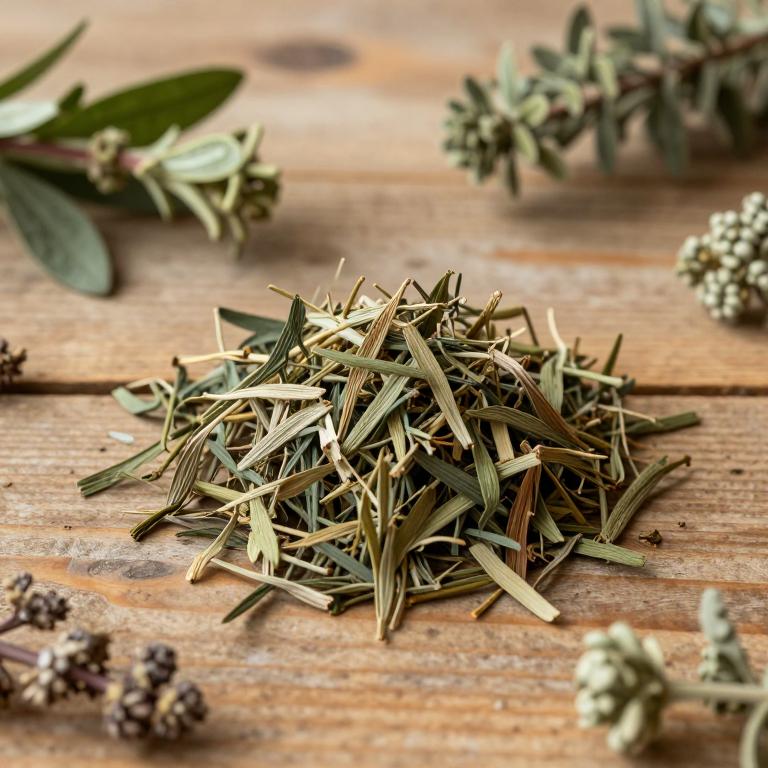
Names and Synonyms
Scientific Names
Accepted name
Ligaria cuneifoliaSynonyms
- Ligaria viscoides
- Psittacanthus lanceolatus
- Psittacanthus cuneifolius subsp. coronatus
- Psittacanthus coronatus
- Psittacanthus montevidensis
- Psittacanthus peruanus
- Ligaria emarginata
- Ligaria coronata
- Psittacanthus cuneifolius var. flavus
- Ligaria lanceolata
- Psittacanthus cuneifolius subsp. montevidensis
- Psittacanthus cuneifolius subsp. peruanus
- Ligaria orbignyana
- Psittacanthus cuneifolius subsp. viscoides
- Loranthus montevidensis
- Psittacanthus viscoides
- Loranthus obmunitus
- Psittacanthus hortonii
- Loranthus viscoides
- Psittacanthus cuneifolius
- Loranthus cuneifolius var. linearifolius
- Elytranthe obmunita
- Psittacanthus obmunitus
- Phrygilanthus cuneifolius
Regional and Traditional Names
Spanish:
- Liga
- Quintral del algarrobo
- Quintral del espino
- Quintral del guayacán
- Solda-solda
Sources: Wikidata, Catalogue of Life
Taxonomical Classification
This plant, Ligaria cuneliifolia, belongs to the kingdom Plantae and the phylum Streptophyta. It is classified under the class Equisetopsida and the subclass Magnoliidae within the order Santalales. Finally, it is a member of the family Loranthaceae and is categorized under the genus Ligaria.
| Rank | Classification |
|---|---|
| Kingdom | Plantae |
| Phylum | Streptophyta |
| Class | Equisetopsida |
| Subclass | Magnoliidae |
| Order | Santalales |
| Family | Loranthaceae |
| Genus | Ligaria |
Sources: The World Checklist of Vascular Plants (WCVP)
Distribution
This plant exhibits a wide geographical range across several regions of South America. In Western South America, it can be found growing in both Bolivia and Peru. Its distribution extends into Brazil, specifically within the southern part of the country. In the southern portion of the continent, the species is located in the northeast of Argentina. Additionally, it is documented to inhabit the northwest region of Argentina.
| Region | Area |
|---|---|
| Western South America | Bolivia |
| Western South America | Peru |
| Brazil | Brazil South |
| Southern South America | Argentina Northeast |
| Southern South America | Argentina Northwest |
| Southern South America | Chile Central |
| Southern South America | Uruguay |
Sources: The World Checklist of Vascular Plants (WCVP)
Botanical Identification
Ecology
The ecology of Ligaria cuneifolia is characterized by its ability to inhabit a broad altitudinal gradient, ranging from sea level (0 m AMSL) up to elevations of 3000 m AMSL. This significant vertical distribution allows the species to adapt to diverse climatic conditions across various mountain profiles. Within these landscapes, the plant is specifically found in the "Campo Limpo" habitat, an open grassland ecosystem where it thrives in sun-exposed environments.
- Elevational range max:
- 3000 m AMSL
- Elevational range min:
- 0 m AMSL
- Habitat :
- Campo Limpo
Life history
The life history of Ligaria cuneifolia is characterized by its status as a perennial plant, allowing it to persist in its environment through multiple growing seasons. This long-lived life cycle enables the species to establish robust root systems and maintain a steady presence within its ecological niche. As a perennial, the plant undergoes seasonal cycles of growth and dormancy, often developing woody structures that support its continued survival and reproductive efforts over several years. This enduring lifecycle provides a stable foundation for its population dynamics, ensuring that it can withstand varying environmental conditions across successive years.
- Lifecycle :
- perennial
Morphology
The morphology of Ligaria cuneifolia is characterized by a woody growth form, functioning primarily as a shrub. Regarding its habit and ecological positioning, it is a terrestrial species that does not exhibit epiphytic tendencies, such as being a holoepiphyte or hemiepiphyte, but rather remains grounded in soil environments. While it possesses a self-supporting structure, it is categorized as a self-supporting shrub rather than a climbing liana, vine, or obligatory climber. Furthermore, the plant maintains an independent lifestyle, lacking the characteristics of an obligatory parasite, and its physical constitution is defined by its woody nature.
- Aquatic :
- terrestrial
- Climber :
- self-supporting
- Epiphyte :
- terrestrial
- Growth form :
- shrub
- Parasite :
- obligatory
- Woodiness :
- woody
Sources: Global Inventory of Floras and Traits (GIFT)
Plant Parts
Ligaria cuneifolia has 2 reported plant parts identified across 2 scientific publications and several other databases that are studied for medicinal purposes. The most consistently reported plant part include fruit, stem.
| Plant part | Supporting sources | Consensus |
|---|---|---|
| Fruit | 1 supporting sources | ★☆☆☆☆ |
| Stem | 1 supporting sources | ★☆☆☆☆ |
Fruit
- Plants (Basel, Switzerland)
Stem
- Plants (Basel, Switzerland)
Chemicals
Ligaria cuneifolia has 2 reported phytochemicals identified across 2 scientific publications and several other databases. The most consistently reported chemicals include Proanthocyanidins, Proanthocyanidin.
| Chemical | Supporting sources | Consensus |
|---|---|---|
| Proanthocyanidins | 2 supporting sources | ★☆☆☆☆ |
| Proanthocyanidin | 1 supporting sources | ★☆☆☆☆ |
Proanthocyanidins
- Journal of ethnopharmacology
- Chemistry & biodiversity
Proanthocyanidin
- Recent patents on endocrine, metabolic & immune drug discovery
Activities
Ligaria cuneifolia has 1 reported activities identified across 2 scientific publications and several other databases. The most consistently reported activities include Antioxidant.
| Activity | Supporting sources | Consensus |
|---|---|---|
| Antioxidant | 1 supporting sources | ★☆☆☆☆ |
Antioxidant
- Chemistry & biodiversity
Conditions
Ligaria cuneifolia has 2 reported investigations on conditions identified across 2 scientific publications and several other databases. The most consistently reported conditions include high blood pressure, antioxidant.
| Condition | Supporting sources | Consensus |
|---|---|---|
| High blood pressure | 2 supporting sources | ★☆☆☆☆ |
| Antioxidant | 1 supporting sources | ★☆☆☆☆ |
High blood pressure
- Journal of ethnopharmacology
- Chemistry & biodiversity
Antioxidant
- Chemistry & biodiversity
Preparations
Ligaria cuneifolia has 3 reported preparations identified across 2 scientific publications and several other databases. The most consistently reported preparations include Lc proanthocyanidin-enriched fraction, PLc, enriched extract from Ligaria cuneifolia.
| Preparation | Supporting sources | Consensus |
|---|---|---|
| Lc proanthocyanidin-enriched fraction | 1 supporting sources | ★☆☆☆☆ |
| Plc | 1 supporting sources | ★☆☆☆☆ |
| Enriched extract from ligaria cuneifolia | 1 supporting sources | ★☆☆☆☆ |
Lc proanthocyanidin-enriched fraction
- Recent patents on endocrine, metabolic & immune drug discovery
Plc
- Recent patents on endocrine, metabolic & immune drug discovery
Enriched extract from ligaria cuneifolia
- Recent patents on endocrine, metabolic & immune drug discovery