divi-divi
Libidibia coriaria · Accepted scientific name
Scientific literature: Very Sparse (16 studies) · ★☆☆☆☆
Divi-divi, scientifically known as Libidibia coriaria, is a versatile leguminous tree native to the arid regions of Africa and the Caribbean. Renowned for its high tannin content, this plant is essential in tanning leather, traditional medicine, and various industrial applications, serving as a vital natural resource globally.
- Family
- Fabaceae
- Native range
- Africa
- Parts used
- Not available
- Common names
- Divi-Divi
- Scientific synonyms
- Poinciana Coriaria · Caesalpinia Coriaria · 1 more
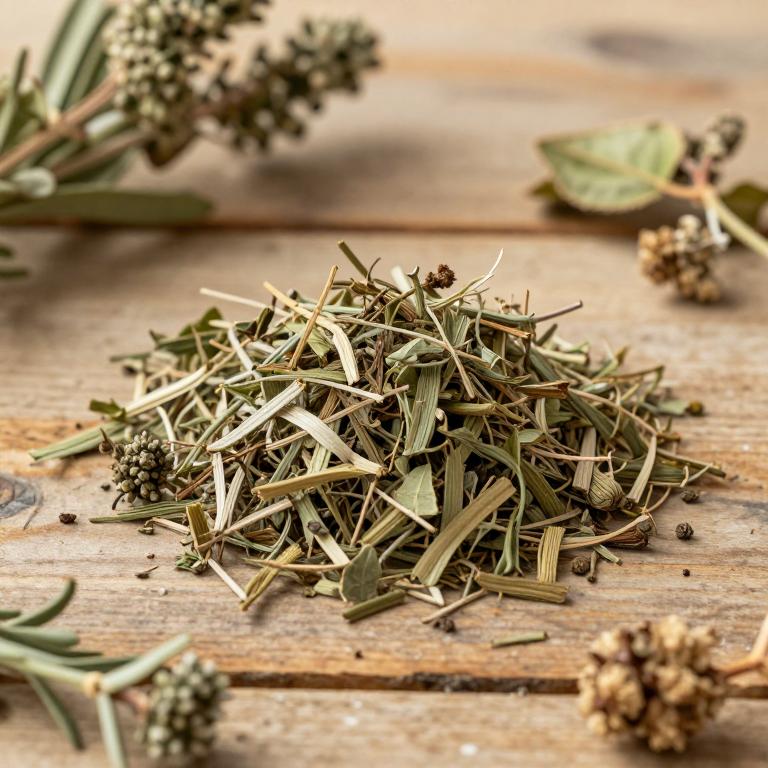
Names and Synonyms
Common Names
- divi-divi
Scientific Names
Accepted name
Libidibia coriariaSynonyms
- Poinciana coriaria
- Caesalpinia coriaria
- Caesalpinia thomaea
Regional and Traditional Names
Spanish:
- cascalote
- dibidibi
- guaracabuya
- guatapana
- nacascol
- nacascolote
- Guaje o cascalote
- Guatapanal
German:
- Divi-Divi-Baum
French:
- Dividivi
- Caesalpinia coriacea
- Caesalpinia coriaria
- Caesalpinia thomaea
- Poinciana coriaria
Sources: Wikidata, Catalogue of Life
Taxonomical Classification
This plant belongs to the kingdom Plantae and is classified under the phylum Streptophyta and class Equisetopsida. Within the subclass Magnoliidae, it is positioned in the order Fabales and the family Fabaceae. Ultimately, it is identified by the genus Libidiibia.
| Rank | Classification |
|---|---|
| Kingdom | Plantae |
| Phylum | Streptophyta |
| Class | Equisetopsida |
| Subclass | Magnoliidae |
| Order | Fabales |
| Family | Fabaceae |
| Genus | Libidibia |
Sources: The World Checklist of Vascular Plants (WCVP)
Distribution
This plant exhibits a wide geographical distribution across several distinct regions of the African continent. In West Tropical Africa, it can be found within the borders of Ghana. Its presence extends into West-Central Tropical Africa, specifically located in the Democratic Republic of the Congo. Within East Tropical Africa, the species is documented in both Tanzania and Uganda. Finally, the plant's range reaches into South Tropical Africa, where it is distributed in Mozambique.
| Region | Area |
|---|---|
| West Tropical Africa | Ghana |
| West-Central Tropical Africa | DR Congo |
| East Tropical Africa | Tanzania |
| East Tropical Africa | Uganda |
| South Tropical Africa | Mozambique |
| Western Indian Ocean | Mauritius |
| Indian Subcontinent | Bangladesh |
| Indian Subcontinent | India |
| Indian Subcontinent | Pakistan |
| Indian Subcontinent | Sri Lanka |
Sources: The World Checklist of Vascular Plants (WCVP)
Botanical Identification
Ecology
The ecology of Libidiibia coriaria is characterized by its ability to inhabit diverse topographical gradients, spanning a broad vertical distribution within its natural environment. This species thrives across an elevational range that begins at sea level (0 m AMSL) and extends up to a maximum altitude of 1000 m AMSL. This altitudinal breadth suggests a high degree of ecological plasticity, allowing the plant to adapt to varying atmospheric pressures, temperature fluctuations, and moisture regimes found between coastal lowlands and mid-elevation zones. Such a wide range indicates that the plant can occupy a variety of niche habitats, likely ranging from lowland scrublands to more temperate montane fringes, provided the specific soil and precipitation requirements of its ecosystem are met.
- Elevational range max:
- 1000 m AMSL
- Elevational range min:
- 0 m AMSL
Life history
The life history of Libidiibia coriaria is characterized by its status as a perennial plant, allowing it to persist through multiple growing seasons and maintain a stable presence within its ecological niche. Throughout its development, the species exhibits an evergreen habit, ensuring that its foliage remains functional and photosynthetic throughout the year without the seasonal shedding of leaves typical of deciduous species. This combination of a long-lived lifecycle and constant leaf cover enables the plant to maintain continuous biological activity and adapt to its environment over an extended period.
- Deciduousness :
- evergreen
- Lifecycle :
- perennial
Morphology
The morphology of Libidia bia coriaria is characterized by a woody growth form that can manifest as either a shrub or a tree. This plant exhibits a significant stature, reaching a mean height of approximately 10 m, with a maximum height potential of up to 12 m. It is classified as a terrestrial species, meaning it is not aquatic or semi-aquatic, and it functions as a terrestrial organism rather than an epiphyte. In terms of its structural habit, the plant is described as self-supporting, lacking the climbing mechanisms of lianas or vines, and it operates as an independent organism rather than a parasite.
- Aquatic :
- terrestrial
- Climber :
- self-supporting
- Epiphyte :
- terrestrial
- Growth form :
- tree
- Growth form :
- shrub
- Parasite :
- independent
- Plant height max:
- 12 m
- Plant height mean:
- 10 m
- Woodiness :
- woody
Physiology
The physiology of Libidibia coriaria is characterized by a C3 photosynthetic pathway, which governs its carbon fixation processes and metabolic efficiency. The plant's vegetative structure features elliptic leaves with an entire margin, lacking both leaf thorns and leaf spines. Furthermore, it functions as a nitrogen fixer, utilizing biological processes to convert atmospheric nitrogen into a usable form, thereby enhancing soil fertility and its own nutritional uptake.
- Leaf form :
- elliptic
- Leaf margin :
- entire
- Leaf spines :
- no
- Leaf thorns :
- no
- Nitrogen fixer :
- yes
- Photosynthetic pathway :
- C3
Reproduction
The reproduction of Libidiibia coriaria is driven by biotic pollination syndromes, specifically relying on insects and bees to facilitate the transfer of pollen. Following successful fertilization, the plant produces dry fruits that house its seeds. The seeds exhibit highly consistent morphological dimensions, characterized by a uniform seed length of 5.9 mm and a consistent seed volume of 57 mm³. In terms of mass, the seeds vary slightly, with a minimum mass of 0.03444 g, a mean mass of 0.05522 g, and a maximum mass reaching 0.0977 g.
- Fruit dryness :
- dry
- Pollination syndrome :
- insect
- Pollination syndrome :
- bee
- Pollination syndrome :
- biotic
- Seed length mean:
- 5.9 mm
- Seed mass max:
- 0.0977 g
- Seed mass mean:
- 0.05522 g
- Seed mass min:
- 0.03444 g
- Seed volume max:
- 57 mm³
Sources: Global Inventory of Floras and Traits (GIFT)
Chemicals
Libidibia coriaria has 12 reported phytochemicals identified across 0 scientific publications and several other databases. The most consistently reported chemicals include 3-O-Galloylquinic acid, Corilagin, Digalloylglucose, Gallic acid, Hydrolyzable Tannins.
| Chemical | Supporting sources | Consensus |
|---|---|---|
| 3-O-Galloylquinic acid | 1 supporting sources | ★☆☆☆☆ |
| Corilagin | 1 supporting sources | ★☆☆☆☆ |
| Digalloylglucose | 1 supporting sources | ★☆☆☆☆ |
| Gallic acid | 1 supporting sources | ★☆☆☆☆ |
| Hydrolyzable Tannins | 1 supporting sources | ★☆☆☆☆ |
| Pentagalloylglucose | 1 supporting sources | ★☆☆☆☆ |
| Tetragalloylglucose | 1 supporting sources | ★☆☆☆☆ |
| Valoneic acid dilactone | 1 supporting sources | ★☆☆☆☆ |
| acetone water | 1 supporting sources | ★☆☆☆☆ |
| digalloylshikimic acid | 1 supporting sources | ★☆☆☆☆ |
3-O-Galloylquinic acid
- Journal of ethnopharmacology
Corilagin
- Biomedicine & pharmacotherapy = Biomedecine & pharmacotherapie
Digalloylglucose
- Journal of ethnopharmacology
Gallic acid
- Journal of ethnopharmacology
Hydrolyzable Tannins
- Journal of ethnopharmacology
Pentagalloylglucose
- Journal of ethnopharmacology
Tetragalloylglucose
- Journal of ethnopharmacology
Valoneic acid dilactone
- Journal of ethnopharmacology
acetone water
- Revista brasileira de parasitologia veterinaria = Brazilian journal of veterinary parasitology : Orgao Oficial do Colegio Brasileiro de Parasitologia Veterinaria
digalloylshikimic acid
- Journal of ethnopharmacology
Activities
Libidibia coriaria has 2 reported activities identified across 0 scientific publications and several other databases. The most consistently reported activities include Antioxidant, Hepatoprotective.
| Activity | Supporting sources | Consensus |
|---|---|---|
| Antioxidant | 1 supporting sources | ★☆☆☆☆ |
| Hepatoprotective | 1 supporting sources | ★☆☆☆☆ |
Antioxidant
- Journal of ethnopharmacology
Hepatoprotective
- Biomedicine & pharmacotherapy = Biomedecine & pharmacotherapie
Preparations
Libidibia coriaria has 4 reported preparations identified across 0 scientific publications and several other databases. The most consistently reported preparations include acetone-water (AW), acetone-water-dichloromethane (AWD), methanol-water (MW), methanol-water-dichloromethane (MWD).
| Preparation | Supporting sources | Consensus |
|---|---|---|
| Acetone-water (aw) | 1 supporting sources | ★☆☆☆☆ |
| Acetone-water-dichloromethane (awd) | 1 supporting sources | ★☆☆☆☆ |
| Methanol-water (mw) | 1 supporting sources | ★☆☆☆☆ |
| Methanol-water-dichloromethane (mwd) | 1 supporting sources | ★☆☆☆☆ |
Acetone-water (aw)
- Revista brasileira de parasitologia veterinaria = Brazilian journal of veterinary parasitology : Orgao Oficial do Colegio Brasileiro de Parasitologia Veterinaria
Acetone-water-dichloromethane (awd)
- Revista brasileira de parasitologia veterinaria = Brazilian journal of veterinary parasitology : Orgao Oficial do Colegio Brasileiro de Parasitologia Veterinaria
Methanol-water (mw)
- Revista brasileira de parasitologia veterinaria = Brazilian journal of veterinary parasitology : Orgao Oficial do Colegio Brasileiro de Parasitologia Veterinaria
Methanol-water-dichloromethane (mwd)
- Revista brasileira de parasitologia veterinaria = Brazilian journal of veterinary parasitology : Orgao Oficial do Colegio Brasileiro de Parasitologia Veterinaria