Rose Cactus
Leuenbergeria bleo · Accepted scientific name
Scientific literature: Very Sparse (12 studies) · ★☆☆☆☆
Rose Cactus, scientifically known as Leuenbergeria bleo, is a vibrant succulent cherished for its striking blooms and medicinal versatility. Renowned in traditional wellness, it possesses unique bioactive properties used to treat skin ailments and inflammation. This resilient plant combines aesthetic beauty with potent natural healing qualities for holistic care.
- Family
- Cactaceae
- Native range
- Asia-Tropical
- Parts used
- Leaf
- Common names
- Rose Cactus
- Scientific synonyms
- Pereskia Bleo · Rhodocactus Corrugatus · 4 more
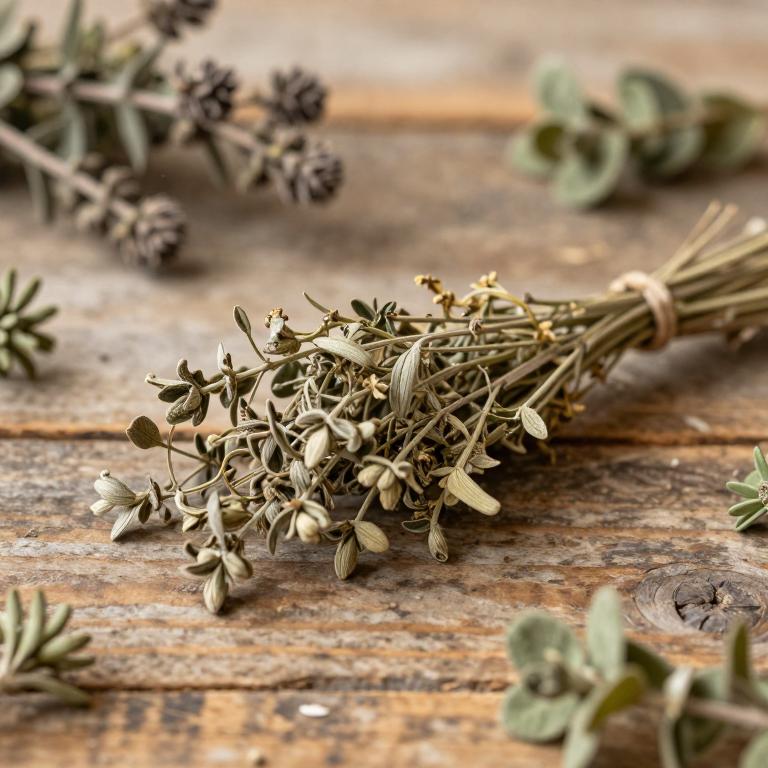
Names and Synonyms
Common Names
- Rose Cactus
Scientific Names
Accepted name
Leuenbergeria bleoSynonyms
- Pereskia bleo
- Rhodocactus corrugatus
- Rhodocactus bleo
- Pereskia panamensis
- Pereskia cruenta
- Pereskia corrugata
Regional and Traditional Names
Spanish:
- Bledo De Chupa
- Guamacho
Sources: Wikidata, Catalogue of Life
Taxonomical Classification
This plant, Leuenbergeria bleo, belongs to the kingdom Plantae and the phylum Streptophyta. Within the class Equisetopsida and subclass Magnoliidae, it is classified under the order Caryophyllales and the family Cactaceae. Finally, its taxonomic identity is defined by the genus Leuenbergeria.
| Rank | Classification |
|---|---|
| Kingdom | Plantae |
| Phylum | Streptophyta |
| Class | Equisetopsida |
| Subclass | Magnoliidae |
| Order | Caryophyllales |
| Family | Cactaceae |
| Genus | Leuenbergeria |
Sources: The World Checklist of Vascular Plants (WCVP)
Distribution
This plant exhibits a widespread geographical distribution that spans across several distinct tropical regions. In the Indian Subcontinent, its presence is noted specifically within the borders of India. Its range extends into Indo-China, where it can be found growing in Vietnam. Within the Malesia region, the species is documented in Malayia. Finally, its distribution reaches Central America, specifically occurring in El Salvador and Panamá.
| Region | Area |
|---|---|
| Indian Subcontinent | India |
| Indo-China | Vietnam |
| Malesia | Malaya |
| Central America | El Salvador |
| Central America | Panamá |
| Caribbean | Cuba |
| Caribbean | Dominican Republic |
| Caribbean | Haiti |
| Caribbean | Leeward Is. |
| Caribbean | Trinidad-Tobago |
Sources: The World Checklist of Vascular Plants (WCVP)
Botanical Identification
Ecology
The ecology of Leonbergia bleo is characterized by its ability to inhabit a diverse range of altitudinal gradients, thriving in environments that span from sea level up to an elevation of 1000 m AMSL. This wide elevational range suggests a high degree of adaptability to varying atmospheric pressures and temperature fluctuations found across lowland and mid-elevation landscapes. By occupying niches from 0 m to 1000 m AMSL, the species can exploit various microclimates, allowing it to establish itself in habitats that vary in moisture availability and solar exposure within this specific vertical span.
- Elevational range max:
- 1000 m AMSL
- Elevational range min:
- 0 m AMSL
Life history
The life history of Leuenbergeria bleo is characterized by its status as a perennial plant, allowing it to persist through multiple growing seasons rather than completing its life cycle in a single year. As a deciduous species, it undergoes a seasonal cycle of shedding its foliage, typically in response to unfavorable environmental conditions or changes in temperature, which marks its transition between active growth phases and periods of dormancy.
- Deciduousness :
- deciduous
- Lifecycle :
- perennial
Morphology
The morphology of Leuenbergeria bleo is characterized by a woody growth form, specifically developing as a shrub. It is a terrestrial species that does not function as an epiphyte, maintaining an independent existence without being a parasite. The plant is self-supporting in its growth habit, rather than acting as a liana or vine, and it can reach a mean height of approximately 4 meters.
- Aquatic :
- terrestrial
- Climber :
- self-supporting
- Epiphyte :
- terrestrial
- Growth form :
- shrub
- Parasite :
- independent
- Plant height mean:
- 4 m
- Woodiness :
- woody
Physiology
The physiology of Leonbergia bleo is characterized by specialized metabolic processes adapted to its specific ecological niche, particularly regarding its nutrient acquisition strategies. In terms of its nitrogen metabolism, the plant does not function as a nitrogen fixer; it lacks the symbiotic relationship with diazotrophic bacteria, such as Rhizobium, typically found in the root nodules of leguminous species. Consequently, it relies on the uptake of exogenous nitrogen sources, primarily in the form of nitrates or ammonium ions, through its root system from the surrounding soil matrix. This dependence on soil nitrogen availability influences its growth patterns, leaf development, and overall reproductive vigor. The plant's physiological efficiency is further governed by its transpiration rates and photosynthetic pathways, which manage gas exchange and water conservation to maintain cellular homeostasis within its native environment.
- Nitrogen fixer :
- no
Sources: Global Inventory of Floras and Traits (GIFT)
Plant Parts
Leuenbergeria bleo has 1 reported plant parts identified across 5 scientific publications and several other databases that are studied for medicinal purposes. The most consistently reported plant part include leaf.
| Plant part | Supporting sources | Consensus |
|---|---|---|
| Leaf | 5 supporting sources | ★★★☆☆ |
Leaf
- PeerJ
- Journal of ethnopharmacology
- Pakistan journal of pharmaceutical sciences
- Journal of complementary & integrative medicine
- Iranian journal of pharmaceutical research : IJPR
Chemicals
Leuenbergeria bleo has 4 reported phytochemicals identified across 5 scientific publications and several other databases. The most consistently reported chemicals include Flavonoids, Phytosterols, Tannins, methanol.
| Chemical | Supporting sources | Consensus |
|---|---|---|
| Flavonoids | 1 supporting sources | ★☆☆☆☆ |
| Phytosterols | 1 supporting sources | ★☆☆☆☆ |
| Tannins | 1 supporting sources | ★☆☆☆☆ |
| methanol | 1 supporting sources | ★☆☆☆☆ |
Flavonoids
- Iranian journal of pharmaceutical research : IJPR
Phytosterols
- Iranian journal of pharmaceutical research : IJPR
Tannins
- Iranian journal of pharmaceutical research : IJPR
methanol
- Journal of ethnopharmacology
Activities
Leuenbergeria bleo has 1 reported activities identified across 5 scientific publications and several other databases. The most consistently reported activities include Toxic.
| Activity | Supporting sources | Consensus |
|---|---|---|
| Toxic | 1 supporting sources | ★☆☆☆☆ |
Toxic
- Journal of ethnopharmacology
Conditions
Leuenbergeria bleo has 2 reported investigations on conditions identified across 5 scientific publications and several other databases. The most consistently reported conditions include antidiabetic, antihyperglycemic.
| Condition | Supporting sources | Consensus |
|---|---|---|
| Antidiabetic | 1 supporting sources | ★☆☆☆☆ |
| Antihyperglycemic | 1 supporting sources | ★☆☆☆☆ |
Antidiabetic
- Iranian journal of pharmaceutical research : IJPR
Antihyperglycemic
- Iranian journal of pharmaceutical research : IJPR
Preparations
Leuenbergeria bleo has 2 reported preparations identified across 5 scientific publications and several other databases. The most consistently reported preparations include leaves, leaf extracts.
| Preparation | Supporting sources | Consensus |
|---|---|---|
| Leaves | 2 supporting sources | ★☆☆☆☆ |
| Leaf extracts | 1 supporting sources | ★☆☆☆☆ |
Leaves
- Pakistan journal of pharmaceutical sciences
- Journal of complementary & integrative medicine
Leaf extracts
- Iranian journal of pharmaceutical research : IJPR