Texas sage
Leucophyllum frutescens · Accepted scientific name
Scientific literature: Very Sparse (18 studies) · ★☆☆☆☆
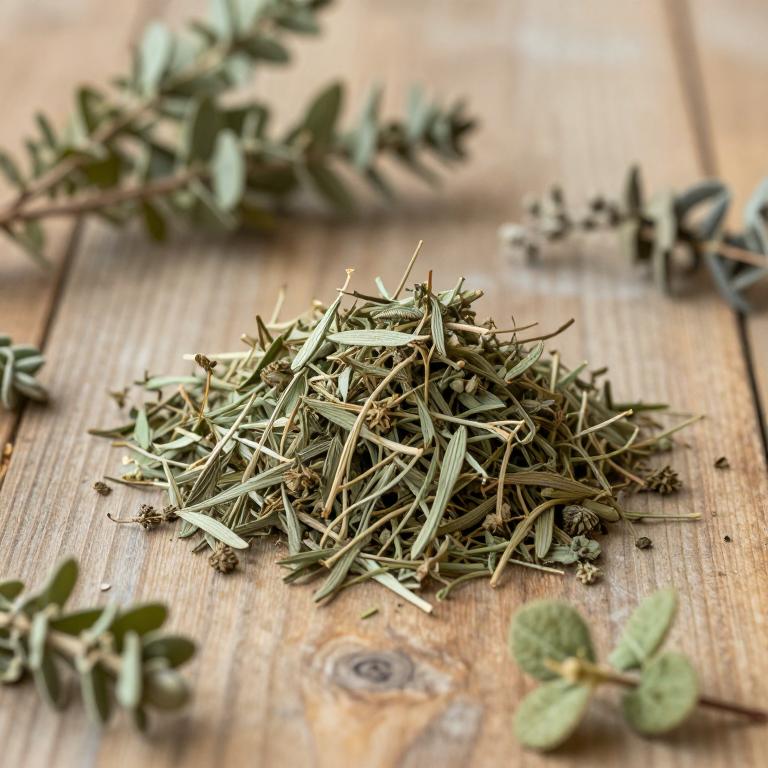
Texas sage, scientifically known as Leucophyllum frutescens, is a resilient evergreen shrub native to the southwestern United States. Renowned for its striking purple blooms, it is valued in traditional medicine for its potential therapeutic properties. This hardy plant thrives in arid climates, offering both ornamental beauty and medicinal interest.
Names and Synonyms
Common Names
- Texas silverleaf
- barometer-bush
- purple-sage
- Texas barometer bush
- Texas ranger
- Texas sage
Scientific Names
Accepted name
Leucophyllum frutescensSynonyms
- Leucophyllum texanum
- Leucophyllum frutescens f. albiflorum
- Leucophyllum frutescens f. albineum
- Leucophyllum frutescens var. floribundum
- Leucophyllum frutescens var. glaucum
- Terania frutescens
Regional and Traditional Names
Spanish:
- Texas Sage
- cenizo
French:
- Sauge du désert
Sources: Wikidata, Catalogue of Life
Taxonomical Classification
This plant belongs to the kingdom Plantae and is classified within the phylum Streptophyta and the class Equisetopsida. It is further categorized under the subclass Magnoliidae and the order Lamiales. Finally, it is a member of the family Scrophulariaceae and is specifically identified by the genus Leucophyllum.
| Rank | Classification |
|---|---|
| Kingdom | Plantae |
| Phylum | Streptophyta |
| Class | Equisetopsida |
| Subclass | Magnoliidae |
| Order | Lamiales |
| Family | Scrophulariaceae |
| Genus | Leucophyllum |
Sources: The World Checklist of Vascular Plants (WCVP)
Distribution
This plant exhibits a wide geographical distribution spanning across North America. In the United States, it is specifically documented within the South-Central region of Texas. Its presence extends extensively throughout Mexico, covering the Northeast and the Gulf regions. Furthermore, it can be found across the Northwest territories of Mexico. Finally, the species is also established throughout the Southwest portion of the country.
| Region | Area |
|---|---|
| South-Central U.S.A. | Texas |
| Mexico | Mexico Northeast |
| Mexico | Mexico Gulf |
| Mexico | Mexico Northwest |
| Mexico | Mexico Southwest |
| Central America | El Salvador |
| Caribbean | Dominican Republic |
| Caribbean | Leeward Is. |
Sources: The World Checklist of Vascular Plants (WCVP)
Botanical Identification
Ecology
The ecology of Leucophyllum frutescens is characterized by its ability to thrive across a specific altitudinal gradient, primarily inhabiting lowland environments. It is typically found at elevations ranging from a minimum of 0 m AMSL to a maximum of 500 m AMSL. This distribution suggests an adaptation to warmer, lower-altitude climates, often occurring in arid or semi-arid ecosystems where it can tolerate varying degrees of solar exposure and soil types within this specific topographical range.
- Elevational range max:
- 500 m AMSL
- Elevational range min:
- 0 m AMSL
Life history
The life history of Leucophyllum frutescens is characterized by its status as a perennial species, allowing it to persist through multiple growing seasons rather than completing its life cycle in a single year. As a long-lived woody shrub, it establishes a robust root system that supports continuous growth and structural development over many years. Its lifecycle is marked by seasonal cycles of vegetative expansion and periodic flowering, often triggered by environmental cues such as rainfall or temperature shifts. This perennial nature enables the plant to endure varying climatic conditions, maintaining its presence in its natural habitat through sustained physiological activity and long-term survival.
- Lifecycle :
- perennial
Morphology
The morphology of Leucophyllum frutescens is characterized by a growth form classified as a shrub, exhibiting a predominantly non-woody structure. It functions as a self-supporting plant, neither acting as a climber (such as a liana or vine) nor as an epiphyte, maintaining a strictly terrestrial existence. The species is an independent organism, showing no parasitic tendencies, and thrives in terrestrial habitats rather than aquatic or semiaquatic environments.
- Aquatic :
- terrestrial
- Climber :
- self-supporting
- Epiphyte :
- terrestrial
- Growth form :
- shrub
- Parasite :
- independent
- Woodiness :
- non-woody
Reproduction
The reproduction of Leucophyllum frutescens involves the production of specialized seeds that exhibit highly consistent physical characteristics. Based on available data, the seed mass is remarkably uniform, with a mean mass of 5.7e-05 g. This consistency is reflected across the entire observed range, as both the maximum and minimum seed mass values are recorded at 5.7e-05 g, indicating a lack of significant variance in the weight of the individual seeds produced during the reproductive cycle.
- Seed mass mean:
- 5.7e-05 g
Sources: Global Inventory of Floras and Traits (GIFT)
Plant Parts
Leucophyllum frutescens has 3 reported plant parts identified across 5 scientific publications and several other databases that are studied for medicinal purposes. The most consistently reported plant part include leaf, flower, root.
| Plant part | Supporting sources | Consensus |
|---|---|---|
| Leaf | 3 supporting sources | ★★☆☆☆ |
| Flower | 1 supporting sources | ★☆☆☆☆ |
| Root | 1 supporting sources | ★☆☆☆☆ |
Leaf
- Journal of ethnopharmacology
- Frontiers in bioscience (Landmark edition)
- Natural product research
Flower
- Natural product research
Root
- Journal of ethnopharmacology
Chemicals
Leucophyllum frutescens has 10 reported phytochemicals identified across 5 scientific publications and several other databases. The most consistently reported chemicals include 1-OCTEN-3-OL, D-Limonene, Epigallocatechin, Eudesmin, Myricetin 3-acetylrhamnoside.
| Chemical | Supporting sources | Consensus |
|---|---|---|
| 1-OCTEN-3-OL | 1 supporting sources | ★☆☆☆☆ |
| D-Limonene | 1 supporting sources | ★☆☆☆☆ |
| Epigallocatechin | 1 supporting sources | ★☆☆☆☆ |
| Eudesmin | 1 supporting sources | ★☆☆☆☆ |
| Myricetin 3-acetylrhamnoside | 1 supporting sources | ★☆☆☆☆ |
| Pinoresinol diglucoside | 1 supporting sources | ★☆☆☆☆ |
| Quercetin 3-O-glucoside | 1 supporting sources | ★☆☆☆☆ |
| n-Heneicosane | 1 supporting sources | ★☆☆☆☆ |
| propyl gallate | 1 supporting sources | ★☆☆☆☆ |
| theobromine | 1 supporting sources | ★☆☆☆☆ |
1-OCTEN-3-OL
- Natural product research
D-Limonene
- Natural product research
Epigallocatechin
- Frontiers in bioscience (Landmark edition)
Eudesmin
- Frontiers in bioscience (Landmark edition)
Myricetin 3-acetylrhamnoside
- Frontiers in bioscience (Landmark edition)
Pinoresinol diglucoside
- Frontiers in bioscience (Landmark edition)
Quercetin 3-O-glucoside
- Frontiers in bioscience (Landmark edition)
n-Heneicosane
- Natural product research
propyl gallate
- Frontiers in bioscience (Landmark edition)
theobromine
- Frontiers in bioscience (Landmark edition)
Conditions
Leucophyllum frutescens has 3 reported investigations on conditions identified across 5 scientific publications and several other databases. The most consistently reported conditions include Alzheimer's disease, Mycobacterium tuberculosis, neurodegenerative diseases.
| Condition | Supporting sources | Consensus |
|---|---|---|
| Alzheimer's disease | 1 supporting sources | ★☆☆☆☆ |
| Mycobacterium tuberculosis | 1 supporting sources | ★☆☆☆☆ |
| Neurodegenerative diseases | 1 supporting sources | ★☆☆☆☆ |
Alzheimer's disease
- Frontiers in bioscience (Landmark edition)
Mycobacterium tuberculosis
- Journal of ethnopharmacology
Neurodegenerative diseases
- Frontiers in bioscience (Landmark edition)
Preparations
Leucophyllum frutescens has 4 reported preparations identified across 5 scientific publications and several other databases. The most consistently reported preparations include Essential oils from the flowers, Essential oils from the leaves, Methanol-based extracts from the leaves, Methanol-based extracts from the roots.
| Preparation | Supporting sources | Consensus |
|---|---|---|
| Essential oils from the flowers | 1 supporting sources | ★☆☆☆☆ |
| Essential oils from the leaves | 1 supporting sources | ★☆☆☆☆ |
| Methanol-based extracts from the leaves | 1 supporting sources | ★☆☆☆☆ |
| Methanol-based extracts from the roots | 1 supporting sources | ★☆☆☆☆ |
Essential oils from the flowers
- Natural product research
Essential oils from the leaves
- Natural product research
Methanol-based extracts from the leaves
- Journal of ethnopharmacology
Methanol-based extracts from the roots
- Journal of ethnopharmacology