Drooping thumba
Leucas nutans · Accepted scientific name
Scientific literature: Very Sparse (4 studies) · ★☆☆☆☆
Drooping thumba, scientifically known as Leucas nutans, is a versatile medicinal herb widely recognized in traditional Ayurvedic practices. Characterized by its distinctive drooping white flowers, this plant offers significant therapeutic benefits, including anti-inflammatory and wound-healing properties, making it a vital component in holistic natural healthcare across tropical regions.
- Family
- Lamiaceae
- Native range
- Asia-Tropical
- Parts used
- Not available
- Common names
- Drooping Thumba
- Scientific synonyms
- Leucas Decurva · Phlomis Nutans
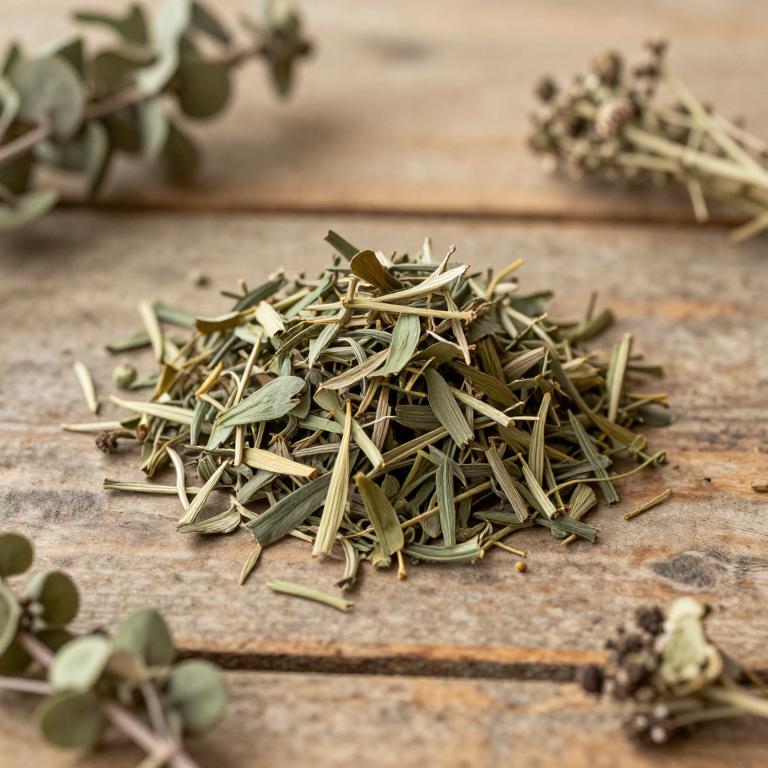
Names and Synonyms
Common Names
- Drooping thumba
Scientific Names
Accepted name
Leucas nutansSynonyms
- Leucas decurva
- Phlomis nutans
Sources: Wikidata, Catalogue of Life
Taxonomical Classification
This plant belongs to the kingdom Plantae and the phylum Streptophyta, placing it within the class Equisetopsida and subclass Magnoliidae. It is further classified under the order Lamiales and the family Lamiaceae. Finally, the species is identified by its genus, Leucas.
| Rank | Classification |
|---|---|
| Kingdom | Plantae |
| Phylum | Streptophyta |
| Class | Equisetopsida |
| Subclass | Magnoliidae |
| Order | Lamiales |
| Family | Lamiaceae |
| Genus | Leucas |
Sources: The World Checklist of Vascular Plants (WCVP)
Distribution
This plant is widely distributed across various regions of the Indian Subcontinent. Specifically, it can be found growing in the countries of India, Pakistan, and Bangladesh. Its presence extends into the mountainous terrains of the West Himalaya. Furthermore, the geographical range reaches into the Indo-China region, particularly within Myanmar. This broad distribution highlights the adaptability of Leucas nutans across diverse Asian landscapes.
| Region | Area |
|---|---|
| Indian Subcontinent | Bangladesh |
| Indian Subcontinent | India |
| Indian Subcontinent | Pakistan |
| Indian Subcontinent | West Himalaya |
| Indo-China | Myanmar |
Sources: The World Checklist of Vascular Plants (WCVP)
Botanical Identification
Life history
The life history of Leucas nutans is characterized by an annual lifecycle, meaning it completes its entire developmental process from germination to seed production within a single growing season. In terms of its biological structure and survival strategy, the plant is classified as a therophyte, a life form where the plant survives the unfavorable season as a seed, allowing it to quickly emerge and flourish when environmental conditions become optimal.
- Life form :
- therophyte
- Lifecycle :
- annual
Morphology
The morphology of Leucas nutans is characterized by its growth form as a non-woody herb. It functions as an independent organism, meaning it is not a parasite, and it maintains a terrestrial lifestyle rather than being an epiphyte. While it exhibits a climbing habit, it is specifically classified as a self-supporting climber, lacking the need for external structures for its primary vertical orientation.
- Climber :
- self-supporting
- Epiphyte :
- terrestrial
- Growth form :
- herb
- Parasite :
- independent
- Woodiness :
- non-woody
Reproduction
Reproduction in Leucas nutans is primarily driven by the production of specialized seeds that facilitate its dispersal and colonization of various habitats. The reproductive success of this species is characterized by a highly consistent seed morphology, with data indicating a uniform seed mass across the population. Specifically, the seed mass exhibits a constant value with a mean, maximum, and minimum of 0.0026 g. This lack of variance in seed mass suggests a highly stabilized reproductive strategy, ensuring that each seed carries a specific, standardized amount of nutrient reserves to support early seedling establishment. Through this precise seed production, the plant effectively manages its life cycle and ensures the continuity of its lineage within its ecological niche.
- Seed mass mean:
- 0.0026 g
Sources: Global Inventory of Floras and Traits (GIFT)
Chemicals
Leucas nutans has 4 reported phytochemicals identified across 0 scientific publications and several other databases. The most consistently reported chemicals include Leucasin, Lupeol palmitate, STIGMASTEROL, Sitosterol.
| Chemical | Supporting sources | Consensus |
|---|---|---|
| Leucasin | 1 supporting sources | ★☆☆☆☆ |
| Lupeol palmitate | 1 supporting sources | ★☆☆☆☆ |
| STIGMASTEROL | 1 supporting sources | ★☆☆☆☆ |
| Sitosterol | 1 supporting sources | ★☆☆☆☆ |
Leucasin
- Phytochemistry
Lupeol palmitate
- Phytochemistry
STIGMASTEROL
- Phytochemistry
Sitosterol
- Phytochemistry