Leucas martinicensis
Leucas martinicensis · Accepted scientific name
Scientific literature: Very Sparse (11 studies) · ★☆☆☆☆
, scientifically known as Leucas martinicensis, is a remarkable medicinal plant valued for its therapeutic potential. Often found in diverse ecosystems, this species contains bioactive compounds used in traditional healing practices. Exploring its phytochemical properties offers promising insights into developing natural treatments for various health conditions and supporting holistic wellness.
- Family
- Lamiaceae
- Native range
- Africa
- Parts used
- Leaf
- Common names
- Not available
- Scientific synonyms
- Leonotis Caribea · Leucas Martinicensis Var. Schimperi · 8 more
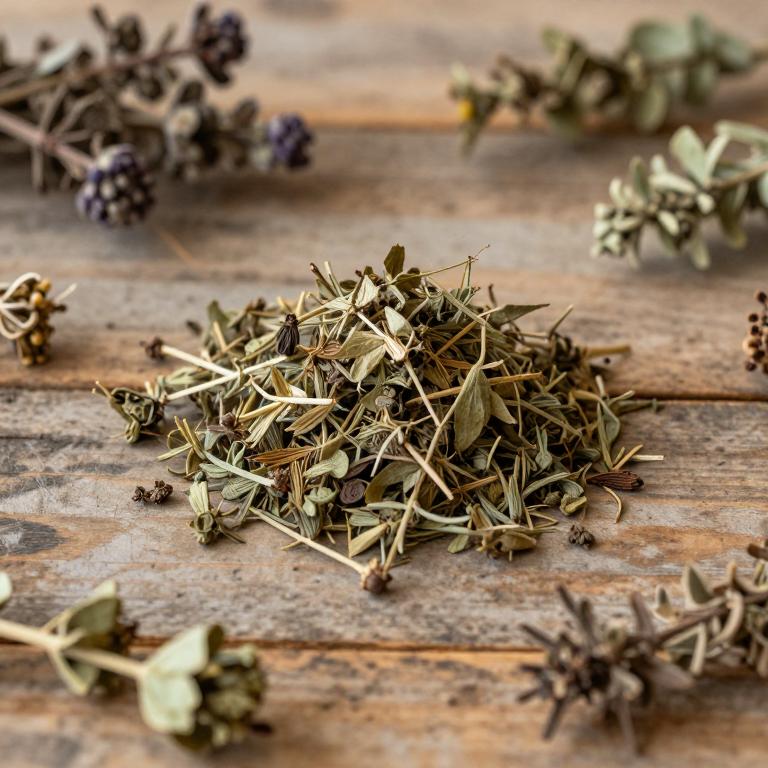
Names and Synonyms
Scientific Names
Accepted name
Leucas martinicensisSynonyms
- Leonotis caribea
- Leucas martinicensis var. schimperi
- Clinopodium martinicense
- Stachys fluminensis
- Leucas elliotii
- Leucas ringoetii
- Phlomis mollis
- Phlomis martinicensis
- Phlomis caribaea
- Leonotis martinicensis
Sources: Wikidata
Taxonomical Classification
This plant belongs to the kingdom Plantae within the phylum Streptophyta and the class Equisetopsida. It is further classified under the subclass Magnoliidae, the order Lamiales, and the family Lamiaceae. Finally, its taxonomic identity is defined by the genus Leucas.
| Rank | Classification |
|---|---|
| Kingdom | Plantae |
| Phylum | Streptophyta |
| Class | Equisetopsida |
| Subclass | Magnoliidae |
| Order | Lamiales |
| Family | Lamiaceae |
| Genus | Leucas |
Sources: The World Checklist of Vascular Plants (WCVP)
Distribution
This plant exhibits a diverse geographical range stretching across several distinct regions. Within the Macaronesia archipelago, its presence is specifically noted in Cape Verde. Moving towards the mainland, it is widely distributed throughout West Tropical Africa. Its documented habitats include the nations of Benin, Burkina, and Gambia. Additionally, the species can be found inhabiting the coastal and inland areas of Ghana.
| Region | Area |
|---|---|
| Macaronesia | Cape Verde |
| West Tropical Africa | Benin |
| West Tropical Africa | Burkina |
| West Tropical Africa | Gambia |
| West Tropical Africa | Ghana |
| West Tropical Africa | Guinea-Bissau |
| West Tropical Africa | Guinea |
| West Tropical Africa | Ivory Coast |
| West Tropical Africa | Liberia |
| West Tropical Africa | Mali |
Sources: The World Checklist of Vascular Plants (WCVP)
Botanical Identification
Ecology
The ecology of Leucas martinicensis is characterized by its adaptability to diverse landscapes, ranging from disturbed anthropogenic areas to the natural environments of the Caatinga (strictu sensu) biome. This species thrives across a significant altitudinal gradient, occupying ecological niches that span from low-lying regions at 120 m AMSL to higher elevations reaching a maximum of 1705 m AMSL. Such a broad elevational range suggests a resilience to varying temperature regimes and atmospheric pressures, allowing it to persist in both modified human-impacted habitats and the semi-arid vegetation typical of its native range.
- Elevational range max:
- 1705 m AMSL
- Elevational range min:
- 120 m AMSL
- Habitat :
- Área Antrópica, Caatinga (stricto sensu)
Life history
The life history of Leucas martinicensis is characterized by an annual lifecycle, meaning it completes its entire developmental process from germination to seed production within a single growing season. As a therophyte, the plant's survival strategy relies on producing seeds that persist through unfavorable conditions, while the vegetative body dies off at the end of the year. This specific life form classifies it among the most ephemeral plants, as it lacks persistent underground organs or woody structures, instead prioritizing rapid growth and reproductive efficiency to fulfill its biological cycle before the onset of seasonal changes.
- Life form :
- therophyte
- Lifecycle :
- annual
Morphology
The morphology of Leucas martinicensis is characterized by a growth form categorized as both a herb and a forb. As a non-woody, terrestrial plant, it functions as an independent organism rather than a parasite or an epiphyte. The species is self-supporting in its structure, lacking the climbing habits of lianas or vines. In terms of stature, the plant exhibits significant variation in height, with individuals ranging from a minimum of 0.15 m to a maximum of approximately 1.83 m, maintaining an average plant height of approximately 0.87 m.
- Aquatic :
- terrestrial
- Climber :
- self-supporting
- Epiphyte :
- terrestrial
- Growth form :
- herb
- Growth form :
- forb
- Parasite :
- independent
- Plant height max:
- 1.828822238 m
- Plant height mean:
- 0.866666666666667 m
- Plant height min:
- 0.15 m
- Woodiness :
- non-woody
Physiology
The physiology of Leucas martinsensis is characterized by complex metabolic processes that support its survival in specific ecological niches, particularly regarding its nutrient acquisition strategies. A critical aspect of its physiological profile involves its relationship with soil nutrients; specifically, the plant is not a nitrogen fixer, meaning it lacks the symbiotic relationship with rhizobia bacteria necessary to convert atmospheric nitrogen into usable forms. Consequently, its physiological dependence on soil nitrogen availability is high, requiring the uptake of nitrates or ammonium through its root system to sustain protein synthesis and chlorophyll production. Beyond nitrogen metabolism, the plant engages in standard photosynthetic pathways to convert light energy into chemical energy, driving the growth and secondary metabolite production essential for its medicinal properties. This metabolic framework dictates its growth patterns and its ability to thrive in environments where soil fertility is maintained through external organic or inorganic inputs rather than internal biological fixation.
- Nitrogen fixer :
- no
Reproduction
Reproduction in Leucas martinicensis is characterized by the production of relatively small seeds, with a measured seed mass ranging from a minimum of 0.00024 g to a maximum of 0.0005 g, resulting in an average seed mass of approximately 0.000415 g. The plant exhibits a highly versatile and unspecialized dispersal syndrome, utilizing multiple mechanisms to ensure its progeny reaches new habitats. This reproductive strategy involves a combination of anemochorous (wind), zoochorous (animal), autochorous (self-dispersal), and hydrochorous (water) dispersal methods. Furthermore, the dispersal profile is described as broadly unspecialized, encompassing various secondary vectors and processes such as anthropochory, endozoochory, epizoochory, and myrmecochory, allowing the species to leverage diverse environmental factors for successful colonization.
- Dispersal syndrome :
- unspecialized
- Seed mass max:
- 5e-04 g
- Seed mass mean:
- 0.000415 g
- Seed mass min:
- 0.00024 g
Sources: Global Inventory of Floras and Traits (GIFT)
Plant Parts
Leucas martinicensis has 1 reported plant parts identified across 1 scientific publications and several other databases that are studied for medicinal purposes. The most consistently reported plant part include leaf.
| Plant part | Supporting sources | Consensus |
|---|---|---|
| Leaf | 1 supporting sources | ★☆☆☆☆ |
Leaf
- Journal of ethnopharmacology
Activities
Leucas martinicensis has 5 reported activities identified across 1 scientific publications and several other databases. The most consistently reported activities include Anthelmintic, Antidepressant, Antispasmodic, Anxiolytic, Cytotoxic.
| Activity | Supporting sources | Consensus |
|---|---|---|
| Anthelmintic | 1 supporting sources | ★☆☆☆☆ |
| Antidepressant | 1 supporting sources | ★☆☆☆☆ |
| Antispasmodic | 1 supporting sources | ★☆☆☆☆ |
| Anxiolytic | 1 supporting sources | ★☆☆☆☆ |
| Cytotoxic | 1 supporting sources | ★☆☆☆☆ |
Anthelmintic
- Journal of ethnopharmacology
Antidepressant
- Journal of ethnopharmacology
Antispasmodic
- Journal of ethnopharmacology
Anxiolytic
- Journal of ethnopharmacology
Cytotoxic
- BMC complementary medicine and therapies
Conditions
Leucas martinicensis has 5 reported investigations on conditions identified across 1 scientific publications and several other databases. The most consistently reported conditions include antidepressant, antispasmodic, anxiolytic, breast cancer, cancer.
| Condition | Supporting sources | Consensus |
|---|---|---|
| Antidepressant | 1 supporting sources | ★☆☆☆☆ |
| Antispasmodic | 1 supporting sources | ★☆☆☆☆ |
| Anxiolytic | 1 supporting sources | ★☆☆☆☆ |
| Breast cancer | 1 supporting sources | ★☆☆☆☆ |
| Cancer | 1 supporting sources | ★☆☆☆☆ |
Antidepressant
- Journal of ethnopharmacology
Antispasmodic
- Journal of ethnopharmacology
Anxiolytic
- Journal of ethnopharmacology
Breast cancer
- Journal of multidisciplinary healthcare
Cancer
- BMC complementary medicine and therapies
Preparations
Leucas martinicensis has 2 reported preparations identified across 1 scientific publications and several other databases. The most consistently reported preparations include crude aqueous and hydro-alcoholic extracts of the aerial parts, extracts.
| Preparation | Supporting sources | Consensus |
|---|---|---|
| Crude aqueous and hydro-alcoholic extracts of the aerial parts | 1 supporting sources | ★☆☆☆☆ |
| Extracts | 1 supporting sources | ★☆☆☆☆ |
Crude aqueous and hydro-alcoholic extracts of the aerial parts
- Journal of ethnopharmacology
Extracts
- BMC complementary medicine and therapies