Leucas chinensis
Leucas chinensis · Accepted scientific name
Scientific literature: Very Sparse (9 studies) · ★☆☆☆☆
Leucas chinensis, scientifically known as Leucas chinensis, is a versatile medicinal herb valued in traditional healing practices. Renowned for its diverse therapeutic properties, this plant is frequently utilized to treat skin ailments, inflammation, and digestive issues. Its unique phytochemical profile makes it a significant subject in ethnobotanical research.
- Family
- Lamiaceae
- Native range
- Asia-Temperate
- Parts used
- Not available
- Common names
- Not available
- Scientific synonyms
- Blandina Chinensis
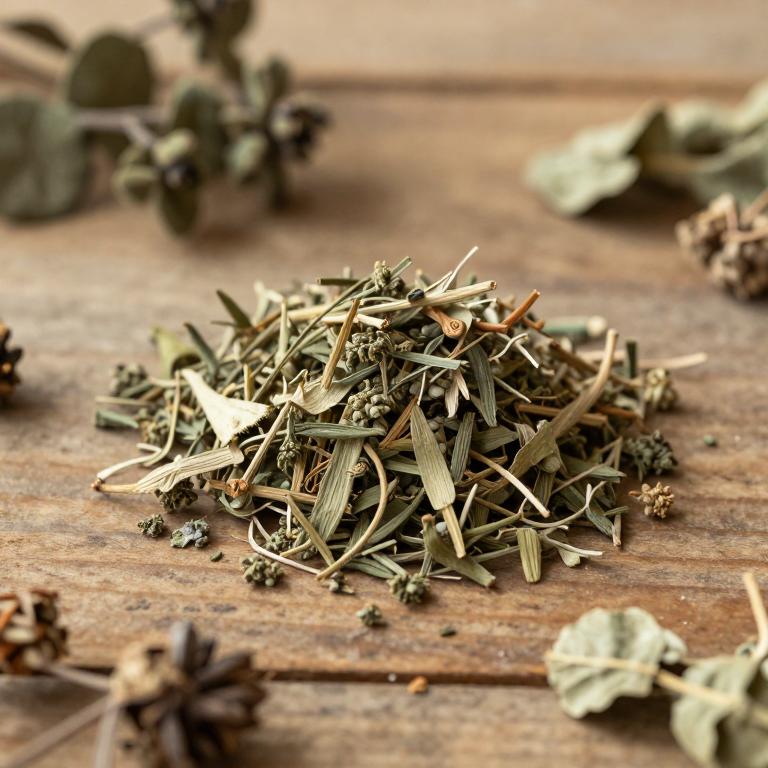
Names and Synonyms
Scientific Names
Accepted name
Leucas chinensisSynonyms
- Blandina chinensis
Sources: Wikidata, Catalogue of Life
Taxonomical Classification
This plant belongs to the kingdom Plantae and is classified under the phylum Streptophyta and class Equisetopsida. Within the subclass Magnoliidae, it is organized into the order Lamiales and the family Lamiaceae. Finally, it is identified by its specific genus, Leucas.
| Rank | Classification |
|---|---|
| Kingdom | Plantae |
| Phylum | Streptophyta |
| Class | Equisetopsida |
| Subclass | Magnoliidae |
| Order | Lamiales |
| Family | Lamiaceae |
| Genus | Leucas |
Sources: The World Checklist of Vascular Plants (WCVP)
Distribution
This plant exhibits a specific geographical distribution across various regions of East Asia. In China, it can be found growing in Hainan and throughout China Southeast. Its presence extends into Japan, where it is native to several distinct areas. Specifically, it is located within the Nansei-shoto islands of Eastern Asia. Additionally, the species is documented in the Ogasawara-shoto islands.
| Region | Area |
|---|---|
| China | Hainan |
| China | China Southeast |
| Eastern Asia | Japan |
| Eastern Asia | Nansei-shoto |
| Eastern Asia | Ogasawara-shoto |
| Eastern Asia | Taiwan |
| Indian Subcontinent | India |
| Malesia | Philippines |
Sources: The World Checklist of Vascular Plants (WCVP)
Botanical Identification
Life history
The life history of Leucas chinensis is characterized by its classification as a chamaephyte, a life form where the permanent buds are located close to the soil surface, often just above or at ground level, allowing the plant to persist through unfavorable seasonal conditions. This growth habit enables it to navigate diverse environmental stressors, frequently occupying disturbed habitats or open landscapes. As a perennial species, its life cycle involves a continuous struggle for space and resources, utilizing its low-lying structural strategy to protect its regenerative tissues from herbivory or temperature fluctuations. The plant undergoes seasonal cycles of vegetative growth and reproductive phases, where it produces inflorescences that facilitate genetic dispersal. By maintaining its vital buds near the substrate, it ensures survival during periods of dormancy, ready to resume rapid development when moisture and light conditions become optimal for its life cycle.
- Life form :
- chamaephyte
Morphology
The morphology of Leucaena chinensis is characterized by a growth form classified as a herb, exhibiting a non-woody structure throughout its development. It functions as an independent organism, meaning it does not act as a parasite, and it maintains a terrestrial lifestyle rather than growing as an epiphyte. In terms of its structural habit, the plant behaves as a self-supporting climber, utilizing its morphology to navigate its environment without relying on a host for nutrients.
- Climber :
- self-supporting
- Epiphyte :
- terrestrial
- Growth form :
- herb
- Parasite :
- independent
- Woodiness :
- non-woody
Sources: Global Inventory of Floras and Traits (GIFT)
Chemicals
Leucas chinensis has 7 reported phytochemicals identified across 0 scientific publications and several other databases. The most consistently reported chemicals include Chryseriol, Flavonoids, OLEANOLIC ACID, apigenin, betulinic acid.
| Chemical | Supporting sources | Consensus |
|---|---|---|
| Chryseriol | 1 supporting sources | ★☆☆☆☆ |
| Flavonoids | 1 supporting sources | ★☆☆☆☆ |
| OLEANOLIC ACID | 1 supporting sources | ★☆☆☆☆ |
| apigenin | 1 supporting sources | ★☆☆☆☆ |
| betulinic acid | 1 supporting sources | ★☆☆☆☆ |
| luteolin | 1 supporting sources | ★☆☆☆☆ |
| triterpene | 1 supporting sources | ★☆☆☆☆ |
Chryseriol
- Journal of ethnopharmacology
Flavonoids
- Journal of ethnopharmacology
OLEANOLIC ACID
- Journal of ethnopharmacology
apigenin
- Journal of ethnopharmacology
betulinic acid
- Journal of ethnopharmacology
luteolin
- Journal of ethnopharmacology
triterpene
- Journal of ethnopharmacology
Activities
Leucas chinensis has 1 reported activities identified across 0 scientific publications and several other databases. The most consistently reported activities include Antioxidant.
| Activity | Supporting sources | Consensus |
|---|---|---|
| Antioxidant | 1 supporting sources | ★☆☆☆☆ |
Antioxidant
- Journal of ethnopharmacology
Conditions
Leucas chinensis has 1 reported investigations on conditions identified across 0 scientific publications and several other databases. The most consistently reported conditions include oxidative stress.
| Condition | Supporting sources | Consensus |
|---|---|---|
| Oxidative stress | 1 supporting sources | ★☆☆☆☆ |
Oxidative stress
- Journal of ethnopharmacology