Leptospermum polygalifolium
Leptospermum polygalifolium · Accepted scientific name
Scientific literature: Very Sparse (29 studies) · ★☆☆☆☆
Leptospermum polygalifolium, scientifically known as Leptospermum polygalifolium, is a distinctive medicinal shrub native to specific Australian regions. Valued for its unique botanical properties, this plant has traditional significance in herbal practices. Understanding its chemical composition and ecological niche is essential for exploring its potential therapeutic applications in pharmacology.
- Family
- Not available
- Native range
- Australasia
- Parts used
- Not available
- Common names
- Not available
- Scientific synonyms
- Not available
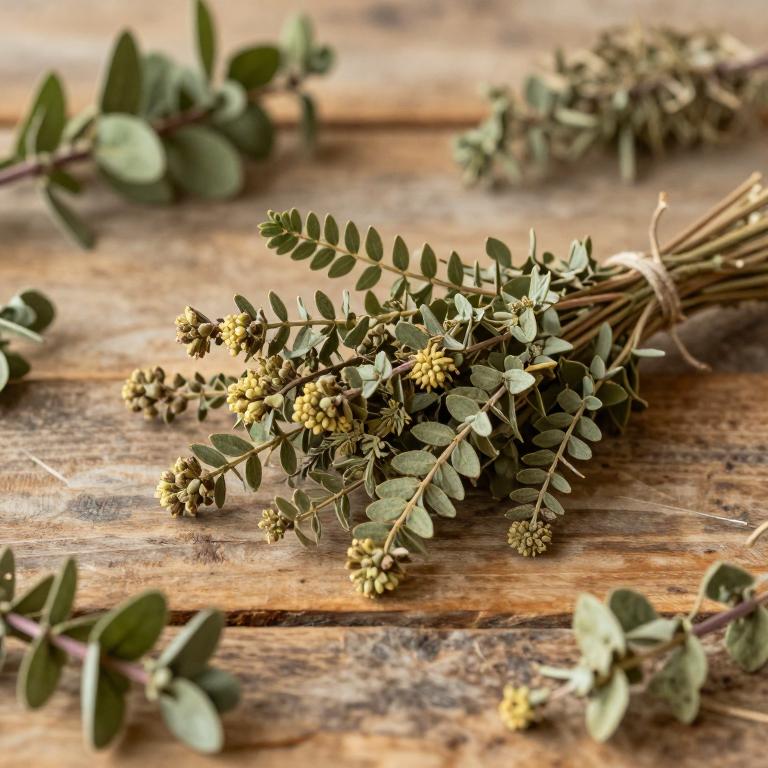
Names and Synonyms
Scientific Names
Accepted name
Leptospermum polygalifoliumDistribution
This plant exhibits a diverse geographical distribution across several oceanic and continental regions. Within Australia, it can be found growing in the coastal areas of New South Wales and Queensland. Its range also extends to the specific territory of Norfolk Island. Beyond the Australian mainland, the species has established itself in the North-Central Pacific. Specifically, it is known to inhabit the islands of Hawaii.
| Region | Area |
|---|---|
| Australia | Norfolk Is. |
| Australia | New South Wales |
| Australia | Queensland |
| North-Central Pacific | Hawaii |
Sources: The World Checklist of Vascular Plants (WCVP)
Botanical Identification
Life history
The life history of Leptospermum polygalifolium is characterized by its status as a perennial organism, ensuring its long-term presence within its ecological niche. In terms of its structural growth patterns and survival strategies, the species exhibits diverse life forms, functioning as both a phanerophyte, where its buds are elevated on woody stems above the ground, and as a nanophanerophyte, typically manifesting as a small shrub with branches held close to the soil surface. This combination of growth habits allows the plant to maintain a stable perennial lifecycle while adapting its physical stature to its specific environmental conditions.
- Life form :
- nanophanerophyte
- Life form :
- phanerophyte
- Lifecycle :
- perennial
Morphology
The morphology of Leptospermum polygalifolium is characterized by a woody growth form, primarily manifesting as a self-supporting shrub. This plant is strictly terrestrial in its habitat, functioning as an independent organism rather than acting as a parasite or an epiphyte. In terms of physical dimensions, it exhibits a significant size range, with a plant height that can reach a minimum of 1 meter and extends up to a maximum of 7 meters. Its structure is robust and self-supporting, lacking any climbing or liana-like tendencies.
- Aquatic :
- terrestrial
- Climber :
- self-supporting
- Epiphyte :
- terrestrial
- Growth form :
- shrub
- Parasite :
- independent
- Plant height max:
- 7 m
- Plant height min:
- 1 m
- Woodiness :
- woody
Physiology
The physiology of Leptospermum polygalifolium is characterized by a C3 photosynthetic pathway, which dictates its carbon fixation processes and metabolic efficiency. The vegetative structure exhibits specific morphological dimensions in its foliage, where the leaves are typically elongated with a length ranging from a minimum of 0.5 cm to a maximum of 2 cm. Complementing this longitudinal growth, the leaf width is relatively narrow, varying from a minimum of 0.1 cm to a maximum of 1 cm, reflecting the plant's specific surface area adaptations for gas exchange and light interception.
- Leaf length max:
- 2 cm
- Leaf length min:
- 0.5 cm
- Leaf width max:
- 1 cm
- Leaf width min:
- 0.1 cm
- Photosynthetic pathway :
- C3
Reproduction
The reproduction of Leptospermum polygalifolium is characterized by a specific flowering phenology and the production of minute seeds. The flowering period for this species typically begins in August and extends through to December, though the timing can be variable across different environmental conditions. Following pollination, the plant produces seeds that are notably small in scale. The seed mass exhibits a narrow range, with a minimum mass of approximately 0.00013 g and a maximum mass of 0.0008 g (8e-04 g). On average, the seed mass is recorded at approximately 0.000364 g, reflecting a highly consistent seed size characteristic of the species.
- Flowering time :
- Aug
- Flowering time :
- Dec
- Seed mass max:
- 8e-04 g
- Seed mass mean:
- 0.000364444333333333 g
- Seed mass min:
- 0.00013 g
Sources: Global Inventory of Floras and Traits (GIFT)
Chemicals
Leptospermum polygalifolium has 1 reported phytochemicals identified across 0 scientific publications and several other databases. The most consistently reported chemicals include ALPHA-PINENE.
| Chemical | Supporting sources | Consensus |
|---|---|---|
| ALPHA-PINENE | 1 supporting sources | ★☆☆☆☆ |
ALPHA-PINENE
- Dr. Duke
Activities
Leptospermum polygalifolium has 28 reported activities identified across 0 scientific publications and several other databases. The most consistently reported activities include Allelochemic, Allergenic, Antiacne, Antibacterial, Antifeedant.
| Activity | Supporting sources | Consensus |
|---|---|---|
| Allelochemic | 1 supporting sources | ★☆☆☆☆ |
| Allergenic | 1 supporting sources | ★☆☆☆☆ |
| Antiacne | 1 supporting sources | ★☆☆☆☆ |
| Antibacterial | 1 supporting sources | ★☆☆☆☆ |
| Antifeedant | 1 supporting sources | ★☆☆☆☆ |
| Antiflu | 1 supporting sources | ★☆☆☆☆ |
| Antiinflammatory | 1 supporting sources | ★☆☆☆☆ |
| Antipneumonic | 1 supporting sources | ★☆☆☆☆ |
| Antiseptic | 1 supporting sources | ★☆☆☆☆ |
| Antispasmodic | 1 supporting sources | ★☆☆☆☆ |
Allelochemic
- Dr. Duke
Allergenic
- Dr. Duke
Antiacne
- Dr. Duke
Antibacterial
- Dr. Duke
Antifeedant
- Dr. Duke
Antiflu
- Dr. Duke
Antiinflammatory
- Dr. Duke
Antipneumonic
- Dr. Duke
Antiseptic
- Dr. Duke
Antispasmodic
- Dr. Duke