Broom Brush
Leptadenia pyrotechnica · Accepted scientific name
Scientific literature: Sparse (54 studies) · ★★☆☆☆
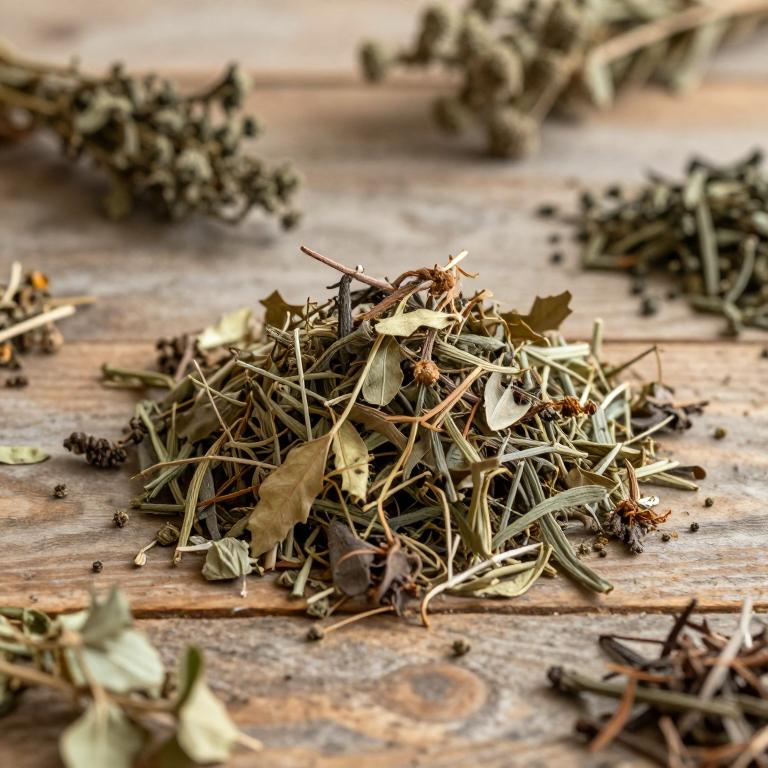
Broom Brush, scientifically known as Leptadenia pyrotechnica, is a versatile medicinal shrub native to arid regions. Renowned for its therapeutic properties, it is frequently utilized in traditional medicine to treat skin ailments, inflammation, and digestive issues. This resilient plant serves as a vital resource in holistic healing practices worldwide.
- Family
- Apocynaceae
- Native range
- Africa
- Parts used
- Root · Stem
- Common names
- Broom Brush · Kheep
- Scientific synonyms
- Leptadenia Spartum · Sarcostemma Pyrotechnicum · 7 more
Names and Synonyms
Common Names
- Broom Brush
- kheep
Scientific Names
Accepted name
Leptadenia pyrotechnicaSynonyms
- Leptadenia spartum
- Sarcostemma pyrotechnicum
- Leptadenia gracilis
- Periploca pyrotechnica
- Leptadenia jacquemontiana
- Microloma angustifolium
- Microloma pyrotechnicum
- Cynanchum pyrotechnicum
- Gymnema spartium
Sources: Wikidata, Catalogue of Life
Taxonomical Classification
This plant belongs to the kingdom Plantae and is classified under the phylum Streptophyta and the class Equisetopsida. Within the subclass Magnoliidae, it is organized under the order Gentianales and the family Apocynaceae. Finally, it is categorized under the genus Leptadenia.
| Rank | Classification |
|---|---|
| Kingdom | Plantae |
| Phylum | Streptophyta |
| Class | Equisetopsida |
| Subclass | Magnoliidae |
| Order | Gentianales |
| Family | Apocynaceae |
| Genus | Leptadenia |
Sources: The World Checklist of Vascular Plants (WCVP)
Distribution
This plant exhibits a specific geographical distribution spanning across several regions of the African continent. In Northern Africa, it can be found inhabiting the landscapes of Algeria, Egypt, and Libya. Its presence is also documented within the borders of Morocco, further establishing its reach in the northern territories. Moving toward West Tropical Africa, the species extends its range into Burkina. Collectively, these locations highlight the varied environments where the plant naturally occurs.
| Region | Area |
|---|---|
| Northern Africa | Algeria |
| Northern Africa | Egypt |
| Northern Africa | Libya |
| Northern Africa | Morocco |
| West Tropical Africa | Burkina |
| West Tropical Africa | Mali |
| West Tropical Africa | Mauritania |
| West Tropical Africa | Nigeria |
| West Tropical Africa | Niger |
| West Tropical Africa | Senegal |
Sources: The World Checklist of Vascular Plants (WCVP)
Botanical Identification
Life history
The life history of Leptadenia pyrotechnica is characterized by a perennial lifecycle, allowing the plant to persist through multiple growing seasons. In terms of its structural growth habit, it exhibits life forms classified as both phanerophyte and chamaephyte, indicating a versatile strategy for managing its reproductive and vegetative structures relative to the ground level. Furthermore, the plant follows a deciduous pattern, shedding its foliage as part of its seasonal biological cycle.
- Deciduousness :
- deciduous
- Life form :
- phanerophyte
- Life form :
- chamaephyte
- Lifecycle :
- perennial
Morphology
The morphology of Leptadenia pyrotechnica is characterized by a woody growth form, specifically categorized as a shrub. It is a terrestrial plant that functions independently, showing no parasitic or epiphytic tendencies. In terms of its structural habit, it acts as a self-supporting climber. The plant exhibits significant variation in stature, with a minimum height of approximately 0.91 m, reaching a maximum height of about 1.83 m, and maintaining an average plant height of approximately 2 m.
- Aquatic :
- terrestrial
- Climber :
- self-supporting
- Epiphyte :
- terrestrial
- Growth form :
- shrub
- Parasite :
- independent
- Plant height max:
- 1.828822238 m
- Plant height mean:
- 2 m
- Plant height min:
- 0.914411119 m
- Woodiness :
- woody
Physiology
The physiology of Leptadenia pyrotechnica is characterized by specialized adaptations to arid environments, focusing on water conservation and efficient nutrient management. In terms of its metabolic nitrogen dynamics, the plant is not a nitrogen fixer, meaning it lacks the symbiotic relationship with diazotrophic bacteria necessary to convert atmospheric nitrogen into a bioavailable form. Consequently, its growth and physiological development are heavily reliant on the uptake of nitrogenous compounds directly from the soil through its root system. To mitigate the physiological stress of high temperatures and low moisture, the plant employs succulent-like properties and specialized leaf structures that limit transpiration, maintaining cellular turgor and metabolic stability under extreme thermal conditions.
- Nitrogen fixer :
- no
Reproduction
The reproduction of Leptadenia pyrotechnica is characterized by a specific flowering phenology and distinct seed morphology. The flowering period typically begins in March and concludes in April, though the timing can be variable across different environmental conditions. Following successful pollination, the plant produces seeds with a highly consistent mass; the seed mass is measured at a mean, minimum, and maximum of 0.00477 g, indicating a very uniform seed size within the species.
- Flowering time :
- Mar
- Flowering time :
- Apr
- Seed mass mean:
- 0.00477 g
Sources: Global Inventory of Floras and Traits (GIFT)
Plant Parts
Leptadenia pyrotechnica has 2 reported plant parts identified across 2 scientific publications and several other databases that are studied for medicinal purposes. The most consistently reported plant part include root, stem.
| Plant part | Supporting sources | Consensus |
|---|---|---|
| Root | 1 supporting sources | ★☆☆☆☆ |
| Stem | 1 supporting sources | ★☆☆☆☆ |
Root
- Antioxidants (Basel, Switzerland)
Stem
- Antioxidants (Basel, Switzerland)
Chemicals
Leptadenia pyrotechnica has 11 reported phytochemicals identified across 2 scientific publications and several other databases. The most consistently reported chemicals include Flavonoid, 6-Deoxy-3-O-methylhexopyranose, Benzoyl, Gallic acid, Hexopyranose.
| Chemical | Supporting sources | Consensus |
|---|---|---|
| Flavonoid | 3 supporting sources | ★★☆☆☆ |
| 6-Deoxy-3-O-methylhexopyranose | 1 supporting sources | ★☆☆☆☆ |
| Benzoyl | 1 supporting sources | ★☆☆☆☆ |
| Gallic acid | 1 supporting sources | ★☆☆☆☆ |
| Hexopyranose | 1 supporting sources | ★☆☆☆☆ |
| SAPONIN | 1 supporting sources | ★☆☆☆☆ |
| Sarcostin | 1 supporting sources | ★☆☆☆☆ |
| Tannin | 1 supporting sources | ★☆☆☆☆ |
| acetyl | 1 supporting sources | ★☆☆☆☆ |
| cinnamoyl | 1 supporting sources | ★☆☆☆☆ |
Flavonoid
- Antioxidants (Basel, Switzerland)
- Chemistry & biodiversity
- International journal of nanomedicine
6-Deoxy-3-O-methylhexopyranose
- Journal of natural products
Benzoyl
- Journal of natural products
Gallic acid
- Molecules (Basel, Switzerland)
Hexopyranose
- Journal of natural products
SAPONIN
- Antioxidants (Basel, Switzerland)
Sarcostin
- Journal of natural products
Tannin
- Antioxidants (Basel, Switzerland)
acetyl
- Journal of natural products
cinnamoyl
- Journal of natural products
Activities
Leptadenia pyrotechnica has 13 reported activities identified across 2 scientific publications and several other databases. The most consistently reported activities include Antioxidant, Antibacterial, Anticancer, Hypolipidemic, Anabolic.
| Activity | Supporting sources | Consensus |
|---|---|---|
| Antioxidant | 4 supporting sources | ★★☆☆☆ |
| Antibacterial | 2 supporting sources | ★☆☆☆☆ |
| Anticancer | 2 supporting sources | ★☆☆☆☆ |
| Hypolipidemic | 2 supporting sources | ★☆☆☆☆ |
| Anabolic | 1 supporting sources | ★☆☆☆☆ |
| Analgesic | 1 supporting sources | ★☆☆☆☆ |
| Anthelmintic | 1 supporting sources | ★☆☆☆☆ |
| Antiatherosclerotic | 1 supporting sources | ★☆☆☆☆ |
| Antifungal | 1 supporting sources | ★☆☆☆☆ |
| Antitumor | 1 supporting sources | ★☆☆☆☆ |
Antioxidant
- Molecules (Basel, Switzerland)
- African journal of traditional, complementary, and alternative medicines : AJTCAM
- Chemistry & biodiversity
- International journal of nanomedicine
Antibacterial
- African journal of traditional, complementary, and alternative medicines : AJTCAM
- Chemistry & biodiversity
Anticancer
- African journal of traditional, complementary, and alternative medicines : AJTCAM
- International journal of nanomedicine
Hypolipidemic
- African journal of traditional, complementary, and alternative medicines : AJTCAM
- Chemistry & biodiversity
Anabolic
- Chemistry & biodiversity
Analgesic
- Chemistry & biodiversity
Anthelmintic
- African journal of traditional, complementary, and alternative medicines : AJTCAM
Antiatherosclerotic
- Chemistry & biodiversity
Antifungal
- African journal of traditional, complementary, and alternative medicines : AJTCAM
Antitumor
- Chemistry & biodiversity
Conditions
Leptadenia pyrotechnica has 11 reported investigations on conditions identified across 2 scientific publications and several other databases. The most consistently reported conditions include antioxidant, cancer, allergic rhinitis, allergies, analgesic.
| Condition | Supporting sources | Consensus |
|---|---|---|
| Antioxidant | 2 supporting sources | ★☆☆☆☆ |
| Cancer | 2 supporting sources | ★☆☆☆☆ |
| Allergic rhinitis | 1 supporting sources | ★☆☆☆☆ |
| Allergies | 1 supporting sources | ★☆☆☆☆ |
| Analgesic | 1 supporting sources | ★☆☆☆☆ |
| Astringent | 1 supporting sources | ★☆☆☆☆ |
| Fever | 1 supporting sources | ★☆☆☆☆ |
| Fevers | 1 supporting sources | ★☆☆☆☆ |
| Infectious diseases | 1 supporting sources | ★☆☆☆☆ |
| Laxative | 1 supporting sources | ★☆☆☆☆ |
Antioxidant
- Chemistry & biodiversity
- International journal of nanomedicine
Cancer
- Molecules (Basel, Switzerland)
- Journal of ethnopharmacology
Allergic rhinitis
- Journal of ethnopharmacology
Allergies
- PeerJ
Analgesic
- Chemistry & biodiversity
Astringent
- Chemistry & biodiversity
Fever
- Journal of ethnopharmacology
Fevers
- PeerJ
Infectious diseases
- Journal of ethnopharmacology
Laxative
- Chemistry & biodiversity
Preparations
Leptadenia pyrotechnica has 10 reported preparations identified across 2 scientific publications and several other databases. The most consistently reported preparations include Aqueous methanolic (30:70) extract of aerial parts, The whole plant, alcoholic extract, aqueous ethanolic crude extract, aqueous extract.
| Preparation | Supporting sources | Consensus |
|---|---|---|
| Aqueous methanolic (30:70) extract of aerial parts | 1 supporting sources | ★☆☆☆☆ |
| The whole plant | 1 supporting sources | ★☆☆☆☆ |
| Alcoholic extract | 1 supporting sources | ★☆☆☆☆ |
| Aqueous ethanolic crude extract | 1 supporting sources | ★☆☆☆☆ |
| Aqueous extract | 1 supporting sources | ★☆☆☆☆ |
| Ethyl acetate partitioning fraction | 1 supporting sources | ★☆☆☆☆ |
| Hot soxhlet extraction | 1 supporting sources | ★☆☆☆☆ |
| N-butanol partitioning fraction | 1 supporting sources | ★☆☆☆☆ |
| Plant extracts | 1 supporting sources | ★☆☆☆☆ |
| Water partitioning fraction | 1 supporting sources | ★☆☆☆☆ |
Aqueous methanolic (30:70) extract of aerial parts
- Journal of ethnopharmacology
The whole plant
- Journal of natural products
Alcoholic extract
- International journal of nanomedicine
Aqueous ethanolic crude extract
- Molecules (Basel, Switzerland)
Aqueous extract
- International journal of nanomedicine
Ethyl acetate partitioning fraction
- Molecules (Basel, Switzerland)
Hot soxhlet extraction
- Antioxidants (Basel, Switzerland)
N-butanol partitioning fraction
- Molecules (Basel, Switzerland)
Plant extracts
- Pakistan journal of biological sciences : PJBS
Water partitioning fraction
- Molecules (Basel, Switzerland)