Leptadenia lanceolata
Leptadenia lanceolata · Accepted scientific name
Scientific literature: Very Sparse (27 studies) · ★☆☆☆☆
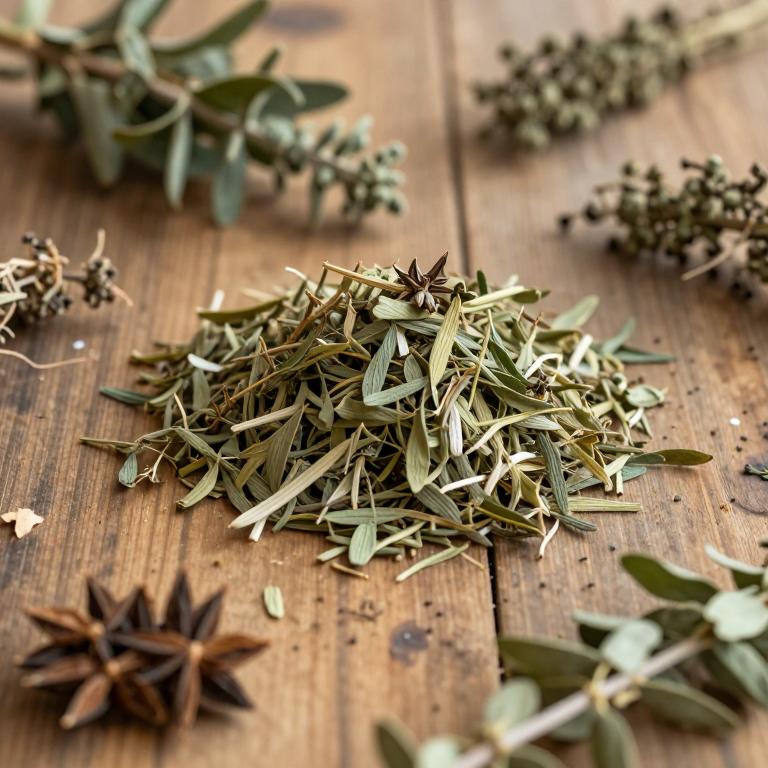
Leptadenia lanceolata, scientifically known as Leptadenia lanceolata, is a versatile climbing shrub native to the arid regions of India. Renowned in traditional Ayurvedic medicine, this plant possesses significant therapeutic properties, often utilized to treat skin ailments, respiratory issues, and inflammation, making it a vital resource in herbal pharmacology.
- Family
- Apocynaceae
- Native range
- Africa
- Parts used
- Leaf
- Common names
- Not available
- Scientific synonyms
- Leptadenia Hastata
Names and Synonyms
Scientific Names
Accepted name
Leptadenia lanceolataSynonyms
- Leptadenia hastata
Sources: Wikidata
Taxonomical Classification
This plant belongs to the kingdom Plantae and is classified under the phylum Streptophyta and class Equisetopsida. Within the subclass Magnoliidae, it is positioned in the order Gentianales and the family Apocynaceae. Its specific taxonomic identity is defined by the genus Leptadenia.
| Rank | Classification |
|---|---|
| Kingdom | Plantae |
| Phylum | Streptophyta |
| Class | Equisetopsida |
| Subclass | Magnoliidae |
| Order | Gentianales |
| Family | Apocynaceae |
| Genus | Leptadenia |
Sources: The World Checklist of Vascular Plants (WCVP)
Distribution
This plant exhibits a diverse geographical distribution spanning across multiple regions of the African continent. In Northern Africa, it can be found growing in the countries of Algeria and Libya. Moving toward West Tropical Africa, the species is also present in Benin. Its range extends further into the West Tropical region to include Burkina. Finally, the plant is documented to occur within the borders of Gambia.
| Region | Area |
|---|---|
| Northern Africa | Algeria |
| Northern Africa | Libya |
| West Tropical Africa | Benin |
| West Tropical Africa | Burkina |
| West Tropical Africa | Gambia |
| West Tropical Africa | Ghana |
| West Tropical Africa | Guinea-Bissau |
| West Tropical Africa | Guinea |
| West Tropical Africa | Ivory Coast |
| West Tropical Africa | Mali |
Sources: The World Checklist of Vascular Plants (WCVP)
Botanical Identification
Life history
The life history of Leptadenia lanceolata is characterized by its nature as a perennial plant, allowing it to persist in its environment through multiple growing seasons. In terms of its structural growth habit and life form, it is classified as a phanerophyte, specifically exhibiting traits associated with phanerophyte growth patterns where the perennating buds are elevated above the ground. This life history strategy enables the species to maintain a stable presence within its ecological niche over an extended period.
- Life form :
- phanerophyte
- Lifecycle :
- perennial
Morphology
The morphology of Leptadenia lanceolata is characterized by its terrestrial growth habit, existing as a non-aquatic species that thrives in land-based environments. It functions as an obligatory climber, specifically adopting a liana growth form where it uses external structures for support rather than being self-supporting. As an independent organism, it does not exhibit parasitic behavior, maintaining its own nutritional processes without relying on a host. Furthermore, the plant is strictly terrestrial rather than epiphytic, and its structural development is defined by a woody nature, providing the necessary rigidity for its climbing lifestyle.
- Aquatic :
- terrestrial
- Climber :
- liana
- Climber :
- obligatory
- Epiphyte :
- terrestrial
- Parasite :
- independent
- Woodiness :
- woody
Physiology
The physiology of Leptadenia lanceolata is characterized by specialized metabolic processes adapted to arid and semi-arid environments, where efficient water use and nutrient cycling are critical for survival. One of its key physiological distinctions lies in its relationship with soil nutrients; specifically, regarding its ability to perform symbiotic nitrogen fixation, the plant is categorized as not being a nitrogen fixer (trait_1: nitrogen fixer, trait_value: no). Instead of relying on root nodules containing nitrogen-fixing bacteria to convert atmospheric nitrogen, it typically depends on the availability of nitrates and ammonium in the soil or through the decomposition of organic matter. Its physiological resilience is further supported by a robust photosynthetic mechanism capable of maintaining carbon assimilation under high thermal stress, often utilizing physiological adaptations in leaf morphology and stomatal control to minimize transpiration while maximizing gas exchange during favorable periods.
- Nitrogen fixer :
- no
Reproduction
Reproduction in Leptadenia lanceolata is primarily driven by the production of specialized seeds that serve as the vehicle for species propagation. The reproductive success of this plant is characterized by highly consistent seed morphology, with a recorded seed mass that remains uniform across all measured samples. Specifically, the seed mass exhibits a mean value of 0.00403 g, a figure that is mirrored by both the maximum and minimum observed seed mass values of 0.00403 g. This lack of variance in seed weight indicates a highly standardized reproductive output, ensuring that each seed carries a precise and consistent amount of biological material necessary for germination and the establishment of new individuals within its ecological niche.
- Seed mass mean:
- 0.00403 g
Sources: Global Inventory of Floras and Traits (GIFT)
Plant Parts
Leptadenia lanceolata has 1 reported plant parts identified across 1 scientific publications and several other databases that are studied for medicinal purposes. The most consistently reported plant part include leaf.
| Plant part | Supporting sources | Consensus |
|---|---|---|
| Leaf | 1 supporting sources | ★☆☆☆☆ |
Leaf
- Food science & nutrition
Chemicals
Leptadenia lanceolata has 19 reported phytochemicals identified across 1 scientific publications and several other databases. The most consistently reported chemicals include Benzoyl, D-Cymarose, D-Oleandrose, Deacetylmetaplexigenin, Glycosides.
| Chemical | Supporting sources | Consensus |
|---|---|---|
| Benzoyl | 1 supporting sources | ★☆☆☆☆ |
| D-Cymarose | 1 supporting sources | ★☆☆☆☆ |
| D-Oleandrose | 1 supporting sources | ★☆☆☆☆ |
| Deacetylmetaplexigenin | 1 supporting sources | ★☆☆☆☆ |
| Glycosides | 1 supporting sources | ★☆☆☆☆ |
| Isoleucine | 1 supporting sources | ★☆☆☆☆ |
| LYCOPENE | 1 supporting sources | ★☆☆☆☆ |
| Lupeol | 1 supporting sources | ★☆☆☆☆ |
| Lupeol hemisuccinate | 1 supporting sources | ★☆☆☆☆ |
| Sarcostin | 1 supporting sources | ★☆☆☆☆ |
Benzoyl
- Journal of natural products
D-Cymarose
- Journal of natural products
D-Oleandrose
- Journal of natural products
Deacetylmetaplexigenin
- Journal of natural products
Glycosides
- Journal of natural products
Isoleucine
- Food science & nutrition
LYCOPENE
- Food science & nutrition
Lupeol
- Phytotherapy research : PTR
Lupeol hemisuccinate
- Phytotherapy research : PTR
Sarcostin
- Journal of natural products
Activities
Leptadenia lanceolata has 1 reported activities identified across 1 scientific publications and several other databases. The most consistently reported activities include Antiinflammatory.
| Activity | Supporting sources | Consensus |
|---|---|---|
| Antiinflammatory | 1 supporting sources | ★☆☆☆☆ |
Antiinflammatory
- Phytotherapy research : PTR
Preparations
Leptadenia lanceolata has 5 reported preparations identified across 1 scientific publications and several other databases. The most consistently reported preparations include CHCl3 extract, crude methanolic extract, latex, less polar extracts, more polar extracts.
| Preparation | Supporting sources | Consensus |
|---|---|---|
| Chcl3 extract | 1 supporting sources | ★☆☆☆☆ |
| Crude methanolic extract | 1 supporting sources | ★☆☆☆☆ |
| Latex | 1 supporting sources | ★☆☆☆☆ |
| Less polar extracts | 1 supporting sources | ★☆☆☆☆ |
| More polar extracts | 1 supporting sources | ★☆☆☆☆ |
Chcl3 extract
- Journal of natural products
Crude methanolic extract
- Journal of intercultural ethnopharmacology
Latex
- Phytotherapy research : PTR
Less polar extracts
- Journal of natural products
More polar extracts
- Journal of natural products