Lepidosperma viscidum
Lepidosperma viscidum · Accepted scientific name
Scientific literature: Very Sparse (1 studies) · ★☆☆☆☆
Lepidospermum viscidum, scientifically known as Lepidospermum viscidum, is a resilient, woody shrub native to Australia. Often found in coastal or heathland environments, this plant holds significant ethnobotanical value. Traditional practitioners have long utilized its unique properties, exploring its potential applications within various natural medicinal practices and herbal remedies.
- Family
- Not available
- Native range
- Australasia
- Parts used
- Stem
- Common names
- Not available
- Scientific synonyms
- Not available
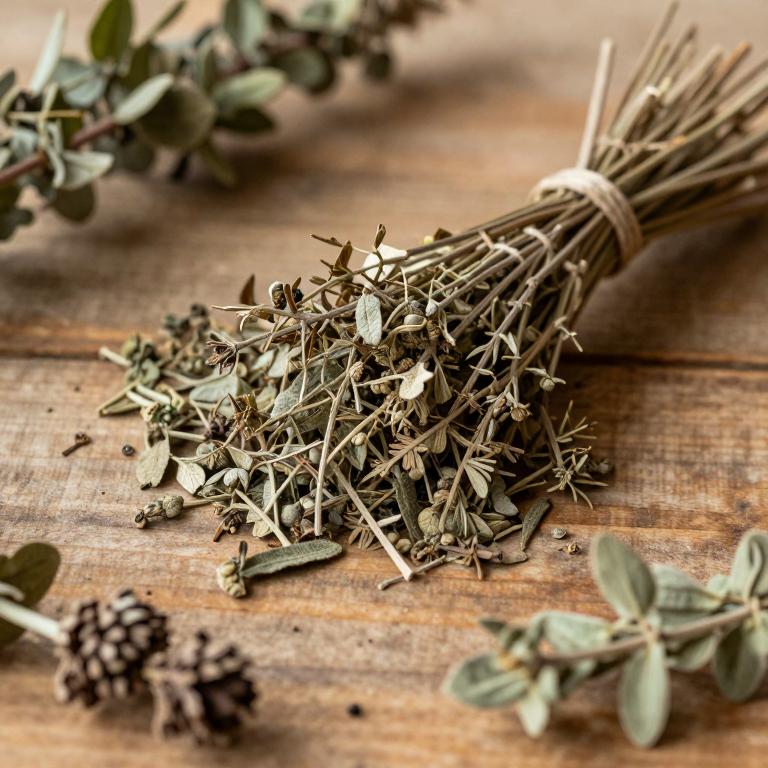
Names and Synonyms
Scientific Names
Accepted name
Lepidosperma viscidumDistribution
This plant is found across several diverse regions within the continent of Australia. Its distribution includes the coastal and inland areas of New South Wales. It can also be located throughout the state of Queensland. Furthermore, the species extends southward into South Australia and Victoria. Finally, its range reaches as far south as the island of Tasmania.
| Region | Area |
|---|---|
| Australia | New South Wales |
| Australia | Queensland |
| Australia | South Australia |
| Australia | Tasmania |
| Australia | Victoria |
Sources: The World Checklist of Vascular Plants (WCVP)
Botanical Identification
Life history
The life history of Lepidosperma viscidum is characterized by its status as a perennial plant, ensuring its long-term persistence within its ecological niche through multiple growing seasons. As a geophyte, its biological strategy involves protecting its vital organs and regenerative structures underground, allowing it to endure seasonal variations and environmental stressors by retreating to subterranean tissues. This life form enables the plant to emerge and re-establish its above-ground presence once favorable conditions return, facilitating a continuous and resilient lifecycle within its habitat.
- Life form :
- geophyte
- Lifecycle :
- perennial
Morphology
The morphology of Lepidosperma viscidum is characterized by its growth form as a non-woody herb, functioning as a self-supporting plant rather than a climber or epiphyte. It exhibits a versatile habitat range, occurring in aquatic, semiaquatic, and terrestrial environments, though it maintains a terrestrial habit in its ecological niche. The plant reaches a height ranging from a minimum of 0.3 m to a maximum of 1 m. Furthermore, it is an independent species, lacking any parasitic relationship with host organisms.
- Aquatic :
- terrestrial
- Climber :
- self-supporting
- Epiphyte :
- terrestrial
- Growth form :
- herb
- Parasite :
- independent
- Plant height max:
- 1 m
- Plant height min:
- 0.3 m
- Woodiness :
- non-woody
Physiology
The physiology of Lepidosperma viscidum is characterized by its utilization of the C3 photosynthetic pathway, a metabolic process that dictates its carbon fixation strategy and adaptation to its environmental niche. Morphologically, its photosynthetic efficiency is supported by slender foliage, with leaf width measurements ranging from a minimum of 0.2 cm to a maximum of 0.7 cm. These specific leaf dimensions contribute to the plant's overall hydraulic architecture and surface-area-to-volume ratio, influencing its gas exchange capabilities and transpiration rates within its habitat.
- Leaf width max:
- 0.7 cm
- Leaf width min:
- 0.2 cm
- Photosynthetic pathway :
- C3
Reproduction
The reproduction of Lepidosperma viscidum is characterized by the production of a specialized fruit type classified as a nut. This reproductive structure is notable for being indehiscent, meaning that the fruit does not split open at maturity to release its seeds, instead remaining intact to protect the progeny until dispersal.
- Dehiscence :
- indehiscent
- Fruit type :
- nut
Sources: Global Inventory of Floras and Traits (GIFT)
Plant Parts
Lepidosperma viscidum has 1 reported plant parts identified across 1 scientific publications and several other databases that are studied for medicinal purposes. The most consistently reported plant part include stem.
| Plant part | Supporting sources | Consensus |
|---|---|---|
| Stem | 1 supporting sources | ★☆☆☆☆ |
Stem
- Journal of basic microbiology