Borrego Valley peppergrass
Lepidium flavum · Accepted scientific name
Scientific literature: Very Sparse (6 studies) · ★☆☆☆☆
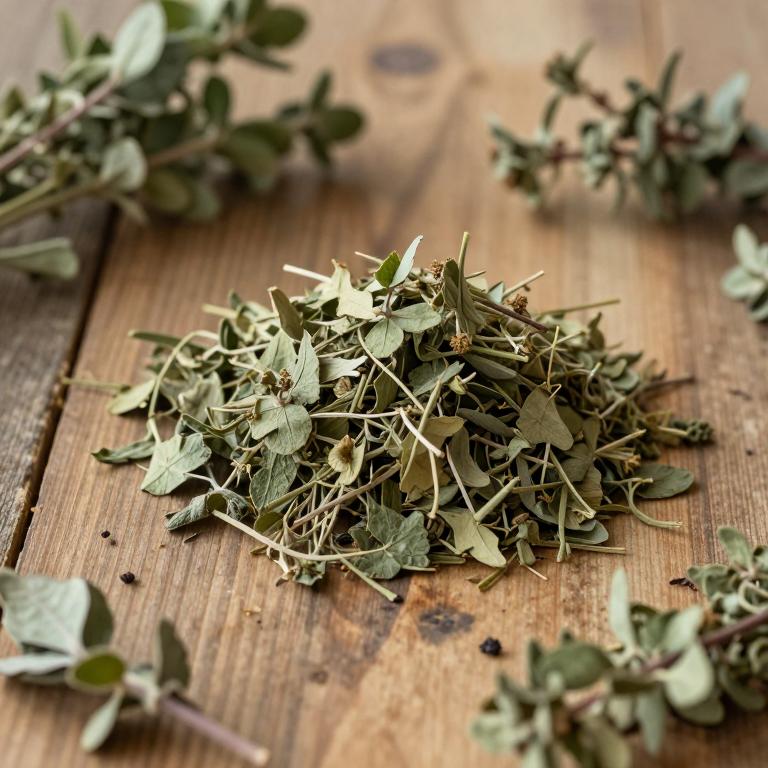
Borrego Valley peppergrass, scientifically known as Lepidium flavum, is a resilient desert herb native to arid regions. Characterized by its tiny, pungent seeds, this plant is valued in traditional ethnobotany for its perceived medicinal properties. It serves as a fascinating example of botanical adaptation within harsh, dry ecosystems.
Names and Synonyms
Common Names
- Borrego Valley peppergrass
- yellow pepperwort
- yellow peppercress
Scientific Names
Accepted name
Lepidium flavumSynonyms
- Lepidium flavum var. felipense
- Lepidium flavum var. apterum
- Sprengeria watsoniana
- Nasturtium flavum
- Sprengeria flava
- Sprengeria minuscula
Sources: Wikidata, Catalogue of Life
Taxonomical Classification
This plant belongs to the kingdom Plantae and the phylum Streptophyta, falling under the class Equisetopsida and subclass Magnoliidae. It is further classified within the order Brassicales and the family Brassicaceae. Finally, its taxonomic identity is defined by the genus Lepidium.
| Rank | Classification |
|---|---|
| Kingdom | Plantae |
| Phylum | Streptophyta |
| Class | Equisetopsida |
| Subclass | Magnoliidae |
| Order | Brassicales |
| Family | Brassicaceae |
| Genus | Lepidium |
Sources: The World Checklist of Vascular Plants (WCVP)
Distribution
This plant exhibits a specific range across the North American continent. Within the Southwestern United States, its presence is noted in the state of California. It can also be found growing in the desert landscapes of Nevada. Moving southward, the distribution extends into the nation of Mexico. Specifically, it is documented to inhabit the Northwest region of Mexico.
| Region | Area |
|---|---|
| Southwestern U.S.A. | California |
| Southwestern U.S.A. | Nevada |
| Mexico | Mexico Northwest |
Sources: The World Checklist of Vascular Plants (WCVP)
Botanical Identification
Life history
The life history of Lepidium flavum is characterized by an annual lifecycle, meaning it completes its entire biological progression from seed germination to seed production and death within a single growing season. As an annual species, the plant focuses its energy on rapid vegetative growth followed by a singular reproductive phase to ensure the continuation of the species. The developmental stages begin with the germination of seeds in suitable soil conditions, leading to the establishment of a primary root system and the development of basal foliage. As the season progresses, the plant transitions into its reproductive stage, producing flowering structures that eventually mature into seeds. This rapid turnover allows the plant to exploit seasonal environmental windows effectively, relying on the production of a robust seed bank to persist through unfavorable periods before the next generation emerges.
- Lifecycle :
- annual
Morphology
The morphology of Lepidium flavum is characterized by a growth form classified as a non-woody herb and a forb, lacking any woody tissue in its structure. It functions as an independent organism rather than a parasite and maintains a terrestrial existence, showing no tendency toward epiphytic or strictly aquatic lifestyles, although its habitat can range across aquatic, semiaquatic, and terrestrial environments. In terms of its structural habit, the plant is self-supporting, possessing neither climbing nor vining characteristics, such as lianas or facultative climbers, which allows it to maintain its upright position without external support.
- Aquatic :
- terrestrial
- Climber :
- self-supporting
- Epiphyte :
- terrestrial
- Growth form :
- herb
- Growth form :
- forb
- Parasite :
- independent
- Woodiness :
- non-woody
Reproduction
The reproduction of Lepidium flavum is characterized by the production of minute seeds that play a critical role in its dispersal and colonization capabilities. Quantitative analysis of its reproductive output reveals a highly consistent seed morphology, with all recorded measurements converging on a singular value. Specifically, the seed mass exhibits a mean of 0.00044 g, a maximum of 0.00044 g, and a minimum of 0.00044 g. This lack of variance in seed mass suggests a highly standardized developmental process during the maturation of the fruit, ensuring that each unit produced for the next generation maintains a uniform weight of 0.00044 g.
- Seed mass mean:
- 0.00044 g
Sources: Global Inventory of Floras and Traits (GIFT)
Chemicals
Lepidium flavum has 1 reported phytochemicals identified across 0 scientific publications and several other databases. The most consistently reported chemicals include CARVACROL.
| Chemical | Supporting sources | Consensus |
|---|---|---|
| CARVACROL | 1 supporting sources | ★☆☆☆☆ |
CARVACROL
- Current pharmaceutical design
Activities
Lepidium flavum has 3 reported activities identified across 0 scientific publications and several other databases. The most consistently reported activities include Anticancer, Antimicrobial, Antioxidant.
| Activity | Supporting sources | Consensus |
|---|---|---|
| Anticancer | 1 supporting sources | ★☆☆☆☆ |
| Antimicrobial | 1 supporting sources | ★☆☆☆☆ |
| Antioxidant | 1 supporting sources | ★☆☆☆☆ |
Anticancer
- Current pharmaceutical design
Antimicrobial
- Current pharmaceutical design
Antioxidant
- Current pharmaceutical design
Conditions
Lepidium flavum has 2 reported investigations on conditions identified across 0 scientific publications and several other databases. The most consistently reported conditions include dental caries, periodontal diseases.
| Condition | Supporting sources | Consensus |
|---|---|---|
| Dental caries | 1 supporting sources | ★☆☆☆☆ |
| Periodontal diseases | 1 supporting sources | ★☆☆☆☆ |
Dental caries
- Current pharmaceutical design
Periodontal diseases
- Current pharmaceutical design