Coronopus didymus
Lepidium didymum · Accepted scientific name
Scientific literature: Very Sparse (20 studies) · ★☆☆☆☆
Coronopus didymus, scientifically known as Lepidium didymum, is a versatile herb often found in coastal regions. Commonly called Lesser Swine-cress, this plant is valued in traditional medicine for its potent antimicrobial and anti-inflammatory properties. It serves as a vital resource in herbal remedies, supporting digestive health and overall wellness.
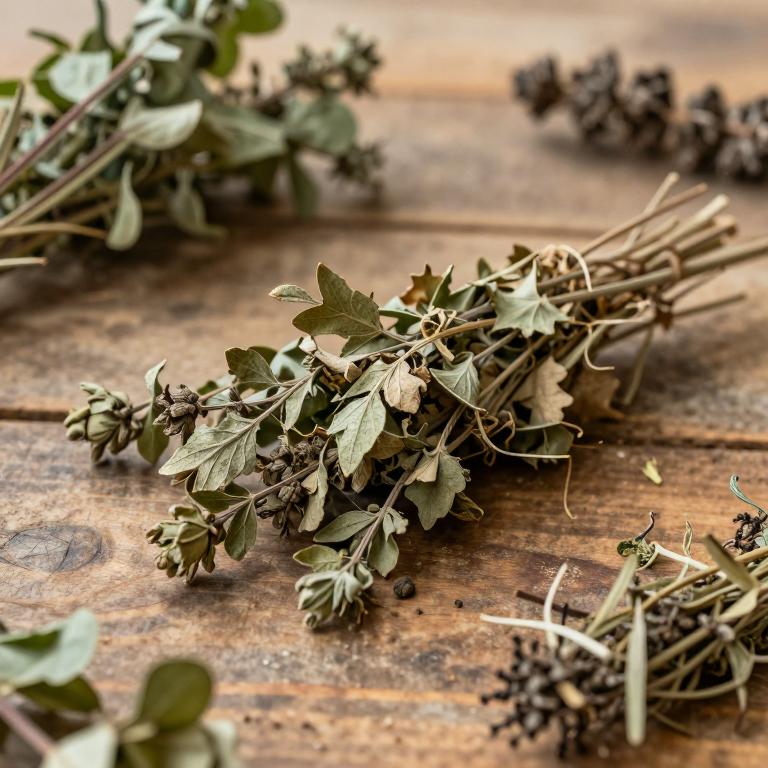
Names and Synonyms
Common Names
- lesser swinecress
- lesser wartcress
- Lesser Swine's Cress
- Lesser Swine-Cress
- Slender Wart-Cress
- Bitter Cress
- Swinecress
- Twin Cress
Scientific Names
Accepted name
Lepidium didymumSynonyms
- Nasturtium americanum
- Lepidium prostratum
- Sennebiera pinnatifida
- Senebiera pinnatifida var. incisa
- Nasturtiolum pinnatum
- Biscutella apetala
- Senebiera pectinata
- Nasturtiolum castratum
- Lepidium anglicum
- Senebiera pinnatifida
- Lepidium americanum
- Senebiera supina
- Senebiera didyma
- Senebiera heleniana
- Cochlearia humifusa
- Senebiera incisa
- Eudistemon humifusum
- Coronopus didymus var. incisus
- Coronopus didymus f. incisus
- Coronopus didymus var. macrocarpus
- Coronopus didymus f. pectinatus
- Coronopus didymus var. rosulatus
- Coronopus didymus
- Coronopus heleniana
- Coronopus incisus
- Coronopus leptocarpus
- Coronopus leptocarpus var. microcarpus
- Coronopus pectinatus
- Coronopus pinnatifidus
- Coronopus pinnatifidus
- Coronopus pinnatus
- Crucifera senebiera
- Carara didyma
- Coronopus didymus var. procumbens
Regional and Traditional Names
Spanish:
- mastuerzo
- mastuerzo de Indias
German:
- Zweiknotiger Krähenfuß
- Senebiera didyma
- Senebiera pinnatifida
- Coronopus pinnatifida
- Coronopus didymus
- zweiknotiger Krähenfuß
French:
- corne-de-cerf didyme
- corne-de-cerf à deux lobes
- sénebière didyme
- Passerage didyme
Sources: Wikidata, Catalogue of Life
Taxonomical Classification
This plant, known scientifically as Lepidium didymum, belongs to the kingdom Plantae and the phylum Streptophyta. It is classified under the class Equisetopsida and the subclass Magnoliidae, falling within the order Brassicales. Finally, it is a member of the family Brassicaceae and is situated within the genus Lepidium.
| Rank | Classification |
|---|---|
| Kingdom | Plantae |
| Phylum | Streptophyta |
| Class | Equisetopsida |
| Subclass | Magnoliidae |
| Order | Brassicales |
| Family | Brassicaceae |
| Genus | Lepidium |
Sources: The World Checklist of Vascular Plants (WCVP)
Distribution
This plant, known as Lepidium didymum, exhibits a specific distribution across several regions of Northern Europe. It can be found growing in the coastal and terrestrial landscapes of Denmark. Furthermore, its presence extends to the northern reaches of the continent within Finland. The species is also documented throughout the islands of Great Britain and Ireland. Finally, its geographical range includes the rugged terrains of Norway.
| Region | Area |
|---|---|
| Northern Europe | Denmark |
| Northern Europe | Finland |
| Northern Europe | Great Britain |
| Northern Europe | Ireland |
| Northern Europe | Norway |
| Northern Europe | Sweden |
| Middle Europe | Austria |
| Middle Europe | Belgium |
| Middle Europe | Czechia-Slovakia |
| Middle Europe | Germany |
Sources: The World Checklist of Vascular Plants (WCVP)
Botanical Identification
Ecology
The ecology of Lepidium didymum is characterized by a broad altitudinal distribution and a strong association with human-disturbed environments. This species thrives across a wide elevational range, beginning at sea level (0 m AMSL) and reaching a maximum altitude of 2900 m AMSL, with a mean elevation of approximately 1600 m AMSL. Its primary habitat is identified as anthropogenic areas (Área Antrópica), indicating that the plant frequently colonizes environments shaped by human activity, such as cultivated lands, roadsides, or disturbed soils.
- Elevational range max:
- 2900 m AMSL
- Elevational range mean:
- 1600 m AMSL
- Elevational range min:
- 0 m AMSL
- Habitat :
- Área Antrópica
Genetics
The genetics of Lepidium didymum are characterized by a specific karyotype that defines its reproductive and evolutionary biology. A fundamental genetic attribute of this species is its chromosome number, which is recorded as 32. This chromosomal count serves as a key cytogenetic marker, distinguishing it within the Brassicaceae family and influencing its genomic stability and inheritance patterns. The specific diploid number plays a critical role in the plant's ability to undergo meiosis and ensures the proper distribution of genetic material during sexual reproduction.
- Chromosome number :
- 32
Life history
The life history of Lepidium didymum is characterized by an annual lifecycle, meaning the plant completes its entire biological progression from germination to seed production within a single growing season. As a therophyte, it survives unfavorable environmental conditions by existing solely as a seed, which remains dormant until conditions become favorable for rapid growth and reproduction. This plant exhibits a deciduous nature, shedding its vegetative structures as it completes its seasonal cycle. Its growth strategy is centered on efficient resource acquisition during its short lifespan, typical of a therophytic life form that prioritizes quick maturation and prolific seeding to ensure the continuity of the species.
- Deciduousness :
- deciduous
- Life form :
- therophyte
- Lifecycle :
- annual
Morphology
The morphology of Lepidium didymum is characterized by its growth form as a non-woody herb and forb. This plant is terrestrial in nature, functioning as an independent organism rather than a parasite or an epiphyte. It is a self-supporting species that does not exhibit climbing behavior, such as lianas or vines. The plant features an ascending shoot orientation, with a maximum shoot length reaching up to 40 cm. In terms of stature, the plant displays a height ranging from a minimum of 0.05 m to a maximum of 0.6 m, with an average plant height of approximately 0.22425 m.
- Aquatic :
- terrestrial
- Climber :
- self-supporting
- Epiphyte :
- terrestrial
- Growth form :
- herb
- Growth form :
- forb
- Parasite :
- independent
- Plant height max:
- 0.6 m
- Plant height mean:
- 0.22425 m
- Plant height min:
- 0.05 m
- Shoot length max:
- 40 cm
- Shoot orientation :
- ascending
- Woodiness :
- non-woody
Physiology
The physiology of Lepidium didymum is characterized by a C3 photosynthetic pathway and a non-carnivorous nutritional strategy. The plant does not exhibit succulence and lacks the capacity for nitrogen fixation, relying instead on standard soil nutrient uptake. Its leaf morphology is notably pinnatisect in form, with dimensions that vary significantly; leaf length ranges from a minimum of 1 cm to a maximum of 10 cm, while leaf width fluctuates between 0.5 cm and 3 cm, resulting in a mean leaf width of 1.7 cm. The average leaf size is recorded at 1.5896 cm², and the plant maintains a mean Specific Leaf Area (SLA) of 351.57 cm²/g, reflecting its specific leaf mass distribution and resource acquisition efficiency.
- Carnivory :
- non-carnivorous
- Leaf form :
- pinnatisect
- Leaf length max:
- 10 cm
- Leaf length min:
- 1 cm
- Leaf size mean:
- 1.5896 cm²
- Leaf width max:
- 3 cm
- Leaf width mean:
- 1.7 cm
- Leaf width min:
- 0.5 cm
- Nitrogen fixer :
- no
- Photosynthetic pathway :
- C3
- Specific Leaf Area (SLA) mean:
- 351.57 cm²/g
- Succulence :
- no
Reproduction
Reproduction in Lepidium didymum is primarily sexual, facilitated by bisexual flowers that are capable of self-fertilization. The plant produces white flowers arranged in a raceme inflorescence, with individual flowers measuring between 0.06 cm and 0.08 cm in length. These flowers follow a biotic pollination syndrome, specifically relying on insects for pollen transfer. The flowering period typically commences in February and extends through August. Following successful pollination, the plant develops a dehiscence-style fruit known as a siliqua. These fruits vary in size, with a mean length of 0.125 cm (ranging from 0.13 cm to a maximum of 1.6 cm) and a mean width of 0.2125 cm (ranging from 0.2 cm to 0.28 cm). Each siliqua is highly prolific, containing between 101 and 1000 seeds. The seeds are remarkably small and uniform, with a consistent length of 1 mm and a mean mass of approximately 0.000503857 g (ranging from 0.00003 g to 0.00072 g). Dispersal is characterized as zoochorous, specifically utilizing an epizoochorous mechanism to spread seeds. There is no evidence of asexual reproduction in this species.
- Dehiscence :
- dehiscent
- Dispersal syndrome :
- zoochorous
- Dispersal syndrome :
- epizoochorous
- Flower colour :
- white
- Flower length max:
- 0.08 cm
- Flower length min:
- 0.06 cm
- Flowering time :
- Feb
- Flowering time :
- Aug
- Fruit length max:
- 1.6 cm
- Fruit length mean:
- 0.125 cm
- Fruit length min:
- 0.13 cm
- Fruit type :
- siliqua
- Fruit width max:
- 0.28 cm
- Fruit width mean:
- 0.2125 cm
- Fruit width min:
- 0.2 cm
- Inflorescence :
- raceme
- Pollination syndrome :
- insect
- Pollination syndrome :
- biotic
- Reproduction asexual :
- absent
- Reproduction sexual :
- bisexual
- Seed length mean:
- 1 mm
- Seed mass max:
- 0.00072 g
- Seed mass mean:
- 0.000503857 g
- Seed mass min:
- 3e-05 g
- Seeds_per_fruit :
- 101-1000
- Self fertilization :
- present
Sources: Global Inventory of Floras and Traits (GIFT)
Plant Parts
Lepidium didymum has 1 reported plant parts identified across 2 scientific publications and several other databases that are studied for medicinal purposes. The most consistently reported plant part include leaf.
| Plant part | Supporting sources | Consensus |
|---|---|---|
| Leaf | 2 supporting sources | ★☆☆☆☆ |
Leaf
- Journal of ethnopharmacology
- Molecules (Basel, Switzerland)
Chemicals
Lepidium didymum has 6 reported phytochemicals identified across 2 scientific publications and several other databases. The most consistently reported chemicals include CHLOROGENIC ACID, FLAVONE, benzoic acid, ferulic acid, kaempferol.
| Chemical | Supporting sources | Consensus |
|---|---|---|
| CHLOROGENIC ACID | 1 supporting sources | ★☆☆☆☆ |
| FLAVONE | 1 supporting sources | ★☆☆☆☆ |
| benzoic acid | 1 supporting sources | ★☆☆☆☆ |
| ferulic acid | 1 supporting sources | ★☆☆☆☆ |
| kaempferol | 1 supporting sources | ★☆☆☆☆ |
| quercetin | 1 supporting sources | ★☆☆☆☆ |
CHLOROGENIC ACID
- Molecules (Basel, Switzerland)
FLAVONE
- Asian Pacific journal of tropical medicine
benzoic acid
- Molecules (Basel, Switzerland)
ferulic acid
- Molecules (Basel, Switzerland)
kaempferol
- Molecules (Basel, Switzerland)
quercetin
- Molecules (Basel, Switzerland)
Activities
Lepidium didymum has 9 reported activities identified across 2 scientific publications and several other databases. The most consistently reported activities include Antioxidant, Antibacterial, Antidiabetic, Antifungal, Antiproliferative.
| Activity | Supporting sources | Consensus |
|---|---|---|
| Antioxidant | 2 supporting sources | ★☆☆☆☆ |
| Antibacterial | 1 supporting sources | ★☆☆☆☆ |
| Antidiabetic | 1 supporting sources | ★☆☆☆☆ |
| Antifungal | 1 supporting sources | ★☆☆☆☆ |
| Antiproliferative | 1 supporting sources | ★☆☆☆☆ |
| Antipyretic | 1 supporting sources | ★☆☆☆☆ |
| Antitumor | 1 supporting sources | ★☆☆☆☆ |
| Cytotoxic | 1 supporting sources | ★☆☆☆☆ |
| Expectorant | 1 supporting sources | ★☆☆☆☆ |
Antioxidant
- Molecules (Basel, Switzerland)
- Pakistan journal of pharmaceutical sciences
Antibacterial
- Pakistan journal of pharmaceutical sciences
Antidiabetic
- Molecules (Basel, Switzerland)
Antifungal
- Pakistan journal of pharmaceutical sciences
Antiproliferative
- Molecules (Basel, Switzerland)
Antipyretic
- Journal of ethnopharmacology
Antitumor
- Pakistan journal of pharmaceutical sciences
Cytotoxic
- Pakistan journal of pharmaceutical sciences
Expectorant
- Journal of ethnopharmacology
Preparations
Lepidium didymum has 14 reported preparations identified across 2 scientific publications and several other databases. The most consistently reported preparations include acetone extract, acetone-based extracts, chloroform extract, decoction, dichloromethane extract.
| Preparation | Supporting sources | Consensus |
|---|---|---|
| Acetone extract | 1 supporting sources | ★☆☆☆☆ |
| Acetone-based extracts | 1 supporting sources | ★☆☆☆☆ |
| Chloroform extract | 1 supporting sources | ★☆☆☆☆ |
| Decoction | 1 supporting sources | ★☆☆☆☆ |
| Dichloromethane extract | 1 supporting sources | ★☆☆☆☆ |
| Ethanol extract | 1 supporting sources | ★☆☆☆☆ |
| Ethanol-based extracts | 1 supporting sources | ★☆☆☆☆ |
| Ethanolic extract | 1 supporting sources | ★☆☆☆☆ |
| Extract | 1 supporting sources | ★☆☆☆☆ |
| Food | 1 supporting sources | ★☆☆☆☆ |
Acetone extract
- Asian Pacific journal of tropical medicine
Acetone-based extracts
- Molecules (Basel, Switzerland)
Chloroform extract
- Asian Pacific journal of tropical medicine
Decoction
- Journal of ethnopharmacology
Dichloromethane extract
- Asian Pacific journal of tropical medicine
Ethanol extract
- Asian Pacific journal of tropical medicine
Ethanol-based extracts
- Molecules (Basel, Switzerland)
Ethanolic extract
- Asian Pacific journal of tropical medicine
Extract
- Antiviral chemistry & chemotherapy
Food
- Journal of ethnopharmacology