Lepidium cartilagineum subsp. cartilagineum
Lepidium cartilagineum subsp. cartilagineum · Accepted scientific name
Scientific literature: Very Sparse (6 studies) · ★☆☆☆☆
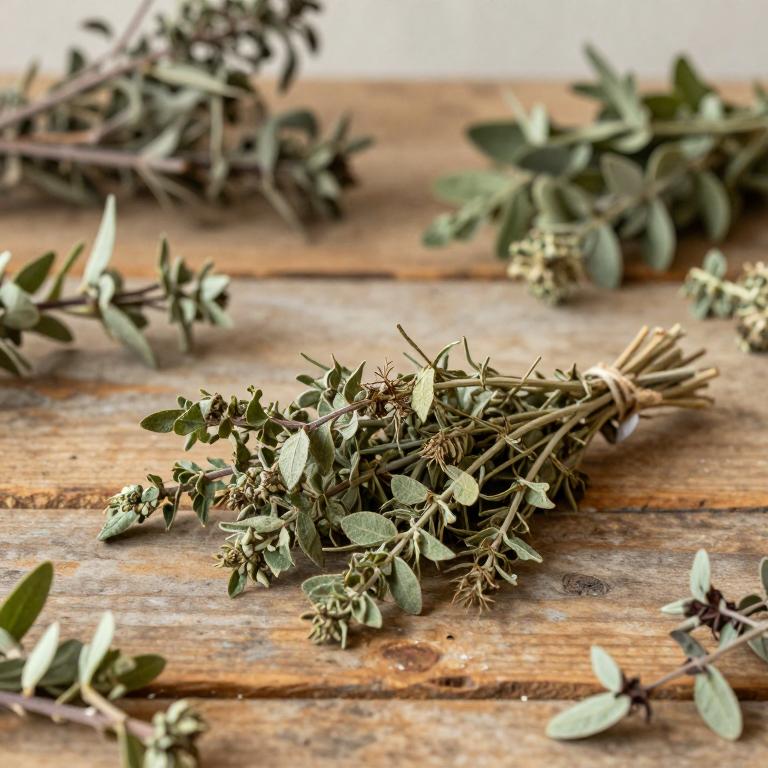
, scientifically known as Lepidium cartilagineum subsp. cartilagineum, is a resilient herbaceous plant native to coastal regions. Often recognized by its unique structural properties, this subspecies holds significant interest in traditional medicine. Researchers explore its bioactive compounds, seeking potential therapeutic applications for its diverse phytochemical profile and medicinal properties.
- Family
- Brassicaceae
- Native range
- Europe
- Parts used
- Not available
- Common names
- Not available
- Scientific synonyms
- Nasturtium Crassifolium · Cardaria Crassifolia · 8 more
Names and Synonyms
Scientific Names
Accepted name
Lepidium cartilagineum subsp. cartilagineumSynonyms
- Nasturtium crassifolium
- Cardaria crassifolia
- Lepidium syvaschicum
- Lepidium cartilagineum subsp. crassifolium
- Lepidium crassifolium
- Lepidium crassifolium var. dentatum
- Lepidium kabulicum
- Lepidium bornmuellerianum
- Lepidium borysthenicum
- Lepidium crassifolium
Taxonomical Classification
This plant belongs to the kingdom Plantae within the phylum Streptophyta and the class Equisetopsida. It is further classified under the subclass Magnoliidae, the order Brassicales, and the family Brassicaceae. Finally, its taxonomic identity is defined by the genus Lepidium, specifically the subspecies cartilagineum.
| Rank | Classification |
|---|---|
| Kingdom | Plantae |
| Phylum | Streptophyta |
| Class | Equisetopsida |
| Subclass | Magnoliidae |
| Order | Brassicales |
| Family | Brassicaceae |
| Genus | Lepidium |
Sources: The World Checklist of Vascular Plants (WCVP)
Distribution
This plant is primarily distributed across several regions within the European continent. In Middle Europe, it can be found growing in the territories of Austria and Germany. Its presence also extends through Hungary and Poland within the same central region. Furthermore, the species reaches into Southeastern Europe, specifically inhabiting Romania. Consequently, its geographical range spans a diverse corridor from central to southeastern parts of the continent.
| Region | Area |
|---|---|
| Middle Europe | Austria |
| Middle Europe | Germany |
| Middle Europe | Hungary |
| Middle Europe | Poland |
| Southeastern Europe | Romania |
| Southeastern Europe | NW. Balkan Pen. |
| Eastern Europe | Krym |
| Eastern Europe | East European Russia |
| Eastern Europe | South European Russia |
| Eastern Europe | Ukraine |
Sources: The World Checklist of Vascular Plants (WCVP)
Activities
Lepidium cartilagineum subsp. cartilagineum has 6 reported activities identified across 0 scientific publications and several other databases. The most consistently reported activities include Analgesic, Anthelmintic, Antibacterial, Antitumor, Irritant.
| Activity | Supporting sources | Consensus |
|---|---|---|
| Analgesic | 1 supporting sources | ★☆☆☆☆ |
| Anthelmintic | 1 supporting sources | ★☆☆☆☆ |
| Antibacterial | 1 supporting sources | ★☆☆☆☆ |
| Antitumor | 1 supporting sources | ★☆☆☆☆ |
| Irritant | 1 supporting sources | ★☆☆☆☆ |
| Laxative | 1 supporting sources | ★☆☆☆☆ |
Analgesic
- International journal of biomaterials
Anthelmintic
- International journal of biomaterials
Antibacterial
- International journal of biomaterials
Antitumor
- International journal of biomaterials
Irritant
- International journal of biomaterials
Laxative
- International journal of biomaterials