Lepechinia salviae
Lepechinia salviae · Accepted scientific name
Scientific literature: Very Sparse (2 studies) · ★☆☆☆☆
Lepechinia salviae, scientifically known as Lepechinia salviae, is a distinctive medicinal shrub native to Australia. Valued in traditional folk medicine, this plant is often utilized for its therapeutic properties. It features aromatic foliage and unique flowering structures, making it a significant subject in botanical studies and herbal wellness.
- Family
- Lamiaceae
- Native range
- Southern America
- Parts used
- Not available
- Common names
- Not available
- Scientific synonyms
- Lepechinia Subhastata · Gardoquia Salviifolia · 6 more
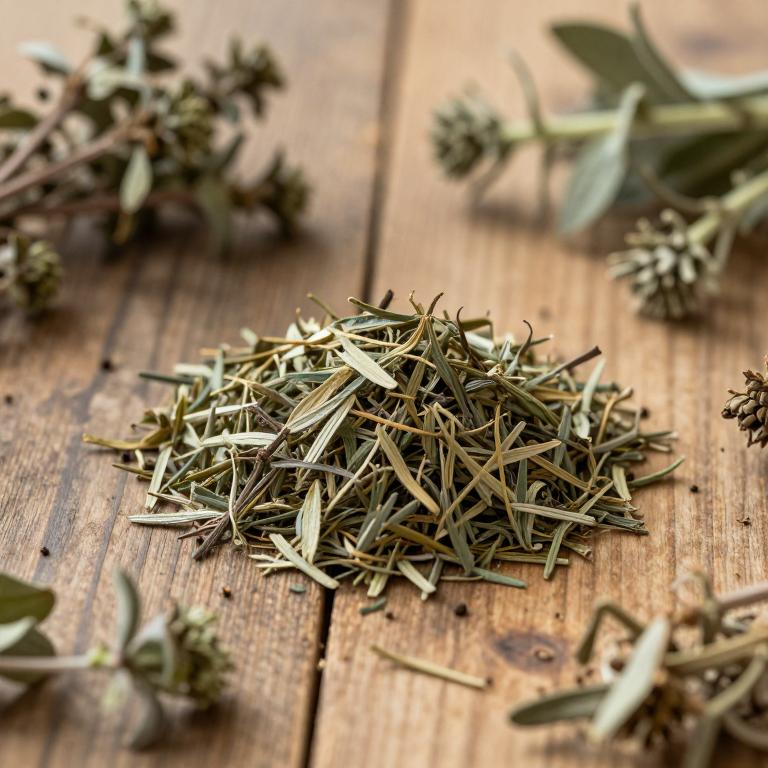
Names and Synonyms
Scientific Names
Accepted name
Lepechinia salviaeSynonyms
- Lepechinia subhastata
- Gardoquia salviifolia
- Gardoquia salviifolia
- Sphacele salviae
- Alguelagum salviae
- Sphacele subhastata
- Alguelagum subhastatum
- Stachys salviae
Sources: Wikidata, Catalogue of Life
Taxonomical Classification
This plant belongs to the kingdom Plantae and is classified under the phylum Streptophyta and the class Equisetopsida. Within the subclass Magnoliidae, it is situated in the order Lamiales and the family Lamiaceae. Ultimately, its taxonomic identity is defined by its placement in the genus Lepechinia.
| Rank | Classification |
|---|---|
| Kingdom | Plantae |
| Phylum | Streptophyta |
| Class | Equisetopsida |
| Subclass | Magnoliidae |
| Order | Lamiales |
| Family | Lamiaceae |
| Genus | Lepechinia |
Sources: The World Checklist of Vascular Plants (WCVP)
Distribution
This plant is native to the specific region of Southern South America. Its primary geographical distribution is concentrated within the central part of Chile. Within this territory, it thrives in the unique environmental conditions provided by the central Chilean landscape. Consequently, the species is considered endemic to this particular area of the continent. Finding this medicinal plant in the wild is therefore limited to these specific southern latitudes.
| Region | Area |
|---|---|
| Southern South America | Chile Central |
Sources: The World Checklist of Vascular Plants (WCVP)
Botanical Identification
Ecology
The ecology of Lepechinia salviae is characterized by its ability to thrive across a broad altitudinal spectrum, ranging from sea level to significant highland elevations. Specifically, the species occupies an ecological niche that spans an elevational range from 0 m AMSL to a maximum of 1500 m AMSL. This wide distributional gradient suggests an adaptability to diverse environmental conditions, including varying temperature regimes and atmospheric pressures encountered between coastal lowlands and montane habitats. Such a range indicates that the plant can tolerate a variety of microclimates, potentially allowing it to persist in different soil compositions and moisture levels found throughout these shifting elevational zones.
- Elevational range max:
- 1500 m AMSL
- Elevational range min:
- 0 m AMSL
Life history
The life history of Lepechinia salviae is characterized by a perennial lifecycle, allowing the plant to persist through multiple growing seasons. In terms of its structural growth patterns and ecological positioning, it exhibits diverse life forms, functioning as a nanophanerophyte while also displaying characteristics consistent with a phanerophyte.
- Life form :
- nanophanerophyte
- Life form :
- phanerophyte
- Lifecycle :
- perennial
Morphology
The morphology of Lepechinia salviae is characterized by a self-supporting growth habit, functioning as a woody shrub rather than a climber or an epiphyte. It is a terrestrial species, lacking aquatic or semiaquatic tendencies, and maintains an independent life cycle without acting as a parasite. Structurally, the plant exhibits significant woodiness, establishing a robust, shrubby form that distinguishes it from herbaceous or graminoid species.
- Aquatic :
- terrestrial
- Climber :
- self-supporting
- Epiphyte :
- terrestrial
- Growth form :
- shrub
- Parasite :
- independent
- Woodiness :
- woody
Reproduction
The reproduction of Lepechinia salviae is characterized by the production of specialized seeds that exhibit specific morphological and weight parameters. The reproductive output is defined by a seed mass that maintains a relatively tight range, indicating a high level of consistency in seed development. On average, the seed mass of this species is 0.006593333 g, with individual seed weights fluctuating between a minimum of 0.00617 g and a maximum of 0.00706 g. These precise measurements reflect the plant's reproductive strategy and the energetic investment allocated to each seed during its maturation process.
- Seed mass max:
- 0.00706 g
- Seed mass mean:
- 0.006593333 g
- Seed mass min:
- 0.00617 g
Sources: Global Inventory of Floras and Traits (GIFT)
Activities
Lepechinia salviae has 1 reported activities identified across 0 scientific publications and several other databases. The most consistently reported activities include Antiproliferative.
| Activity | Supporting sources | Consensus |
|---|---|---|
| Antiproliferative | 1 supporting sources | ★☆☆☆☆ |
Antiproliferative
- Natural product communications