Baja Pitcher Sage
Lepechinia hastata · Accepted scientific name
Scientific literature: Very Sparse (23 studies) · ★☆☆☆☆
Baja Pitcher Sage, scientifically known as Lepechinia hastata, is a distinctive perennial herb native to the arid regions of Mexico. Renowned for its unique, pitcher-shaped flowers, this medicinal plant is traditionally utilized in folk remedies to treat various ailments, offering significant botanical interest for its therapeutic potential and striking appearance.
- Family
- Lamiaceae
- Native range
- Pacific
- Parts used
- Not available
- Common names
- Baja Pitcher Sage · Cape Pitcher Sage · 3 more
- Scientific synonyms
- Alguelagum Hastatum
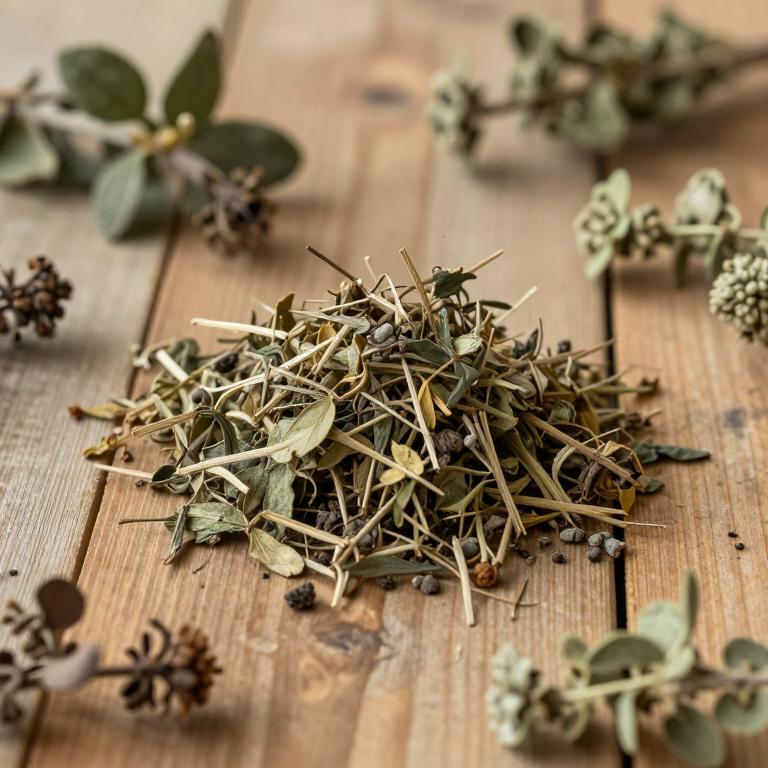
Names and Synonyms
Common Names
- Baja Pitcher Sage
- Cape Pitcher Sage
- False Salvia
- Island Pitcher Sage
- Pakata
Scientific Names
Accepted name
Lepechinia hastataSynonyms
- Alguelagum hastatum
Sources: Wikidata, Catalogue of Life
Taxonomical Classification
This plant belongs to the kingdom Plantae and is classified under the phylum Streptophyta and the class Equisetopsida. Within the subclass Magnoliidae, it is further categorized into the order Lamiales and the family Lamiaceae. Finally, its taxonomic identity is defined by the genus Lepechinia.
| Rank | Classification |
|---|---|
| Kingdom | Plantae |
| Phylum | Streptophyta |
| Class | Equisetopsida |
| Subclass | Magnoliidae |
| Order | Lamiales |
| Family | Lamiaceae |
| Genus | Lepechinia |
Sources: The World Checklist of Vascular Plants (WCVP)
Distribution
This plant exhibits a specific distribution pattern across the Pacific and North American regions. In the North-Central Pacific, it can be found growing in the islands of Hawaii. Its range extends to the Mexican Pacific Islands located off the coast. Furthermore, it is documented within the Mexico Northwest territory. These distinct locations highlight its specialized geographical presence.
| Region | Area |
|---|---|
| North-Central Pacific | Hawaii |
| Mexico | Mexican Pacific Is. |
| Mexico | Mexico Northwest |
Sources: The World Checklist of Vascular Plants (WCVP)
Botanical Identification
Life history
The life history of Lepechinia hastata is characterized by its status as a perennial species, allowing it to persist through multiple growing seasons rather than completing its cycle in a single year. Structurally, the plant adopts a chamaephyte life form, meaning its perennating buds are located close to or just above the soil surface, which typically aids in its survival and establishment within its specific ecological niche.
- Life form :
- chamaephyte
- Lifecycle :
- perennial
Morphology
The morphology of Lepechinia hastaata is characterized by a non-woody growth form, specifically categorized as a herbaceous forb. This plant functions as an independent organism, neither acting as a parasite nor as an epiphyte, maintaining a primarily terrestrial existence within its habitat. In terms of physical stature, it is a self-supporting plant that does not require climbing structures, reaching a plant height that typically ranges from a minimum of 0.8 m to a maximum of 1.5 m. Although it is categorized within a spectrum that includes aquatic and semiaquatic environments, its primary ecological habit is terrestrial.
- Aquatic :
- terrestrial
- Climber :
- self-supporting
- Epiphyte :
- terrestrial
- Growth form :
- herb
- Growth form :
- forb
- Parasite :
- independent
- Plant height max:
- 1.5 m
- Plant height min:
- 0.8 m
- Woodiness :
- non-woody
Physiology
The physiological structure of Lepechinia hastata is characterized by its significant foliar development, which facilitates efficient photosynthetic activity through substantial surface area. The leaves exhibit considerable morphological variation in their dimensions, with lengths ranging from a minimum of 12 cm to a maximum of 25 cm. Complementing this longitudinal growth, the leaf width demonstrates a broad range, spanning from a minimum of 3.3 cm to a maximum of 13 cm. This dimensional plasticity in the foliage allows the plant to optimize light interception and gas exchange within its specific ecological niche, supporting its metabolic requirements through a robust leaf architecture.
- Leaf length max:
- 25 cm
- Leaf length min:
- 12 cm
- Leaf width max:
- 13 cm
- Leaf width min:
- 3.3 cm
Reproduction
The reproduction of Lepechinia hastata is characterized by the production of small, specialized fruits that serve as the primary vehicle for seed dispersal. These fruits exhibit a specific size range, typically measuring between a minimum of 0.4 cm and a maximum of 0.5 cm in length. This consistent dimension in fruit development ensures that the reproductive output remains within a tight morphological window, facilitating the successful propagation of the species within its natural habitat.
- Fruit length max:
- 0.5 cm
- Fruit length min:
- 0.4 cm
Sources: Global Inventory of Floras and Traits (GIFT)
Chemicals
Lepechinia hastata has 2 reported phytochemicals identified across 0 scientific publications and several other databases. The most consistently reported chemicals include carnosol, Carnosic acid.
| Chemical | Supporting sources | Consensus |
|---|---|---|
| carnosol | 2 supporting sources | ★☆☆☆☆ |
| Carnosic acid | 1 supporting sources | ★☆☆☆☆ |
carnosol
- Dr. Duke
- Journal of ethnopharmacology
Carnosic acid
- Dr. Duke
Activities
Lepechinia hastata has 20 reported activities identified across 0 scientific publications and several other databases. The most consistently reported activities include 5-Lipoxygenase-Inhibitor, AntiHIV, Antibiotic, Antihepatotoxic, Antiinflammatory.
| Activity | Supporting sources | Consensus |
|---|---|---|
| 5-Lipoxygenase-Inhibitor | 1 supporting sources | ★☆☆☆☆ |
| AntiHIV | 1 supporting sources | ★☆☆☆☆ |
| Antibiotic | 1 supporting sources | ★☆☆☆☆ |
| Antihepatotoxic | 1 supporting sources | ★☆☆☆☆ |
| Antiinflammatory | 1 supporting sources | ★☆☆☆☆ |
| Antilipoperoxidant | 1 supporting sources | ★☆☆☆☆ |
| Antimutagenic | 1 supporting sources | ★☆☆☆☆ |
| Antioxidant | 1 supporting sources | ★☆☆☆☆ |
| Antiradicular | 1 supporting sources | ★☆☆☆☆ |
| Antitumor | 1 supporting sources | ★☆☆☆☆ |
5-Lipoxygenase-Inhibitor
- Dr. Duke
AntiHIV
- Dr. Duke
Antibiotic
- Dr. Duke
Antihepatotoxic
- Dr. Duke
Antiinflammatory
- Dr. Duke
Antilipoperoxidant
- Dr. Duke
Antimutagenic
- Dr. Duke
Antioxidant
- Dr. Duke
Antiradicular
- Dr. Duke
Antitumor
- Dr. Duke