Leonurus panzerioides
Leonurus panzerioides · Accepted scientific name
Scientific literature: Very Sparse (8 studies) · ★☆☆☆☆
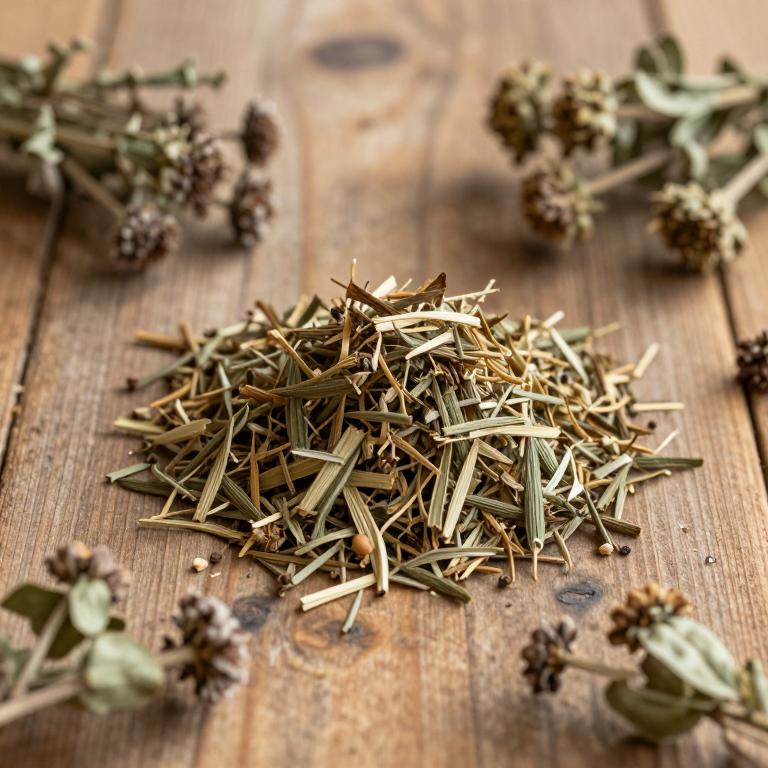
, scientifically known as Leonurus panzerioides, is a medicinal herb valued for its diverse therapeutic properties. Often found in specific tropical regions, this plant is traditionally utilized in folk medicine to address various ailments. Its unique chemical composition offers significant potential for pharmacological research and natural healing practices worldwide.
- Family
- Lamiaceae
- Native range
- Asia-Temperate
- Parts used
- Not available
- Common names
- Not available
- Scientific synonyms
- Leonurus Oreades
Names and Synonyms
Scientific Names
Accepted name
Leonurus panzerioidesSynonyms
- Leonurus oreades
Sources: Wikidata, Catalogue of Life
Taxonomical Classification
This plant belongs to the kingdom Plantae and the phylum Streptophyta within the class Equisetopsida. It is further classified under the subclass Magnoliidae and the order Lamiales, falling into the family Lamiaceae. Ultimately, it is categorized under the genus Leonurus.
| Rank | Classification |
|---|---|
| Kingdom | Plantae |
| Phylum | Streptophyta |
| Class | Equisetopsida |
| Subclass | Magnoliidae |
| Order | Lamiales |
| Family | Lamiaceae |
| Genus | Leonurus |
Sources: The World Checklist of Vascular Plants (WCVP)
Distribution
This plant is primarily distributed across the specific regions of Central Asia. Its natural habitat includes the mountainous and arid landscapes found within Kyrgyzstan. Additionally, the species can be identified growing in various parts of Tajikistan. It also maintains a presence throughout the territory of Uzbekistan. Together, these three countries represent the key geographical range for this medicinal species.
| Region | Area |
|---|---|
| Central Asia | Kirgizstan |
| Central Asia | Tadzhikistan |
| Central Asia | Uzbekistan |
Sources: The World Checklist of Vascular Plants (WCVP)
Botanical Identification
Ecology
The ecology of Leonurus panzerioides is primarily defined by its presence in high-altitude environments, where it flourishes within expansive meadows and rugged mountain terrains. It thrives in these open, sun-exposed landscapes, often colonizing areas that provide a balance of well-drained soil and the specific microclimatic conditions found in montane ecosystems. By occupying these meadowlands, the species participates in the complex biological interactions of mountain flora, adapting to the seasonal temperature fluctuations and the distinct moisture regimes characteristic of such elevated habitats.
- Habitat :
- meadows, mountains
Life history
The life history of Leonurus panzerioides is characterized by its classification as a perennial plant, allowing it to persist through multiple growing seasons. As a hemicryptophyte, its perennating buds are located at the soil surface, protected by leaf litter or debris during unfavorable environmental conditions. This life form, shared across its taxonomic identity as a hemicryptophyte, enables the species to maintain a stable presence within its habitat by regenerating from these surface-level buds once favorable conditions return.
- Life form :
- hemicryptophyte
- Lifecycle :
- perennial
Morphology
The morphology of Leonurus panzerioides is characterized by its growth form as a non-woody herb. This plant is a self-supporting species that does not function as a climber, maintaining its structure independently. It grows as a terrestrial plant, functioning as an independent organism rather than a parasite or an epiphyte. In terms of stature, the plant typically reaches a minimum height of 0.4 m, with a maximum height of approximately 0.7 m.
- Climber :
- self-supporting
- Epiphyte :
- terrestrial
- Growth form :
- herb
- Parasite :
- independent
- Plant height max:
- 0.7 m
- Plant height min:
- 0.4 m
- Woodiness :
- non-woody
Reproduction
The reproduction of Leonurus panzerioides is characterized by a specific seasonal flowering cycle that facilitates its reproductive success. The flowering period typically begins in July and extends through August, though the precise timing can be subject to environmental variability. This concentrated blooming window serves as the primary phase for sexual reproduction, during which the plant produces flowers to enable pollination.
- Flowering time :
- Jul
- Flowering time :
- Aug
Sources: Global Inventory of Floras and Traits (GIFT)
Chemicals
Leonurus panzerioides has 6 reported phytochemicals identified across 0 scientific publications and several other databases. The most consistently reported chemicals include 8-Acetylharpagide, Harpagide, Leonurine, eugenol, p-Vinyl guaiacol.
| Chemical | Supporting sources | Consensus |
|---|---|---|
| 8-Acetylharpagide | 1 supporting sources | ★☆☆☆☆ |
| Harpagide | 1 supporting sources | ★☆☆☆☆ |
| Leonurine | 1 supporting sources | ★☆☆☆☆ |
| eugenol | 1 supporting sources | ★☆☆☆☆ |
| p-Vinyl guaiacol | 1 supporting sources | ★☆☆☆☆ |
| stachydrine | 1 supporting sources | ★☆☆☆☆ |
8-Acetylharpagide
- Phytochemical analysis : PCA
Harpagide
- Phytochemical analysis : PCA
Leonurine
- Phytochemical analysis : PCA
eugenol
- Phytochemical analysis : PCA
p-Vinyl guaiacol
- Phytochemical analysis : PCA
stachydrine
- Phytochemical analysis : PCA
Activities
Leonurus panzerioides has 1 reported activities identified across 0 scientific publications and several other databases. The most consistently reported activities include Sedative.
| Activity | Supporting sources | Consensus |
|---|---|---|
| Sedative | 1 supporting sources | ★☆☆☆☆ |
Sedative
- Phytochemical analysis : PCA
Conditions
Leonurus panzerioides has 1 reported investigations on conditions identified across 0 scientific publications and several other databases. The most consistently reported conditions include sedative.
| Condition | Supporting sources | Consensus |
|---|---|---|
| Sedative | 1 supporting sources | ★☆☆☆☆ |
Sedative
- Phytochemical analysis : PCA
Preparations
Leonurus panzerioides has 2 reported preparations identified across 0 scientific publications and several other databases. The most consistently reported preparations include essential oils, methanol extracts.
| Preparation | Supporting sources | Consensus |
|---|---|---|
| Essential oils | 1 supporting sources | ★☆☆☆☆ |
| Methanol extracts | 1 supporting sources | ★☆☆☆☆ |
Essential oils
- Phytochemical analysis : PCA
Methanol extracts
- Phytochemical analysis : PCA