Lion Paws
Leonotis · Accepted scientific name
Scientific literature: Very Sparse (6 studies) · ★☆☆☆☆
Lion Paws, scientifically known as Leonotis, is a striking perennial shrub celebrated for its vibrant, orange tubular flowers. Native to Africa, this medicinal powerhouse is traditionally used to treat respiratory ailments, inflammation, and fever. Its unique appearance and potent therapeutic properties make it a vital herb in herbal medicine.
- Family
- Lamiaceae
- Native range
- Africa
- Parts used
- Stem
- Common names
- Lion Paws · Wild Daggas · 1 more
- Scientific synonyms
- Hemisodon
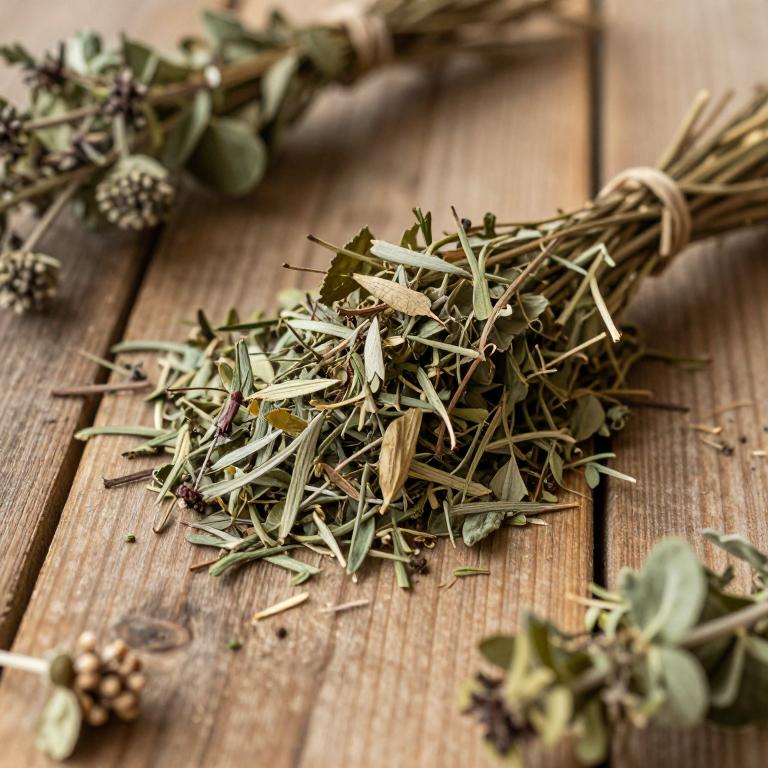
Names and Synonyms
Common Names
- Lion Paws
- Wild Daggas
- lion's ears
Scientific Names
Accepted name
LeonotisSynonyms
- Hemisodon
Regional and Traditional Names
Spanish:
- Colas de león
German:
- Löwenohren
- Löwenohren
Sources: Wikidata, Catalogue of Life
Taxonomical Classification
This plant belongs to the kingdom Plantae and the phylum Streptophyta, falling under the class Equisetopsida and subclass Magnoliidae. Within the order Lamiales and the family Lamiaceae, it is classified under the genus Leonotis.
| Rank | Classification |
|---|---|
| Kingdom | Plantae |
| Phylum | Streptophyta |
| Class | Equisetopsida |
| Subclass | Magnoliidae |
| Order | Lamiales |
| Family | Lamiaceae |
| Genus | Leonotis |
Sources: The World Checklist of Vascular Plants (WCVP)
Distribution
This plant exhibits a diverse geographical distribution spanning several distinct regions across the African continent and its surrounding islands. In Northern Africa, it can be found specifically within the borders of Morocco. Its range extends to the Macaronesian region, where it inhabits the Canary Islands. Within West Tropical Africa, the species is documented in Benin as well as in Burkina. Additionally, the plant's presence is confirmed in the West Tropical African nation of Gambia.
| Region | Area |
|---|---|
| Northern Africa | Morocco |
| Macaronesia | Canary Is. |
| West Tropical Africa | Benin |
| West Tropical Africa | Burkina |
| West Tropical Africa | Gambia |
| West Tropical Africa | Ghana |
| West Tropical Africa | Guinea-Bissau |
| West Tropical Africa | Guinea |
| West Tropical Africa | Ivory Coast |
| West Tropical Africa | Liberia |
Sources: The World Checklist of Vascular Plants (WCVP)
Plant Parts
Leonotis has 1 reported plant parts identified across 1 scientific publications and several other databases that are studied for medicinal purposes. The most consistently reported plant part include stem.
| Plant part | Supporting sources | Consensus |
|---|---|---|
| Stem | 1 supporting sources | ★☆☆☆☆ |
Stem
- Zhong yao cai = Zhongyaocai = Journal of Chinese medicinal materials
Chemicals
Leonotis has 2 reported phytochemicals identified across 1 scientific publications and several other databases. The most consistently reported chemicals include stachydrine, Leonurine.
| Chemical | Supporting sources | Consensus |
|---|---|---|
| stachydrine | 2 supporting sources | ★☆☆☆☆ |
| Leonurine | 1 supporting sources | ★☆☆☆☆ |
stachydrine
- International immunopharmacology
- Phytochemistry
Leonurine
- Phytochemistry
Activities
Leonotis has 1 reported activities identified across 1 scientific publications and several other databases. The most consistently reported activities include Sedative.
| Activity | Supporting sources | Consensus |
|---|---|---|
| Sedative | 1 supporting sources | ★☆☆☆☆ |
Sedative
- Phytochemistry
Preparations
Leonotis has 2 reported preparations identified across 1 scientific publications and several other databases. The most consistently reported preparations include Yimu Cao, extracts.
| Preparation | Supporting sources | Consensus |
|---|---|---|
| Yimu cao | 1 supporting sources | ★☆☆☆☆ |
| Extracts | 1 supporting sources | ★☆☆☆☆ |
Yimu cao
- Zhong yao cai = Zhongyaocai = Journal of Chinese medicinal materials
Extracts
- Biofizika