Lavigeria macrocarpa
Lavigeria macrocarpa · Accepted scientific name
Scientific literature: Very Sparse (7 studies) · ★☆☆☆☆
, scientifically known as Lavigeria macrocarpa, is a significant medicinal plant valued for its diverse therapeutic properties. Often utilized in traditional medicine to address various ailments, this species holds great potential for pharmacological research. Understanding its phytochemical composition is essential for exploring its role in developing future natural treatments.
- Family
- Icacinaceae
- Native range
- Africa
- Parts used
- Not available
- Common names
- Not available
- Scientific synonyms
- Icacina Macrocarpa · Lavigeria Salutaris
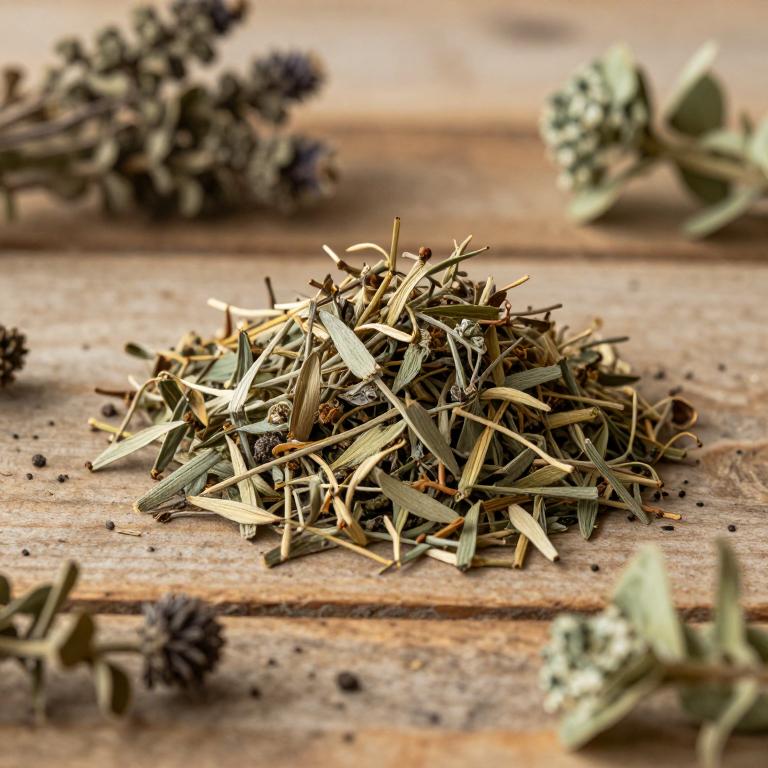
Names and Synonyms
Scientific Names
Accepted name
Lavigeria macrocarpaSynonyms
- Icacina macrocarpa
- Lavigeria salutaris
Sources: Wikidata
Taxonomical Classification
This plant belongs to the kingdom Plantae and is classified within the phylum Streptophyta and the class Equisetopsida. It falls under the subclass Magnoliidae and the order Icacinales, specifically within the family Icacinaceae. Its taxonomic identification is completed by its classification under the genus Lavigeria.
| Rank | Classification |
|---|---|
| Kingdom | Plantae |
| Phylum | Streptophyta |
| Class | Equisetopsida |
| Subclass | Magnoliidae |
| Order | Icacinales |
| Family | Icacinaceae |
| Genus | Lavigeria |
Sources: The World Checklist of Vascular Plants (WCVP)
Distribution
This plant exhibits a specific distribution pattern primarily located within the tropical regions of the African continent. In West Tropical Africa, its presence is documented in Nigeria. Moving into the West-Central Tropical Africa zone, the species can be found in the Central African Republic. Furthermore, the plant extends its range through Cameroon and into the Congo. Finally, its geographical footprint includes the nation of Gabon.
| Region | Area |
|---|---|
| West Tropical Africa | Nigeria |
| West-Central Tropical Africa | Central African Republic |
| West-Central Tropical Africa | Cameroon |
| West-Central Tropical Africa | Congo |
| West-Central Tropical Africa | Gabon |
| West-Central Tropical Africa | Gulf of Guinea Is. |
| West-Central Tropical Africa | DR Congo |
Sources: The World Checklist of Vascular Plants (WCVP)
Botanical Identification
Ecology
The ecology of Lavigeria macrocarpa is intrinsically linked to the complex structural dynamics of its native environment, specifically thriving within the dense primary well-drained forest. In these stable, climax forest ecosystems, the plant occupies niches characterized by high organic matter content and consistent moisture levels maintained by a thick canopy cover. The well-drained nature of the substrate is a critical ecological requirement, preventing root hypoxia while allowing for the steady infiltration of nutrients necessary for its growth. Within this dense primary vegetation, the plant exists in a state of constant competition for light and space, benefiting from the microclimates created by the multi-layered forest architecture which buffers against extreme temperature fluctuations and maintains high humidity levels.
- Habitat :
- dense primary wel-drained forest
Morphology
The morphology of Lavigeria macrocarpa is characterized by its growth as a woody liana, functioning as an obligatory climber that utilizes surrounding structures for support. Although it exhibits the structural complexity of a tree in certain developmental aspects, its primary habit is that of a vine. As an independent organism, it does not function as a parasite, maintaining its own nutritional processes. Furthermore, it is classified as a terrestrial plant, rooting in the soil rather than growing as an epiphyte.
- Climber :
- liana
- Climber :
- obligatory
- Epiphyte :
- terrestrial
- Growth form :
- tree
- Parasite :
- independent
- Woodiness :
- woody
Sources: Global Inventory of Floras and Traits (GIFT)
Chemicals
Lavigeria macrocarpa has 4 reported phytochemicals identified across 0 scientific publications and several other databases. The most consistently reported chemicals include Flavonoids, Icacine, Phenols, Tannins.
| Chemical | Supporting sources | Consensus |
|---|---|---|
| Flavonoids | 1 supporting sources | ★☆☆☆☆ |
| Icacine | 1 supporting sources | ★☆☆☆☆ |
| Phenols | 1 supporting sources | ★☆☆☆☆ |
| Tannins | 1 supporting sources | ★☆☆☆☆ |
Flavonoids
- Advances in pharmacological and pharmaceutical sciences
Icacine
- Fitoterapia
Phenols
- Advances in pharmacological and pharmaceutical sciences
Tannins
- Advances in pharmacological and pharmaceutical sciences
Activities
Lavigeria macrocarpa has 3 reported activities identified across 0 scientific publications and several other databases. The most consistently reported activities include Antifungal, Antioxidant, Cytotoxic.
| Activity | Supporting sources | Consensus |
|---|---|---|
| Antifungal | 1 supporting sources | ★☆☆☆☆ |
| Antioxidant | 1 supporting sources | ★☆☆☆☆ |
| Cytotoxic | 1 supporting sources | ★☆☆☆☆ |
Antifungal
- Advances in pharmacological and pharmaceutical sciences
Antioxidant
- Advances in pharmacological and pharmaceutical sciences
Cytotoxic
- Fitoterapia
Preparations
Lavigeria macrocarpa has 2 reported preparations identified across 0 scientific publications and several other databases. The most consistently reported preparations include EtOH extract, plant extracts.
| Preparation | Supporting sources | Consensus |
|---|---|---|
| Etoh extract | 1 supporting sources | ★☆☆☆☆ |
| Plant extracts | 1 supporting sources | ★☆☆☆☆ |
Etoh extract
- Fitoterapia
Plant extracts
- Advances in pharmacological and pharmaceutical sciences