lavendels
Lavandula · Accepted scientific name
Scientific literature: Sparse (64 studies) · ★★☆☆☆
Lavendels, scientifically known as Lavandula, is a beloved aromatic shrub celebrated for its fragrant purple blooms. Renowned in herbal medicine, it possesses powerful calming, antiseptic, and anti-inflammatory properties. Often used in essential oils, lavender effectively relieves anxiety, promotes restful sleep, and soothes skin irritations through its soothing essence.
- Family
- Lamiaceae
- Native range
- Europe
- Parts used
- Not available
- Common names
- Lavender · Lavenders
- Scientific synonyms
- Chaetostachys · Isinia · 1 more
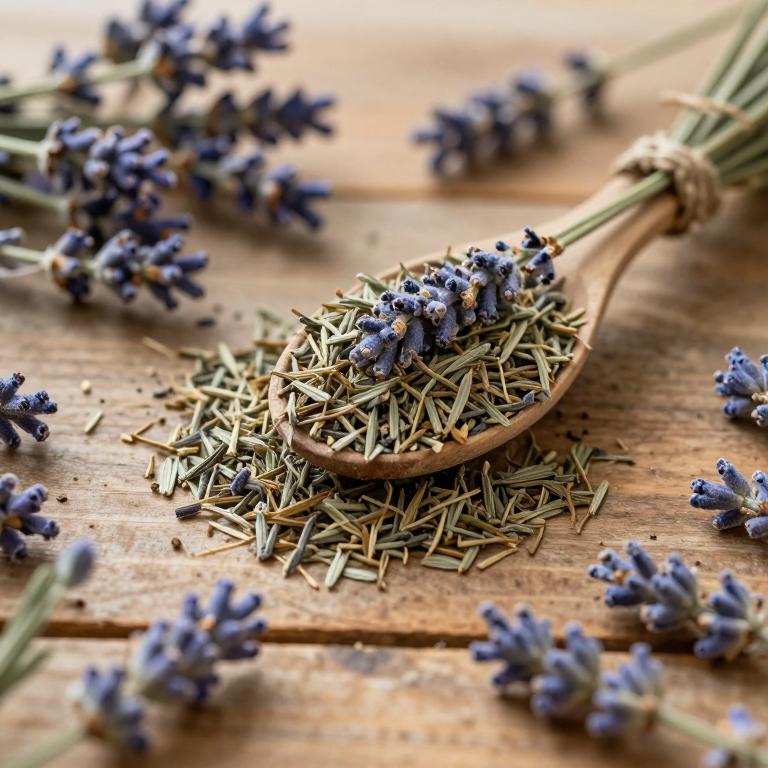
Names and Synonyms
Common Names
- Lavender
- Lavenders
Scientific Names
Accepted name
LavandulaSynonyms
- Chaetostachys
- Isinia
- Sabaudia
Regional and Traditional Names
Spanish:
- Lavanda
- Lavanduleae
- Stoechas
- Styphonia
- Lavender
- Lavendula
- Isinia
German:
- Lavendel
- Lavendel
French:
- lavande
- Lavandin
- Lavandes
- Lavande
Sources: Wikidata, Catalogue of Life
Taxonomical Classification
This plant belongs to the kingdom Plantae and is classified under the phylum Streptophyta within the class Equisetopsida. As a member of the subclass Magnoliidae and the order Lamiales, it is further categorized into the family Lamiaceae. Finally, its specific taxonomic identity is defined by the genus Lavandula.
| Rank | Classification |
|---|---|
| Kingdom | Plantae |
| Phylum | Streptophyta |
| Class | Equisetopsida |
| Subclass | Magnoliidae |
| Order | Lamiales |
| Family | Lamiaceae |
| Genus | Lavandula |
Sources: The World Checklist of Vascular Plants (WCVP)
Distribution
This plant exhibits a diverse range of habitats across several European regions. In Northern Europe, its presence is noted in both Great Britain and Ireland. Moving toward the center of the continent, it can be found throughout Middle Europe, specifically in Austria and Germany. Its distribution also extends to the Mediterranean climate of Southwestern Europe. Within this southern region, the plant is documented growing in the Baleares.
| Region | Area |
|---|---|
| Northern Europe | Great Britain |
| Northern Europe | Ireland |
| Middle Europe | Austria |
| Middle Europe | Germany |
| Southwestern Europe | Baleares |
| Southwestern Europe | Corse |
| Southwestern Europe | France |
| Southwestern Europe | Portugal |
| Southwestern Europe | Sardegna |
| Southwestern Europe | Spain |
Sources: The World Checklist of Vascular Plants (WCVP)
Chemicals
Lavandula has 7 reported phytochemicals identified across 0 scientific publications and several other databases. The most consistently reported chemicals include Linalool, LINALYL ACETATE, Coumarins, Flavonoids, cineole.
| Chemical | Supporting sources | Consensus |
|---|---|---|
| Linalool | 6 supporting sources | ★★★☆☆ |
| LINALYL ACETATE | 4 supporting sources | ★★☆☆☆ |
| Coumarins | 1 supporting sources | ★☆☆☆☆ |
| Flavonoids | 1 supporting sources | ★☆☆☆☆ |
| cineole | 1 supporting sources | ★☆☆☆☆ |
| tri-p-coumaroylspermidine | 1 supporting sources | ★☆☆☆☆ |
| triterpenoids | 1 supporting sources | ★☆☆☆☆ |
Linalool
- Veterinary parasitology
- Planta medica
- European journal of pharmaceutical sciences : official journal of the European Federation for Pharmaceutical Sciences
- Phytomedicine : international journal of phytotherapy and phytopharmacology
- Scientific reports
View 1 additional sources
- Endocrine, metabolic & immune disorders drug targets
LINALYL ACETATE
- Planta medica
- European journal of pharmaceutical sciences : official journal of the European Federation for Pharmaceutical Sciences
- Phytomedicine : international journal of phytotherapy and phytopharmacology
- Scientific reports
Coumarins
- Phytomedicine : international journal of phytotherapy and phytopharmacology
Flavonoids
- Phytomedicine : international journal of phytotherapy and phytopharmacology
cineole
- European journal of pharmaceutical sciences : official journal of the European Federation for Pharmaceutical Sciences
tri-p-coumaroylspermidine
- Journal of agricultural and food chemistry
triterpenoids
- Phytomedicine : international journal of phytotherapy and phytopharmacology
Activities
Lavandula has 10 reported activities identified across 0 scientific publications and several other databases. The most consistently reported activities include Antibacterial, Analgesic, Antioxidant, Antidepressant, Antifungal.
| Activity | Supporting sources | Consensus |
|---|---|---|
| Antibacterial | 3 supporting sources | ★★☆☆☆ |
| Analgesic | 2 supporting sources | ★☆☆☆☆ |
| Antioxidant | 2 supporting sources | ★☆☆☆☆ |
| Antidepressant | 1 supporting sources | ★☆☆☆☆ |
| Antifungal | 1 supporting sources | ★☆☆☆☆ |
| Antigiardial | 1 supporting sources | ★☆☆☆☆ |
| Antiinflammatory | 1 supporting sources | ★☆☆☆☆ |
| Antimicrobial | 1 supporting sources | ★☆☆☆☆ |
| Antiseptic | 1 supporting sources | ★☆☆☆☆ |
| Anxiolytic | 1 supporting sources | ★☆☆☆☆ |
Antibacterial
- Current molecular medicine
- Naunyn-Schmiedeberg's archives of pharmacology
- Phytomedicine : international journal of phytotherapy and phytopharmacology
Analgesic
- Journal of burn care & research : official publication of the American Burn Association
- Naunyn-Schmiedeberg's archives of pharmacology
Antioxidant
- Current molecular medicine
- Phytomedicine : international journal of phytotherapy and phytopharmacology
Antidepressant
- Phytomedicine : international journal of phytotherapy and phytopharmacology
Antifungal
- Naunyn-Schmiedeberg's archives of pharmacology
Antigiardial
- Veterinary parasitology
Antiinflammatory
- Stomatologiia
Antimicrobial
- Naunyn-Schmiedeberg's archives of pharmacology
Antiseptic
- GMS hygiene and infection control
Anxiolytic
- Phytomedicine : international journal of phytotherapy and phytopharmacology
Conditions
Lavandula has 26 reported investigations on conditions identified across 0 scientific publications and several other databases. The most consistently reported conditions include depression, anxiety, sleep, COVID-19, Depression.
| Condition | Supporting sources | Consensus |
|---|---|---|
| Depression | 3 supporting sources | ★★☆☆☆ |
| Anxiety | 2 supporting sources | ★☆☆☆☆ |
| Sleep | 2 supporting sources | ★☆☆☆☆ |
| Covid-19 | 1 supporting sources | ★☆☆☆☆ |
| Depression | 1 supporting sources | ★☆☆☆☆ |
| Giardia duodenalis | 1 supporting sources | ★☆☆☆☆ |
| Acne vulgaris | 1 supporting sources | ★☆☆☆☆ |
| Antidepressant | 1 supporting sources | ★☆☆☆☆ |
| Anxiolytic | 1 supporting sources | ★☆☆☆☆ |
| Asthma | 1 supporting sources | ★☆☆☆☆ |
Depression
- Alternative medicine review : a journal of clinical therapeutic
- Pharmacological research
- Current medicinal chemistry
Anxiety
- Phytomedicine : international journal of phytotherapy and phytopharmacology
- Recent patents on biotechnology
Sleep
- Journal of psychopharmacology (Oxford, England)
- Phytomedicine : international journal of phytotherapy and phytopharmacology
Covid-19
- Medical gas research
Depression
- International journal of molecular sciences
Giardia duodenalis
- Veterinary parasitology
Acne vulgaris
- Journal of cosmetic dermatology
Antidepressant
- Phytomedicine : international journal of phytotherapy and phytopharmacology
Anxiolytic
- Phytomedicine : international journal of phytotherapy and phytopharmacology
Asthma
- Journal of complementary & integrative medicine
Preparations
Lavandula has 5 reported preparations identified across 0 scientific publications and several other databases. The most consistently reported preparations include essential oil, essential oils, high polarity extracts, lavandula essential oil (LEO), lavandula tincture.
| Preparation | Supporting sources | Consensus |
|---|---|---|
| Essential oil | 1 supporting sources | ★☆☆☆☆ |
| Essential oils | 1 supporting sources | ★☆☆☆☆ |
| High polarity extracts | 1 supporting sources | ★☆☆☆☆ |
| Lavandula essential oil (leo) | 1 supporting sources | ★☆☆☆☆ |
| Lavandula tincture | 1 supporting sources | ★☆☆☆☆ |
Essential oil
- Plants (Basel, Switzerland)
Essential oils
- Veterinary parasitology
High polarity extracts
- Plants (Basel, Switzerland)
Lavandula essential oil (leo)
- Applied nursing research : ANR
Lavandula tincture
- Progress in neuro-psychopharmacology & biological psychiatry