round-leaf lavender
Lavandula rotundifolia · Accepted scientific name
Scientific literature: Very Sparse (2 studies) · ★☆☆☆☆
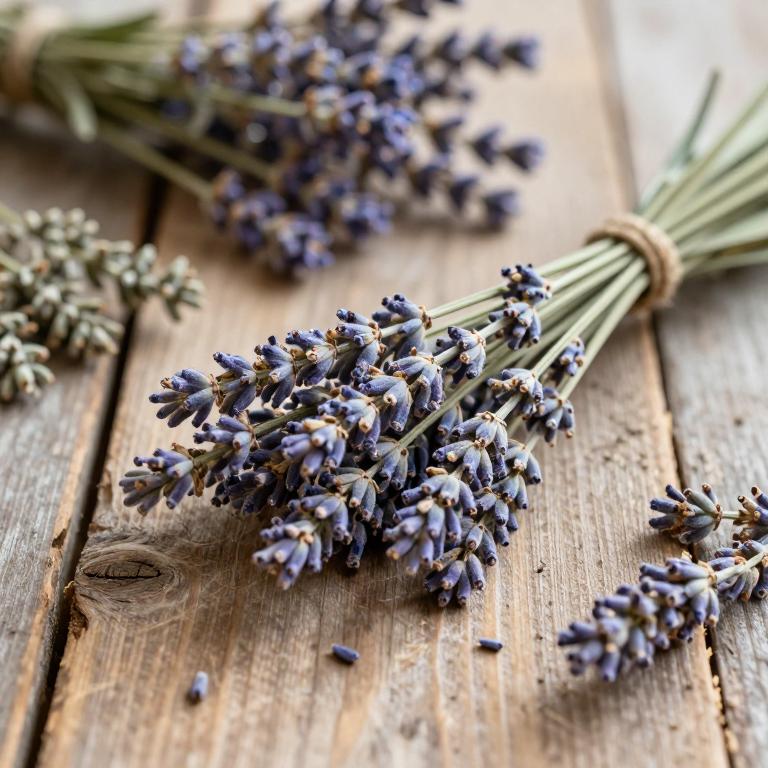
Round-leaf lavender, scientifically known as Lavandula rotundifolia, is a perennial shrub prized for its aromatic, small, rounded leaves and fragrant purple blooms. Native to the Mediterranean, this hardy plant offers potent essential oils widely used in aromatherapy to reduce anxiety, promote restful sleep, and soothe skin irritations naturally.
- Family
- Lamiaceae
- Native range
- Africa
- Parts used
- Not available
- Common names
- Round-Leaf Lavender · Cape Verde Lavender
- Scientific synonyms
- Stoechas Rotundifolia · Lavandula Rotundifolia Var. Crenata · 2 more
Names and Synonyms
Common Names
- round-leaf lavender
- Cape Verde Lavender
Scientific Names
Accepted name
Lavandula rotundifoliaSynonyms
- Stoechas rotundifolia
- Lavandula rotundifolia var. crenata
- Lavandula rotundifolia var. incisa
- Lavandula rotundifolia var. subpinnatifida
Sources: Wikidata, Catalogue of Life
Taxonomical Classification
This plant belongs to the kingdom Plantae and is classified under the phylum Streptophyta within the class Equisetopsida. As a member of the subclass Magnoliidae and the order Lamiales, it falls under the family Lamiaceae. Finally, it is categorized within the genus Lavandula.
| Rank | Classification |
|---|---|
| Kingdom | Plantae |
| Phylum | Streptophyta |
| Class | Equisetopsida |
| Subclass | Magnoliidae |
| Order | Lamiales |
| Family | Lamiaceae |
| Genus | Lavandula |
Sources: The World Checklist of Vascular Plants (WCVP)
Distribution
This plant, known scientifically as Lavandula rotundifolia, exhibits a very specific and limited geographical range. Its natural presence is primarily concentrated within the Macaronesian region. Specifically, its distribution can be identified in the archipelago of Cape Verde. Because of this localized occurrence, the species is considered endemic to these particular Atlantic islands. Therefore, its survival is closely tied to the unique environmental conditions found within this specific area.
| Region | Area |
|---|---|
| Macaronesia | Cape Verde |
Sources: The World Checklist of Vascular Plants (WCVP)
Botanical Identification
Life history
The life history of Lavandula rotundifolia is characterized by its classification as a perennial subshrub, specifically exhibiting a life form categorized as a chamaephyte. This botanical designation indicates that its permanent buds are located close to the soil surface, typically just above it, allowing the plant to withstand varying environmental stressors through its low-growing, woody structure. Within the nuances of its ecological strategy, it functions as a chamaephyte, ensuring its survival and regenerative capacity by maintaining its vital organs near the ground level, which provides protection against desiccation and temperature fluctuations. This life history pattern enables the species to establish stable, long-lived mounds that can endure the seasonal shifts of its natural Mediterranean-type habitats.
- Life form :
- chamaephyte
Morphology
The morphology of Lavandula rotundifolia is characterized by a growth form classified as a shrub, typically exhibiting a woody structure that provides stability. It is an independent organism, functioning as a non-parasitic species that does not rely on a host for nutrients. As a terrestrial plant, it grows directly in the soil rather than as an epiphyte. Furthermore, its structural habit is self-supporting, meaning it possesses the inherent rigidity to maintain its upright posture without the need for external climbing structures or support.
- Climber :
- self-supporting
- Epiphyte :
- terrestrial
- Growth form :
- shrub
- Parasite :
- independent
Sources: Global Inventory of Floras and Traits (GIFT)
Activities
Lavandula rotundifolia has 1 reported activities identified across 0 scientific publications and several other databases. The most consistently reported activities include Antimalarial.
| Activity | Supporting sources | Consensus |
|---|---|---|
| Antimalarial | 1 supporting sources | ★☆☆☆☆ |
Antimalarial
- Plants (Basel, Switzerland)
Conditions
Lavandula rotundifolia has 1 reported investigations on conditions identified across 0 scientific publications and several other databases. The most consistently reported conditions include malaria.
| Condition | Supporting sources | Consensus |
|---|---|---|
| Malaria | 1 supporting sources | ★☆☆☆☆ |
Malaria
- Plants (Basel, Switzerland)
Preparations
Lavandula rotundifolia has 2 reported preparations identified across 0 scientific publications and several other databases. The most consistently reported preparations include aqueous extracts (infusions), ethanolic extracts.
| Preparation | Supporting sources | Consensus |
|---|---|---|
| Aqueous extracts (infusions) | 1 supporting sources | ★☆☆☆☆ |
| Ethanolic extracts | 1 supporting sources | ★☆☆☆☆ |
Aqueous extracts (infusions)
- Plants (Basel, Switzerland)
Ethanolic extracts
- Plants (Basel, Switzerland)