Downy Lavender
Lavandula pubescens · Accepted scientific name
Scientific literature: Very Sparse (17 studies) · ★☆☆☆☆
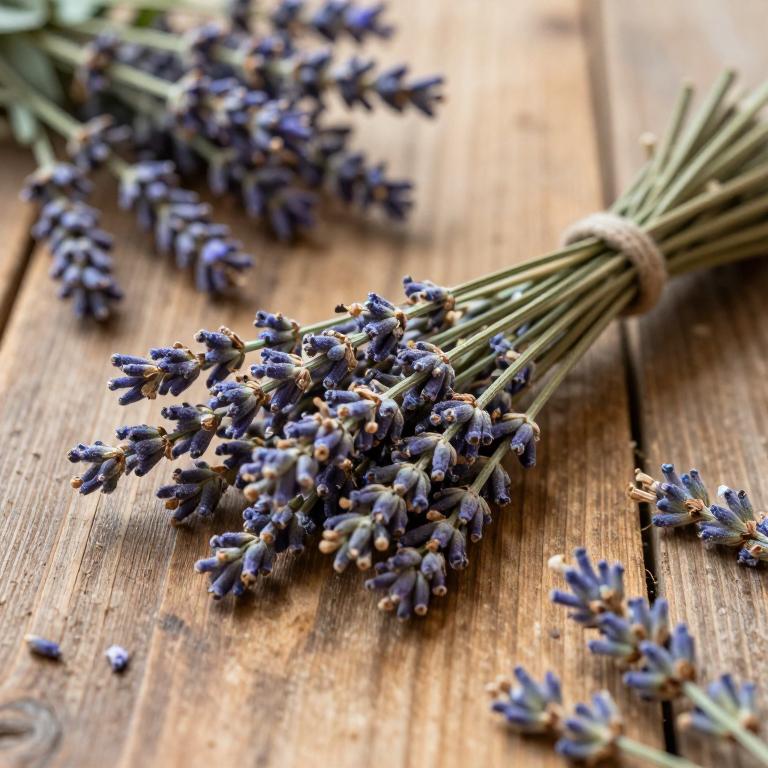
Downy Lavender, scientifically known as Lavandula pubescens, is a captivating aromatic shrub native to the Mediterranean. Renowned for its soft, pubescent foliage and fragrant purple blooms, this medicinal herb offers soothing properties. It is traditionally utilized in aromatherapy and herbal remedies to promote relaxation, alleviate stress, and support wellness.
- Family
- Lamiaceae
- Native range
- Africa
- Parts used
- Not available
- Common names
- Downy Lavender
- Scientific synonyms
- Not available
Names and Synonyms
Common Names
- Downy Lavender
Scientific Names
Accepted name
Lavandula pubescensSources: Wikidata, Catalogue of Life
Taxonomical Classification
This plant belongs to the kingdom Plantae and is classified within the phylum Streptophyta and class Equisetopsida. It is further categorized under the subclass Magnoliidae, the order Lamiales, and the family Lamiaceae. Ultimately, it is identified by its genus name, Lavandula.
| Rank | Classification |
|---|---|
| Kingdom | Plantae |
| Phylum | Streptophyta |
| Class | Equisetopsida |
| Subclass | Magnoliidae |
| Order | Lamiales |
| Family | Lamiaceae |
| Genus | Lavandula |
Sources: The World Checklist of Vascular Plants (WCVP)
Distribution
This plant, Lavandula pubescens, exhibits a specific distribution across several distinct regions. In Northern Africa, its presence can be noted within the borders of Egypt. Moving toward Northeast Tropical Africa, the species is also found in Eritrea. Its range extends into Western Asia, specifically inhabiting the areas of Palestine and the Sinai Peninsula. Finally, the plant is distributed across the Arabian Peninsula, where it grows in Saudi Arabia.
| Region | Area |
|---|---|
| Northern Africa | Egypt |
| Northeast Tropical Africa | Eritrea |
| Western Asia | Palestine |
| Western Asia | Sinai |
| Arabian Peninsula | Saudi Arabia |
| Arabian Peninsula | Yemen |
Sources: The World Checklist of Vascular Plants (WCVP)
Botanical Identification
Life history
The life history of Lavandula pubescens is characterized by its classification as a perennial subshrub, specifically exhibiting a life form categorized as a chamaephyte. Within the various ecological classifications of plant growth habits, it functions both as a chamamephyte and a nanophanerophyte, meaning its perennating buds are located close to or just above the soil surface, allowing it to withstand environmental fluctuations. This life strategy enables the plant to establish stable, woody bases that persist through multiple growing seasons while maintaining a low-growing, bushy architecture. Through this chamaephytic development, the species efficiently manages its resource allocation to survive in its specific ecological niche, transitioning through seasonal cycles by maintaining its regenerative structures near the ground level.
- Life form :
- chamaephyte
Morphology
The morphology of Lavandula pubescens is characterized by its growth form as a subshrub, exhibiting a structurally robust and woody nature. It is a self-supporting plant that does not function as a climber, maintaining a stable upright posture through its woody stems. In terms of its ecological positioning and habitat preference, the species is strictly terrestrial, lacking any aquatic or semiaquatic tendencies, and it does not function as an epiphyte. Furthermore, the plant is an independent organism, showing no parasitic behavior toward other species.
- Aquatic :
- terrestrial
- Climber :
- self-supporting
- Epiphyte :
- terrestrial
- Growth form :
- subshrub
- Parasite :
- independent
- Woodiness :
- woody
Reproduction
The reproduction of Lavandula pubescens is characterized by the production of minute seeds that play a critical role in its dispersal and propagation strategies. Quantitative analysis of the seed morphology reveals significant precision in its reproductive output, with seed mass measurements showing a narrow range of variation. The mean seed mass is recorded at 0.00059 g, indicating a highly standardized biological investment per seed. Within the population, the individual seed mass fluctuates slightly, reaching a maximum value of 0.00071 g and a minimum value of 0.00047 g. These specific mass parameters suggest that the plant produces lightweight seeds, which is an evolutionary adaptation likely facilitating efficient distribution via wind or gravity to ensure successful colonization of suitable habitats.
- Seed mass max:
- 0.00071 g
- Seed mass mean:
- 0.00059 g
- Seed mass min:
- 0.00047 g
Sources: Global Inventory of Floras and Traits (GIFT)
Chemicals
Lavandula pubescens has 2 reported phytochemicals identified across 0 scientific publications and several other databases. The most consistently reported chemicals include CARVACROL, Monoterpenes.
| Chemical | Supporting sources | Consensus |
|---|---|---|
| CARVACROL | 1 supporting sources | ★☆☆☆☆ |
| Monoterpenes | 1 supporting sources | ★☆☆☆☆ |
CARVACROL
- Evidence-based complementary and alternative medicine : eCAM
Monoterpenes
- Evidence-based complementary and alternative medicine : eCAM
Activities
Lavandula pubescens has 10 reported activities identified across 0 scientific publications and several other databases. The most consistently reported activities include Antioxidant, Antiacetylcholinesterase, Antibacterial, Anticholinesterase, Antihyperlipidemic.
| Activity | Supporting sources | Consensus |
|---|---|---|
| Antioxidant | 2 supporting sources | ★☆☆☆☆ |
| Antiacetylcholinesterase | 1 supporting sources | ★☆☆☆☆ |
| Antibacterial | 1 supporting sources | ★☆☆☆☆ |
| Anticholinesterase | 1 supporting sources | ★☆☆☆☆ |
| Antihyperlipidemic | 1 supporting sources | ★☆☆☆☆ |
| Antimicrobial | 1 supporting sources | ★☆☆☆☆ |
| Antiobesity | 1 supporting sources | ★☆☆☆☆ |
| Antiseptic | 1 supporting sources | ★☆☆☆☆ |
| Neuroprotective | 1 supporting sources | ★☆☆☆☆ |
| Sedative | 1 supporting sources | ★☆☆☆☆ |
Antioxidant
- Immunological investigations
- Evidence-based complementary and alternative medicine : eCAM
Antiacetylcholinesterase
- Evidence-based complementary and alternative medicine : eCAM
Antibacterial
- Evidence-based complementary and alternative medicine : eCAM
Anticholinesterase
- Evidence-based complementary and alternative medicine : eCAM
Antihyperlipidemic
- Evidence-based complementary and alternative medicine : eCAM
Antimicrobial
- Evidence-based complementary and alternative medicine : eCAM
Antiobesity
- Evidence-based complementary and alternative medicine : eCAM
Antiseptic
- Evidence-based complementary and alternative medicine : eCAM
Neuroprotective
- Evidence-based complementary and alternative medicine : eCAM
Sedative
- Evidence-based complementary and alternative medicine : eCAM
Conditions
Lavandula pubescens has 4 reported investigations on conditions identified across 0 scientific publications and several other databases. The most consistently reported conditions include Alzheimer's disease, antiseptic, obesity, sedative.
| Condition | Supporting sources | Consensus |
|---|---|---|
| Alzheimer's disease | 1 supporting sources | ★☆☆☆☆ |
| Antiseptic | 1 supporting sources | ★☆☆☆☆ |
| Obesity | 1 supporting sources | ★☆☆☆☆ |
| Sedative | 1 supporting sources | ★☆☆☆☆ |
Alzheimer's disease
- Evidence-based complementary and alternative medicine : eCAM
Antiseptic
- Evidence-based complementary and alternative medicine : eCAM
Obesity
- Evidence-based complementary and alternative medicine : eCAM
Sedative
- Evidence-based complementary and alternative medicine : eCAM
Preparations
Lavandula pubescens has 1 reported preparations identified across 0 scientific publications and several other databases. The most consistently reported preparations include plant extracts.
| Preparation | Supporting sources | Consensus |
|---|---|---|
| Plant extracts | 1 supporting sources | ★☆☆☆☆ |
Plant extracts
- Immunological investigations