spanish lavender
Lavandula pedunculata · Accepted scientific name
Scientific literature: Very Sparse (5 studies) · ★☆☆☆☆
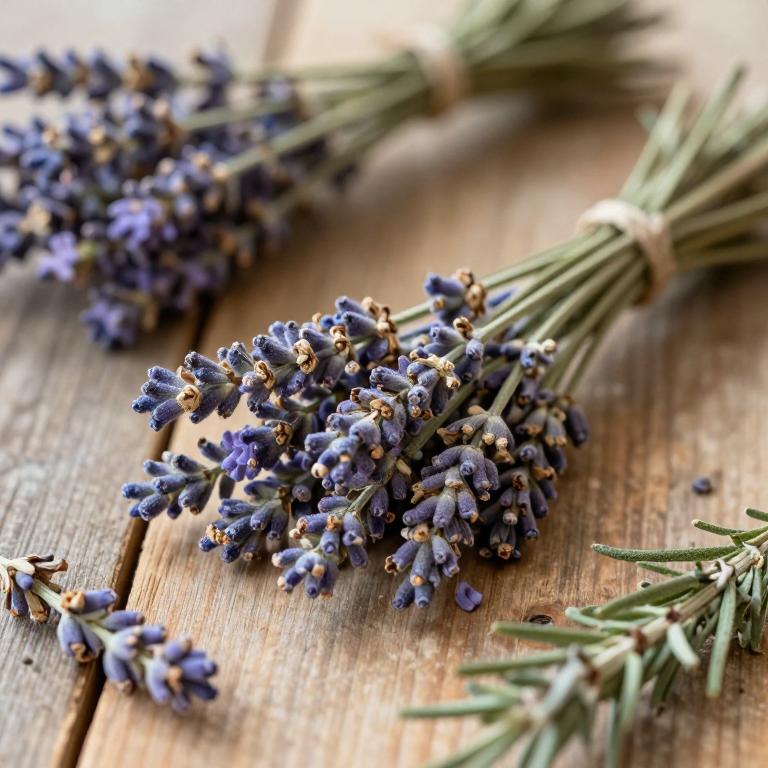
Spanish lavender, scientifically known as Lavandula pedunculata, is a resilient, aromatic shrub native to the Mediterranean. Renowned for its striking violet blooms and silver-green foliage, it is widely used in herbal medicine for its calming properties, antiseptic qualities, and ability to soothe skin irritations and reduce anxiety effectively.
- Family
- Lamiaceae
- Native range
- Europe
- Parts used
- Not available
- Common names
- Spanish Lavender
- Scientific synonyms
- Stoechas Pedunculata · Lavandula Stoechas Subsp. Pedunculata · 2 more
Names and Synonyms
Common Names
- spanish lavender
Scientific Names
Accepted name
Lavandula pedunculataSynonyms
- Stoechas pedunculata
- Lavandula stoechas subsp. pedunculata
- Lavandula stoechas var. pedunculata
- Lavandula stoechas subsp. pedunculata
Regional and Traditional Names
Spanish:
- cantueso
- almoraduz de cuello largo
- cantueso largo
- tomillo borriquero
French:
- Lavande pédonculée
Sources: Wikidata, Catalogue of Life
Taxonomical Classification
This plant belongs to the kingdom Plantae within the phylum Streptophyta and the class Equisetopsida. It is further classified under the subclass Magnoliidae, the order Lamiales, and the family Lamiaceae. Finally, it is identified by the genus Lavandula.
| Rank | Classification |
|---|---|
| Kingdom | Plantae |
| Phylum | Streptophyta |
| Class | Equisetopsida |
| Subclass | Magnoliidae |
| Order | Lamiales |
| Family | Lamiaceae |
| Genus | Lavandula |
Sources: The World Checklist of Vascular Plants (WCVP)
Distribution
This plant exhibits a diverse geographical distribution spanning several distinct regions. In Southwestern Europe, it can be found growing throughout both Portugal and Spain. Its range extends into Southeastern Europe, specifically within the European portion of Türkiye. Additionally, the species is present in Northern Africa, particularly in Morocco. Finally, its habitat includes the Macaronesian islands, most notably the Canary Islands.
| Region | Area |
|---|---|
| Southwestern Europe | Portugal |
| Southwestern Europe | Spain |
| Southeastern Europe | Türkiye-in-Europe |
| Northern Africa | Morocco |
| Macaronesia | Canary Is. |
| Macaronesia | Madeira |
| Western Asia | East Aegean Is. |
| Western Asia | Türkiye |
Sources: The World Checklist of Vascular Plants (WCVP)
Botanical Identification
Ecology
The ecology of Lavandula pedunculata is defined by its adaptation to a diverse vertical distribution within its native habitats, spanning a significant altitudinal gradient. This species is capable of thriving across an elevational range that begins at sea level (0 m AMSL) and extends up to a maximum altitude of 1500 m AMSL. Such a broad ecological niche suggests a high degree of plasticity, allowing the plant to inhabit various microclimates ranging from coastal lowlands to montane environments. This range necessitates an ability to tolerate varying degrees of temperature fluctuations, moisture availability, and atmospheric pressure, facilitating its establishment in diverse topographical settings within its geographical territory.
- Elevational range max:
- 1500 m AMSL
- Elevational range min:
- 0 m AMSL
Life history
The life history of Lavandula pedunculata is characterized by its classification as a perennial herb with a specific growth habit defined by its survival strategy. In terms of its ecological life form, the species is categorized as a chamaephyte, meaning its perennating buds are located close to the soil surface, allowing it to endure seasonal environmental stresses. More specifically, its life form can be further distinguished as a chamaephyte within the broader spectrum of plant strategies, positioning it between more robust phanerophytes and shorter-lived therophytes. This growth pattern enables the plant to maintain a stable presence in its habitat, utilizing its low-lying buds to regenerate after periods of dormancy or unfavorable climatic conditions.
- Life form :
- chamaephyte
Morphology
The morphology of Lavandula pedunculata is characterized by its growth form as a woody shrub, exhibiting a self-supporting structure that does not require climbing assistance. The plant maintains an erect shoot orientation and typically reaches a height ranging from a minimum of 0.3 m to a maximum of 0.6 m. As an independent organism, it does not function as a parasite or an epiphyte, maintaining a terrestrial habit rather than an aquatic or semiaquatic lifestyle.
- Aquatic :
- terrestrial
- Climber :
- self-supporting
- Epiphyte :
- terrestrial
- Growth form :
- shrub
- Parasite :
- independent
- Plant height max:
- 0.6 m
- Plant height min:
- 0.3 m
- Shoot orientation :
- erect
- Woodiness :
- woody
Physiology
The physiology of Lavandula pedunculata is characterized by specific morphological adaptations of its foliage, which plays a critical role in its metabolic and transpiration processes. The leaves exhibit an elliptic form, a structural adaptation that optimizes light interception and surface area management. These leaves demonstrate significant dimensional variability, with lengths ranging from a minimum of 1.5 cm to a maximum of 4.5 cm. Complementing this longitudinal variation, the leaf width is notably slender, ranging from a minimum of 0.1 cm to a maximum of 0.6 cm. This narrow, elliptic configuration suggests a physiological strategy to minimize water loss through transpiration while maintaining efficient gas exchange and photosynthetic capacity within its natural habitat.
- Leaf form :
- elliptic
- Leaf length max:
- 4.5 cm
- Leaf length min:
- 1.5 cm
- Leaf width max:
- 0.6 cm
- Leaf width min:
- 0.1 cm
Reproduction
The reproduction of Lavandula pedunculata is characterized by a flowering period that typically begins in February and extends through September, though the timing can be variable. During this cycle, the plant produces violet-colored flowers, each measuring a maximum of 0.55 cm in length, which are arranged in inflorescences ranging from a minimum of 0.015 m to a maximum of 0.04 m. Following pollination, the plant develops brown fruits that are relatively small, with a length varying between 0.18 cm and 0.22 cm and a width between 0.12 cm and 0.13 cm. The resulting seeds are exceptionally lightweight, possessing a mean mass of approximately 0.000303333 g, with individual seed masses ranging from a minimum of 0.0001 g to a maximum of 0.00071 g.
- Flower colour :
- violet
- Flower length max:
- 0.55 cm
- Flowering time :
- Feb
- Flowering time :
- Sep
- Fruit colour :
- brown
- Fruit length max:
- 0.22 cm
- Fruit length min:
- 0.18 cm
- Fruit width max:
- 0.13 cm
- Fruit width min:
- 0.12 cm
- Inflorescence length max:
- 0.04 m
- Inflorescence length min:
- 0.015 m
- Seed mass max:
- 0.00071 g
- Seed mass mean:
- 0.000303333 g
- Seed mass min:
- 1e-04 g
Sources: Global Inventory of Floras and Traits (GIFT)
Chemicals
Lavandula pedunculata has 1 reported phytochemicals identified across 0 scientific publications and several other databases. The most consistently reported chemicals include glucose.
| Chemical | Supporting sources | Consensus |
|---|---|---|
| glucose | 1 supporting sources | ★☆☆☆☆ |
glucose
- Pharmaceutics
Activities
Lavandula pedunculata has 1 reported activities identified across 0 scientific publications and several other databases. The most consistently reported activities include Antihyperglycemic.
| Activity | Supporting sources | Consensus |
|---|---|---|
| Antihyperglycemic | 1 supporting sources | ★☆☆☆☆ |
Antihyperglycemic
- Pharmaceutics
Conditions
Lavandula pedunculata has 2 reported investigations on conditions identified across 0 scientific publications and several other databases. The most consistently reported conditions include hyperglycemia, type 2 diabetes.
| Condition | Supporting sources | Consensus |
|---|---|---|
| Hyperglycemia | 1 supporting sources | ★☆☆☆☆ |
| Type 2 diabetes | 1 supporting sources | ★☆☆☆☆ |
Hyperglycemia
- Pharmaceutics
Type 2 diabetes
- Pharmaceutics
Preparations
Lavandula pedunculata has 4 reported preparations identified across 0 scientific publications and several other databases. The most consistently reported preparations include Essential Oils, Essential oil, aqueous extract, ethanolic extract.
| Preparation | Supporting sources | Consensus |
|---|---|---|
| Essential oils | 1 supporting sources | ★☆☆☆☆ |
| Essential oil | 1 supporting sources | ★☆☆☆☆ |
| Aqueous extract | 1 supporting sources | ★☆☆☆☆ |
| Ethanolic extract | 1 supporting sources | ★☆☆☆☆ |
Essential oils
- Plants (Basel, Switzerland)
Essential oil
- Journal of ethnopharmacology
Aqueous extract
- Pharmaceutics
Ethanolic extract
- Journal of ethnopharmacology