French lavender
Lavandula dentata · Accepted scientific name
Scientific literature: Very Sparse (42 studies) · ★☆☆☆☆
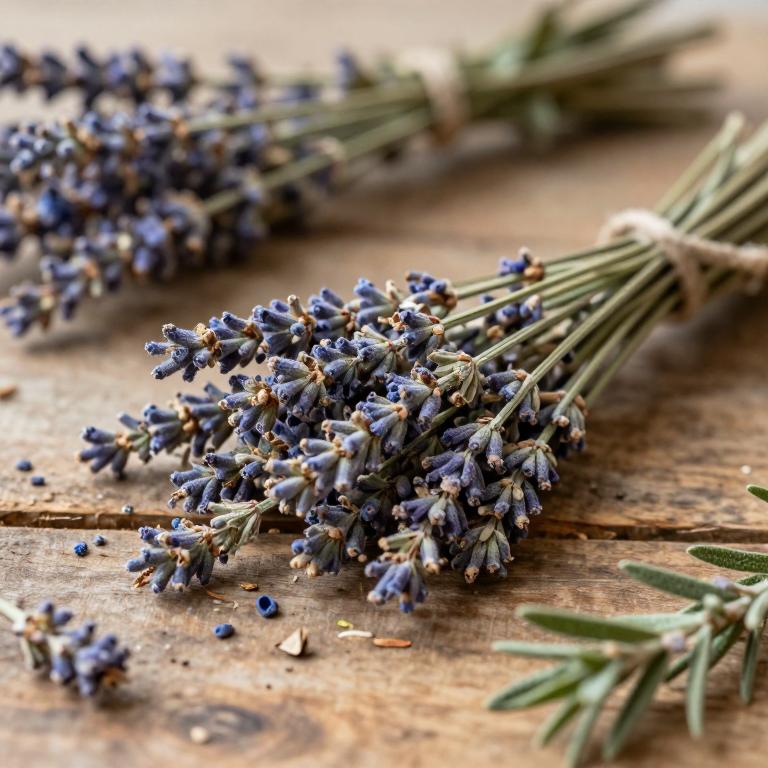
French lavender, scientifically known as Lavandula dentata, is a fragrant, evergreen shrub celebrated for its serrated leaves and delicate purple blooms. Renowned in herbal medicine, it offers calming aromatherapy benefits, promotes relaxation, and possesses antiseptic properties, making it a versatile staple in holistic wellness and natural skincare traditions.
- Family
- Lamiaceae
- Native range
- Europe
- Parts used
- Leaf
- Common names
- French Lavender · Toothed Lavender
- Scientific synonyms
- Stoechas Dentata
Names and Synonyms
Common Names
- French lavender
- toothed lavender
Scientific Names
Accepted name
Lavandula dentataSynonyms
- Stoechas dentata
Regional and Traditional Names
Spanish:
- Stoechas dentata
- Lavandula dentata var. vulgaris
- Lavandula dentata f. persicina
- Lavandula pinnata
- Lavandula santolinifolia
- Alhucema inglesa
- Alhucema rizada
- Cantueso dentado
- Garlanda
- Cantueso rizado
- Espliego dentado
- Lavandula dentata f persicina
- Lavandula dentata var vulgaris
- alhucema rizada
- cantueso dentado
- cantueso rizado
- espliego dentado
German:
- Französischer Lavendel
- Gezähnter Lavendel
- Grüner Zahn-Lavendel
- Französischer Lavendel
- Gezähnter Lavendel
French:
- Lavande dentée
- Lavande dentée
Sources: Wikidata, Catalogue of Life
Taxonomical Classification
This plant belongs to the kingdom Plantae and is classified under the phylum Streptophyta and class Equisetopsida. Within the subclass Magnoliidae, it is further organized into the order Lamiales and the family Lamiaceae. Finally, it is identified by the genus Lavandula.
| Rank | Classification |
|---|---|
| Kingdom | Plantae |
| Phylum | Streptophyta |
| Class | Equisetopsida |
| Subclass | Magnoliidae |
| Order | Lamiales |
| Family | Lamiaceae |
| Genus | Lavandula |
Sources: The World Checklist of Vascular Plants (WCVP)
Distribution
This plant is primarily found across various regions of Southwestern Europe. Within this area, its distribution includes the Balearic Islands and mainland Spain. Moving toward Southeastern Europe, the species can also be located in Bulgaria. Furthermore, it is commonly found throughout the landscape of Greece. Finally, its geographical range extends into the territory of Italy.
| Region | Area |
|---|---|
| Southwestern Europe | Baleares |
| Southwestern Europe | Spain |
| Southeastern Europe | Bulgaria |
| Southeastern Europe | Greece |
| Southeastern Europe | Italy |
| Southeastern Europe | Sicilia |
| Northern Africa | Algeria |
| Northern Africa | Morocco |
| Northern Africa | Tunisia |
| Macaronesia | Canary Is. |
Sources: The World Checklist of Vascular Plants (WCVP)
Botanical Identification
Ecology
The ecology of Lavandula dentata is characterized by its preference for lowland environments, where it thrives within a specific altitudinal gradient. This species is typically found at elevations ranging from 0 m to a maximum of 700 m AMSL, occupying lower-altitude landscapes that shape its growth patterns and distribution.
- Elevational range max:
- 700 m AMSL
- Elevational range min:
- 0 m AMSL
- Habitat :
- Lowland
Life history
The life history of Lavandula dentata is characterized by its status as a perennial plant, allowing it to persist through multiple growing seasons. As a chamaephyte, its growth habit is defined by stems that remain close to the ground, with the buds located at or just above the soil surface. This species maintains an evergreen deciduousness, ensuring that its foliage remains functional and present throughout the year rather than shedding all its leaves seasonally.
- Deciduousness :
- evergreen
- Life form :
- chamaephyte
- Lifecycle :
- perennial
Morphology
The morphology of Lavandula dentata is characterized by a woody, self-supporting growth habit, functioning as both a shrub and a subshrub. It is a terrestrial plant that grows independently, without acting as a parasite or an epiphyte. The plant reaches a height ranging from a minimum of 0.3 m to a maximum of 1 m. As a self-supporting species, it does not exhibit climber or liana characteristics, maintaining a stable, upright structure.
- Aquatic :
- terrestrial
- Climber :
- self-supporting
- Epiphyte :
- terrestrial
- Growth form :
- shrub
- Growth form :
- subshrub
- Parasite :
- independent
- Plant height max:
- 1 m
- Plant height min:
- 0.3 m
- Woodiness :
- woody
Physiology
The physiology of Lavandula dentata is characterized by a C3 photosynthetic pathway, which dictates its metabolic processes and carbon fixation efficiency. The plant's vegetative morphology is defined by linear leaf forms that exhibit significant dimensional variability; specifically, the leaves possess a length ranging from a minimum of 1 cm to a maximum of 4.5 cm, while the width fluctuates between a minimum of 0.3 cm and a maximum of 1 cm. Furthermore, the species does not function as a nitrogen fixer, relying instead on soil nutrient availability for its nitrogen requirements rather than symbiotic atmospheric fixation.
- Leaf form :
- linear
- Leaf length max:
- 4.5 cm
- Leaf length min:
- 1 cm
- Leaf width max:
- 1 cm
- Leaf width min:
- 0.3 cm
- Nitrogen fixer :
- no
- Photosynthetic pathway :
- C3
Reproduction
The reproduction of Lavandula dentata is a primarily sexual process, as asexual reproduction is absent in this species. The flowering cycle is characterized by a significant duration, with the blooming period typically starting in September and concluding in June. During this time, the plant produces distinctive violet-colored flowers, which reach a maximum length of 0.7 cm. These flowers rely on biotic pollination, specifically utilizing an insect pollination syndrome to facilitate fertilization. Following successful pollination, the plant develops dry, brown fruits that measure approximately 0.2 cm in mean length, with a maximum length of 0.15 cm and a maximum width of 0.08 cm. The resulting seeds are very fine, possessing a mean mass of 0.000275 g, with values ranging from a minimum of 0.0002 g to a maximum of 0.00031 g. Dispersal of these seeds is categorized as unspecialized, meaning the plant does not rely on a highly specific mechanism for moving its offspring to new locations.
- Dispersal syndrome :
- unspecialized
- Flower colour :
- violet
- Flower length max:
- 0.7 cm
- Flowering time :
- Sep
- Flowering time :
- Jun
- Fruit colour :
- brown
- Fruit dryness :
- dry
- Fruit length max:
- 0.15 cm
- Fruit length mean:
- 0.2 cm
- Fruit width max:
- 0.08 cm
- Pollination syndrome :
- insect
- Pollination syndrome :
- biotic
- Reproduction asexual :
- absent
- Seed mass max:
- 0.00031 g
- Seed mass mean:
- 0.000275 g
- Seed mass min:
- 2e-04 g
Sources: Global Inventory of Floras and Traits (GIFT)
Plant Parts
Lavandula dentata has 1 reported plant parts identified across 2 scientific publications and several other databases that are studied for medicinal purposes. The most consistently reported plant part include leaf.
| Plant part | Supporting sources | Consensus |
|---|---|---|
| Leaf | 2 supporting sources | ★☆☆☆☆ |
Leaf
- Drug and chemical toxicology
- Molecules (Basel, Switzerland)
Chemicals
Lavandula dentata has 13 reported phytochemicals identified across 2 scientific publications and several other databases. The most consistently reported chemicals include 1.8-cineole, Borneol, CARVEOL, Camphene hydrate, D-Limonene.
| Chemical | Supporting sources | Consensus |
|---|---|---|
| 1.8-cineole | 1 supporting sources | ★☆☆☆☆ |
| Borneol | 1 supporting sources | ★☆☆☆☆ |
| CARVEOL | 1 supporting sources | ★☆☆☆☆ |
| Camphene hydrate | 1 supporting sources | ★☆☆☆☆ |
| D-Limonene | 1 supporting sources | ★☆☆☆☆ |
| Eucalyptol | 1 supporting sources | ★☆☆☆☆ |
| Hydroxycinnamic Acids | 1 supporting sources | ★☆☆☆☆ |
| Isobornyl acetate | 1 supporting sources | ★☆☆☆☆ |
| Linalool | 1 supporting sources | ★☆☆☆☆ |
| Myrtenol | 1 supporting sources | ★☆☆☆☆ |
1.8-cineole
- Pakistan journal of biological sciences : PJBS
Borneol
- Molecules (Basel, Switzerland)
CARVEOL
- Molecules (Basel, Switzerland)
Camphene hydrate
- Molecules (Basel, Switzerland)
D-Limonene
- Molecules (Basel, Switzerland)
Eucalyptol
- Molecules (Basel, Switzerland)
Hydroxycinnamic Acids
- Electrophoresis
Isobornyl acetate
- Molecules (Basel, Switzerland)
Linalool
- Molecules (Basel, Switzerland)
Myrtenol
- Molecules (Basel, Switzerland)
Activities
Lavandula dentata has 8 reported activities identified across 2 scientific publications and several other databases. The most consistently reported activities include Antimicrobial, Antioxidant, Analgesic, Antibacterial, Anticoagulant.
| Activity | Supporting sources | Consensus |
|---|---|---|
| Antimicrobial | 2 supporting sources | ★☆☆☆☆ |
| Antioxidant | 2 supporting sources | ★☆☆☆☆ |
| Analgesic | 1 supporting sources | ★☆☆☆☆ |
| Antibacterial | 1 supporting sources | ★☆☆☆☆ |
| Anticoagulant | 1 supporting sources | ★☆☆☆☆ |
| Antifungal | 1 supporting sources | ★☆☆☆☆ |
| Antiplasmodial | 1 supporting sources | ★☆☆☆☆ |
| Neuroprotective | 1 supporting sources | ★☆☆☆☆ |
Antimicrobial
- Drug and chemical toxicology
- Pakistan journal of biological sciences : PJBS
Antioxidant
- Drug and chemical toxicology
- Molecules (Basel, Switzerland)
Analgesic
- Pakistan journal of biological sciences : PJBS
Antibacterial
- Molecules (Basel, Switzerland)
Anticoagulant
- Pakistan journal of biological sciences : PJBS
Antifungal
- Molecules (Basel, Switzerland)
Antiplasmodial
- BMC complementary and alternative medicine
Neuroprotective
- Pharmaceuticals (Basel, Switzerland)
Conditions
Lavandula dentata has 14 reported investigations on conditions identified across 2 scientific publications and several other databases. The most consistently reported conditions include cancer, Dermatitis, Epilepsy, Neuroinflammation, Oxidative Stress.
| Condition | Supporting sources | Consensus |
|---|---|---|
| Cancer | 2 supporting sources | ★☆☆☆☆ |
| Dermatitis | 1 supporting sources | ★☆☆☆☆ |
| Epilepsy | 1 supporting sources | ★☆☆☆☆ |
| Neuroinflammation | 1 supporting sources | ★☆☆☆☆ |
| Oxidative stress | 1 supporting sources | ★☆☆☆☆ |
| Plasmodium falciparum | 1 supporting sources | ★☆☆☆☆ |
| Analgesic | 1 supporting sources | ★☆☆☆☆ |
| Anticoagulant | 1 supporting sources | ★☆☆☆☆ |
| Asthenia | 1 supporting sources | ★☆☆☆☆ |
| Colitis | 1 supporting sources | ★☆☆☆☆ |
Cancer
- Drug and chemical toxicology
- Evidence-based complementary and alternative medicine : eCAM
Dermatitis
- International journal of microbiology
Epilepsy
- Pharmaceuticals (Basel, Switzerland)
Neuroinflammation
- Pharmaceuticals (Basel, Switzerland)
Oxidative stress
- Pharmaceuticals (Basel, Switzerland)
Plasmodium falciparum
- BMC complementary and alternative medicine
Analgesic
- Pakistan journal of biological sciences : PJBS
Anticoagulant
- Pakistan journal of biological sciences : PJBS
Asthenia
- Environmental science and pollution research international
Colitis
- Journal of ethnopharmacology
Preparations
Lavandula dentata has 9 reported preparations identified across 2 scientific publications and several other databases. The most consistently reported preparations include essential oils, EO, Ethanol Extract, Oil, aqueous extracts.
| Preparation | Supporting sources | Consensus |
|---|---|---|
| Essential oils | 3 supporting sources | ★★☆☆☆ |
| Eo | 1 supporting sources | ★☆☆☆☆ |
| Ethanol extract | 1 supporting sources | ★☆☆☆☆ |
| Oil | 1 supporting sources | ★☆☆☆☆ |
| Aqueous extracts | 1 supporting sources | ★☆☆☆☆ |
| Essential oil | 1 supporting sources | ★☆☆☆☆ |
| Extracts with methanol | 1 supporting sources | ★☆☆☆☆ |
| Leaf ethanolic extracts | 1 supporting sources | ★☆☆☆☆ |
| Methanolic extracts | 1 supporting sources | ★☆☆☆☆ |
Essential oils
- Molecules (Basel, Switzerland)
- Scientific reports
- Journal of fungi (Basel, Switzerland)
Eo
- Pakistan journal of biological sciences : PJBS
Ethanol extract
- Pharmaceuticals (Basel, Switzerland)
Oil
- Pharmaceuticals (Basel, Switzerland)
Aqueous extracts
- International journal of microbiology
Essential oil
- Pakistan journal of biological sciences : PJBS
Extracts with methanol
- BMC complementary and alternative medicine
Leaf ethanolic extracts
- Drug and chemical toxicology
Methanolic extracts
- International journal of microbiology