stagshorn lavender
Lavandula coronopifolia · Accepted scientific name
Scientific literature: Very Sparse (8 studies) · ★☆☆☆☆
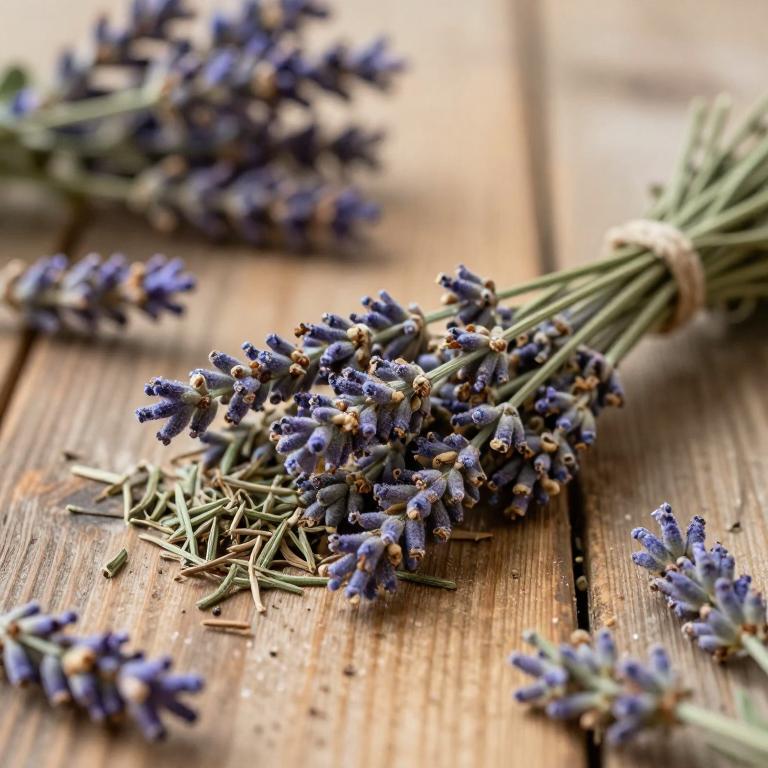
Staghorn lavender, scientifically known as Lavandula coronopifolia, is a unique, low-growing Mediterranean shrub prized for its distinctive, antler-like foliage. Renowned for its calming aromatic properties, this resilient perennial offers a compact, silvery-green aesthetic, making it an exceptional choice for therapeutic gardens and natural aromatherapy enthusiasts seeking botanical elegance.
- Family
- Lamiaceae
- Native range
- Africa
- Parts used
- Not available
- Common names
- Stagshorn Lavender
- Scientific synonyms
- Lavandula Stricta · Lavandula Stricta Var. Subtropica · 8 more
Names and Synonyms
Common Names
- stagshorn lavender
Scientific Names
Accepted name
Lavandula coronopifoliaSynonyms
- Lavandula stricta
- Lavandula stricta var. subtropica
- Lavandula humbertii f. glabricaulis
- Lavandula stricta f. conferta
- Lavandula humbertii
- Lavandula stricta var. humbertii
- Lavandula coronopifolia var. humbertii
- Lavandula coronopifolia var. subtropica
- Lavandula subtropica
- Isinia laristanica
Sources: Wikidata, Catalogue of Life
Taxonomical Classification
This plant belongs to the kingdom Plantae and the phylum Streptophyta, falling under the class Equisetopsida and subclass Magnoliidae. It is classified within the order Lamiales and the family Lamiaceae. Finally, its taxonomic identity is defined by the genus Lavandula.
| Rank | Classification |
|---|---|
| Kingdom | Plantae |
| Phylum | Streptophyta |
| Class | Equisetopsida |
| Subclass | Magnoliidae |
| Order | Lamiales |
| Family | Lamiaceae |
| Genus | Lavandula |
Sources: The World Checklist of Vascular Plants (WCVP)
Distribution
This plant, Lavandula coronopifolia, is primarily distributed throughout the northern regions of the African continent. Its natural habitat encompasses several key territories, including the coastal and inland areas of Algeria and Morocco. Furthermore, the species can be found growing within the landscapes of Libya and Egypt. It also extends its range into the arid environments of Western Sahara. Collectively, these locations define the specific geographical footprint of this medicinal lavender species.
| Region | Area |
|---|---|
| Northern Africa | Algeria |
| Northern Africa | Egypt |
| Northern Africa | Libya |
| Northern Africa | Morocco |
| Northern Africa | Western Sahara |
| Macaronesia | Cape Verde |
| West Tropical Africa | Mali |
| West Tropical Africa | Mauritania |
| West Tropical Africa | Niger |
| Northeast Tropical Africa | Chad |
Sources: The World Checklist of Vascular Plants (WCVP)
Botanical Identification
Life history
The life history of Lavandula coronopifolia is characterized by its status as a perennial plant, meaning it completes its life cycle over multiple years rather than within a single growing season. In terms of its structural growth habit and ecological positioning, it is classified as a chamaephyte, a life form where the majority of the plant's photosynthetic organs are located close to the soil surface, often protected by a layer of leaf litter or remaining just above the ground level during dormant periods. This combination of a long-lived lifecycle and a low-growing stature allows the species to establish persistent presence within its natural habitat.
- Life form :
- chamaephyte
- Lifecycle :
- perennial
Morphology
The morphology of Lavandula coronopifolia is characterized by its growth form as a woody subshrub, displaying a structural habit that can range from a small shrub to a more compact subshrubby profile. It is an independent organism, functioning as a non-parasitic species that does not rely on other plants for nutrients. In terms of its ecological positioning and habitat adaptation, the plant is terrestrial rather than aquatic or epiphytic, maintaining a self-supporting growth habit without the need for climbing or external support structures. Its physical constitution is notably woody, providing the necessary structural integrity for its development in its natural environment.
- Aquatic :
- terrestrial
- Climber :
- self-supporting
- Epiphyte :
- terrestrial
- Growth form :
- shrub
- Growth form :
- subshrub
- Parasite :
- independent
- Woodiness :
- woody
Reproduction
The reproduction of Lavandula coronopifolia is characterized by the production of minute seeds that play a critical role in its dispersal and establishment within its ecological niche. Based on quantitative botanical data, the seed mass of this species is highly consistent, exhibiting no variance across recorded samples. The seed mass is measured at a mean of 0.00085 g, a value that is identical to both the maximum and minimum recorded thresholds of 0.00085 g. This uniformity in seed mass suggests a highly stabilized reproductive strategy, ensuring that each individual unit produced for propagation maintains a precise weight of 0.00085 g, which is essential for the plant's efficient lifecycle and population maintenance.
- Seed mass mean:
- 0.00085 g
Sources: Global Inventory of Floras and Traits (GIFT)
Chemicals
Lavandula coronopifolia has 7 reported phytochemicals identified across 0 scientific publications and several other databases. The most consistently reported chemicals include CHLOROFORM, ETHYL ACETATE, LIMONENE, Linalool, MYRCENE.
| Chemical | Supporting sources | Consensus |
|---|---|---|
| CHLOROFORM | 1 supporting sources | ★☆☆☆☆ |
| ETHYL ACETATE | 1 supporting sources | ★☆☆☆☆ |
| LIMONENE | 1 supporting sources | ★☆☆☆☆ |
| Linalool | 1 supporting sources | ★☆☆☆☆ |
| MYRCENE | 1 supporting sources | ★☆☆☆☆ |
| PETROLEUM ETHER | 1 supporting sources | ★☆☆☆☆ |
| ethanol | 1 supporting sources | ★☆☆☆☆ |
CHLOROFORM
- Asian Pacific journal of cancer prevention : APJCP
ETHYL ACETATE
- Asian Pacific journal of cancer prevention : APJCP
LIMONENE
- Natural product research
Linalool
- Natural product research
MYRCENE
- Natural product research
PETROLEUM ETHER
- Asian Pacific journal of cancer prevention : APJCP
ethanol
- Asian Pacific journal of cancer prevention : APJCP