lemon lavender
Lavandula citriodora · Accepted scientific name
Scientific literature: Very Sparse (1 studies) · ★☆☆☆☆
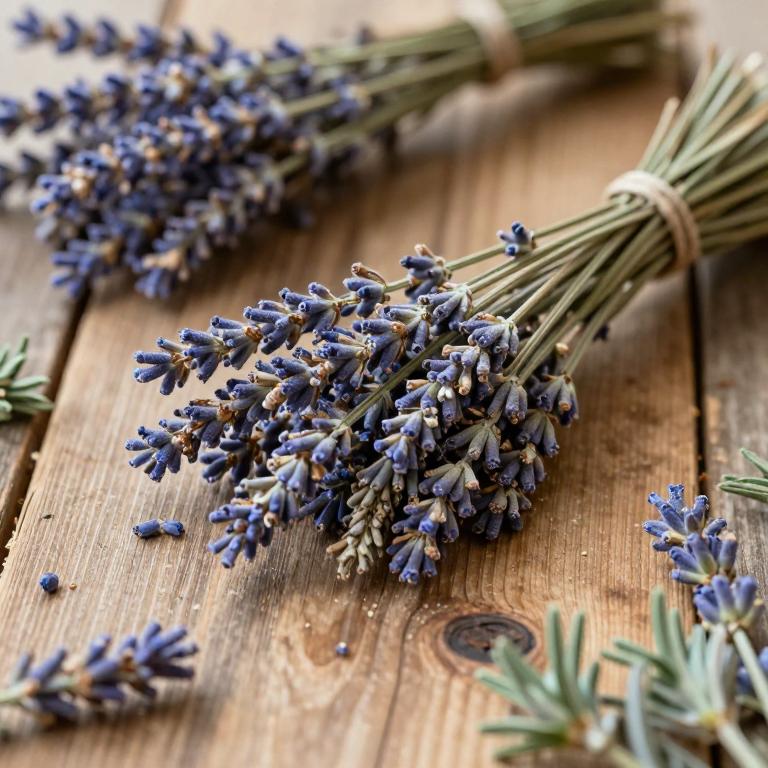
Lemon lavender, scientifically known as Lavandula citriodora, is a fragrant perennial celebrated for its distinct citrus aroma. Renowned in herbal medicine, it offers soothing properties for anxiety and skin irritations. This versatile plant combines the calming essence of lavender with refreshing lemon notes, making it a therapeutic garden essential.
- Family
- Lamiaceae
- Native range
- Asia-Temperate
- Parts used
- Not available
- Common names
- Lemon Lavender · Lemon-Scented Lavender
- Scientific synonyms
- Not available
Names and Synonyms
Common Names
- lemon lavender
- Lemon-scented Lavender
Scientific Names
Accepted name
Lavandula citriodoraSources: Wikidata, Catalogue of Life
Taxonomical Classification
This plant belongs to the kingdom Plantae and is classified under the phylum Streptophyta and class Equisetopsida. Within the subclass Magnoliidae, it is further categorized under the order Lamiales and the family Lamiaceae. Finally, it is identified by its genus, Lavandula.
| Rank | Classification |
|---|---|
| Kingdom | Plantae |
| Phylum | Streptophyta |
| Class | Equisetopsida |
| Subclass | Magnoliidae |
| Order | Lamiales |
| Family | Lamiaceae |
| Genus | Lavandula |
Sources: The World Checklist of Vascular Plants (WCVP)
Distribution
This plant, known as Lavandula citriodora, possesses a specific natural range within the Middle East. Its geographical distribution is primarily centered in the regions of the Arabian Peninsula. Specifically, it can be found growing in the territory of Saudi Arabia. Additionally, this medicinal species is also native to Yemen. Therefore, its presence is closely linked to these specific arid environments.
| Region | Area |
|---|---|
| Arabian Peninsula | Saudi Arabia |
| Arabian Peninsula | Yemen |
Sources: The World Checklist of Vascular Plants (WCVP)
Botanical Identification
Life history
The life history of Lavandula citriodora is characterized by its classification as a perennial species that exhibits a specific growth habit adapted to Mediterranean climates. In terms of its ecological life form, the plant is primarily identified as a chamaephyte, a classification that reflects its structural strategy of maintaining its photosynthetic organs close to the soil surface, often protected by the substrate or minimal woody structures. More specifically, when analyzed through various botanical life form systems, it is categorized as a chamaephyte, indicating that its buds and regenerative tissues are situated near or just above the ground level. This growth strategy allows the plant to endure seasonal environmental stressors, such as intense heat or moderate frost, by utilizing its low-profile architecture to conserve moisture and protect its vital meristematic tissues.
- Life form :
- chamaephyte
Morphology
The morphology of Lavandula citriodora is characterized by its growth habit as a self-supporting shrub, lacking any climbing mechanisms such as tendrils or twining stems, which distinguishes it from obligatory or facultative climbers. It functions as an independent organism, showing no parasitic tendencies toward host plants, as it is neither an obligatory nor a facultative parasite. Furthermore, the plant is strictly terrestrial in its ecological niche, possessing a root system adapted for soil anchorage rather than an epiphytic existence, meaning it does not grow upon other plants as an obligatory or facultative epiphyte.
- Climber :
- self-supporting
- Epiphyte :
- terrestrial
- Parasite :
- independent
Reproduction
Reproduction in Lavandula citriodora occurs primarily through the production of small seeds contained within its flowering spikes, which follow a highly consistent morphological pattern regarding their physical properties. The seeds produced by this species exhibit a uniform weight distribution, characterized by a mean seed mass of 0.00046 g. This uniformity is further evidenced by the fact that both the maximum and minimum recorded seed mass values are identical at 0.00046 g, indicating a lack of significant variance in the weight of individual seeds during the reproductive cycle. This precise seed mass is a critical factor in the plant's dispersal and germination strategies within its natural habitat.
- Seed mass mean:
- 0.00046 g
Sources: Global Inventory of Floras and Traits (GIFT)
Activities
Lavandula citriodora has 1 reported activities identified across 0 scientific publications and several other databases. The most consistently reported activities include Antibacterial.
| Activity | Supporting sources | Consensus |
|---|---|---|
| Antibacterial | 1 supporting sources | ★☆☆☆☆ |
Antibacterial
- Avicenna journal of phytomedicine