Lavandula bipinnata
Lavandula bipinnata · Accepted scientific name
Scientific literature: Very Sparse (16 studies) · ★☆☆☆☆
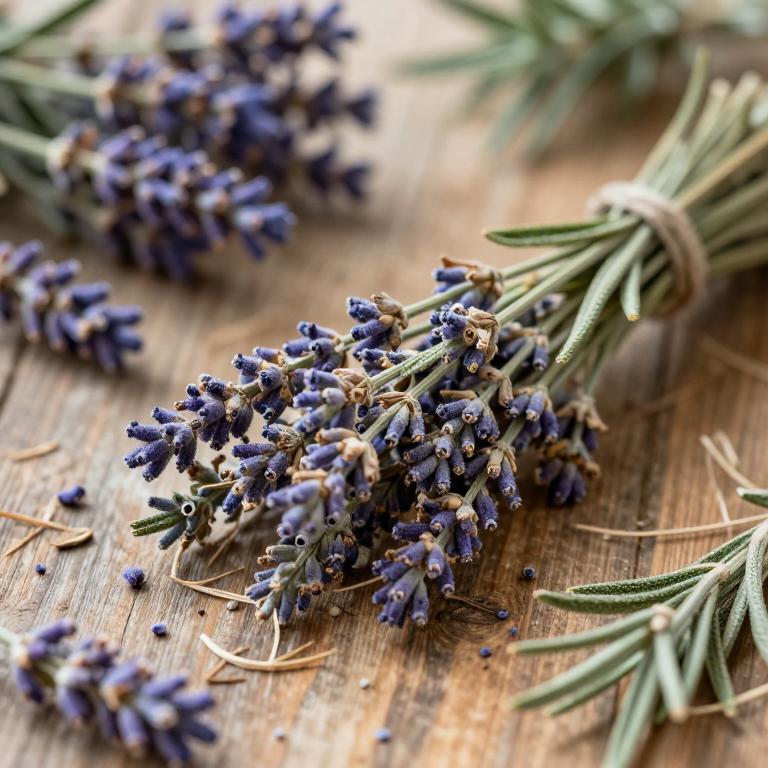
, scientifically known as Lavandula bipinnaata, is a fragrant perennial herb prized for its therapeutic properties. Belonging to the Lamiaceae family, this species offers soothing essential oils used in aromatherapy. Renowned for its calming effects, it serves as a natural remedy for anxiety, insomnia, and skin irritations worldwide.
- Family
- Lamiaceae
- Native range
- Asia-Tropical
- Parts used
- Not available
- Common names
- Not available
- Scientific synonyms
- Chaetostachys Multifida · Bystropogon Bipinnatus · 3 more
Names and Synonyms
Scientific Names
Accepted name
Lavandula bipinnataSynonyms
- Chaetostachys multifida
- Bystropogon bipinnatus
- Lavandula bipinnata var. burmanniana
- Lavandula bipinnata var. rothiana
- Lavandula bipinnata var. intermedia
Sources: Wikidata, Catalogue of Life
Taxonomical Classification
This plant belongs to the kingdom Plantae and is classified under the phylum Streptophyta and the class Equisetopsida. Within the subclass Magnoliidae, it is categorized under the order Lamiales and the family Lamiaceae. Finally, it is identified by the genus Lavandula.
| Rank | Classification |
|---|---|
| Kingdom | Plantae |
| Phylum | Streptophyta |
| Class | Equisetopsida |
| Subclass | Magnoliidae |
| Order | Lamiales |
| Family | Lamiaceae |
| Genus | Lavandula |
Sources: The World Checklist of Vascular Plants (WCVP)
Distribution
This plant, known scientifically as Lavandula bipinnata, exhibits a specific geographical distribution within the Asian continent. Its natural range is primarily concentrated within the vast expanse of the Indian Subcontinent. Specifically, this species can be found growing in the diverse landscapes of India. Additionally, its presence extends across the borders into the country of Bangladesh. Therefore, these two nations represent the primary regions where this medicinal plant is located.
| Region | Area |
|---|---|
| Indian Subcontinent | Bangladesh |
| Indian Subcontinent | India |
Sources: The World Checklist of Vascular Plants (WCVP)
Botanical Identification
Life history
The life history of Lavandula bipinnata is characterized by its classification as a chamaephyte, a growth form where the majority of the plant's regenerative organs are located close to the soil surface, typically just above it. Specifically, it exhibits a chamaephyte life strategy (Life_form_1) and aligns with the chamaephyte category (Life_form_2) within the broader spectrum of plant life forms including phanerophytes, hemicryptophytes, cryptophytes, geophytes, hydrophytes, helophytes, therophytes, and lithophytes. This positioning allows the species to survive environmental stressors by keeping its vital buds near or slightly above the ground level, facilitating its persistence in its natural Mediterranean habitats.
- Life form :
- chamaephyte
Morphology
The morphology of Lavandula bipinnata is characterized by a shrub growth form, presenting a structured yet somewhat flexible architectural habit. As a non-climbing species, it functions as a self-supporting organism, maintaining its upright posture without the need for external structures or climbing mechanisms. The plant is entirely independent in its nutritional requirements, exhibiting no parasitic tendencies, and thrives as a terrestrial species rooted in the soil rather than as an epiphyte. Furthermore, its structural composition displays variable woodiness, allowing for a physical consistency that can transition between more herbaceous and more woody textures depending on the age and environmental conditions of the specimen.
- Climber :
- self-supporting
- Epiphyte :
- terrestrial
- Growth form :
- shrub
- Parasite :
- independent
- Woodiness :
- variable
Sources: Global Inventory of Floras and Traits (GIFT)
Chemicals
Lavandula bipinnata has 8 reported phytochemicals identified across 0 scientific publications and several other databases. The most consistently reported chemicals include 1,8-Cineole, Flavonoids, camphor, 15,16-dihydroxy-7,11-dioxopimar-8(9)-ene, ALPHA-PINENE.
| Chemical | Supporting sources | Consensus |
|---|---|---|
| 1,8-Cineole | 2 supporting sources | ★☆☆☆☆ |
| Flavonoids | 2 supporting sources | ★☆☆☆☆ |
| camphor | 2 supporting sources | ★☆☆☆☆ |
| 15,16-dihydroxy-7,11-dioxopimar-8(9)-ene | 1 supporting sources | ★☆☆☆☆ |
| ALPHA-PINENE | 1 supporting sources | ★☆☆☆☆ |
| CARVACROL | 1 supporting sources | ★☆☆☆☆ |
| Glutinosin | 1 supporting sources | ★☆☆☆☆ |
| triterpenoids | 1 supporting sources | ★☆☆☆☆ |
1,8-Cineole
- Molecules (Basel, Switzerland)
- Life (Basel, Switzerland)
Flavonoids
- Molecules (Basel, Switzerland)
- Journal of traditional and complementary medicine
camphor
- Molecules (Basel, Switzerland)
- Life (Basel, Switzerland)
15,16-dihydroxy-7,11-dioxopimar-8(9)-ene
- Journal of natural products
ALPHA-PINENE
- Life (Basel, Switzerland)
CARVACROL
- Molecules (Basel, Switzerland)
Glutinosin
- Journal of natural products
triterpenoids
- Molecules (Basel, Switzerland)
Activities
Lavandula bipinnata has 2 reported activities identified across 0 scientific publications and several other databases. The most consistently reported activities include Antioxidant, Antiparasitic.
| Activity | Supporting sources | Consensus |
|---|---|---|
| Antioxidant | 1 supporting sources | ★☆☆☆☆ |
| Antiparasitic | 1 supporting sources | ★☆☆☆☆ |
Antioxidant
- Molecules (Basel, Switzerland)
Antiparasitic
- Molecules (Basel, Switzerland)
Conditions
Lavandula bipinnata has 1 reported investigations on conditions identified across 0 scientific publications and several other databases. The most consistently reported conditions include inflammation.
| Condition | Supporting sources | Consensus |
|---|---|---|
| Inflammation | 1 supporting sources | ★☆☆☆☆ |
Inflammation
- Journal of traditional and complementary medicine
Preparations
Lavandula bipinnata has 1 reported preparations identified across 0 scientific publications and several other databases. The most consistently reported preparations include LMW.
| Preparation | Supporting sources | Consensus |
|---|---|---|
| Lmw | 1 supporting sources | ★☆☆☆☆ |
Lmw
- Biomedical and environmental sciences : BES