Lavandula angustifolia angustifolia
Lavandula angustifolia subsp. angustifolia · Accepted scientific name
Scientific literature: Very Sparse (41 studies) · ★☆☆☆☆
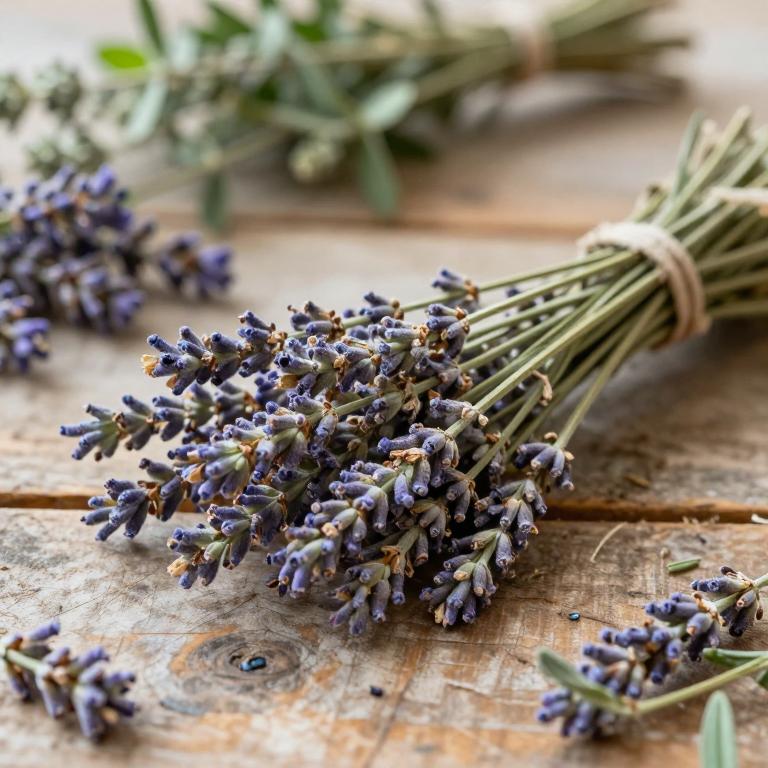
Lavandula angustifolia angustifolia, scientifically known as Lavandula angustifolia subsp. angustifolia, is a prized perennial herb renowned for its aromatic purple blooms. Highly valued in traditional medicine, this subspecies offers potent calming properties, frequently used to alleviate anxiety, improve sleep quality, and soothe skin irritations through its essential oils.
Names and Synonyms
Common Names
- Lavandula angustifolia angustifolia
- English lavender
- common lavender
- garden lavender
- lavender
- true lavender
Scientific Names
Accepted name
Lavandula angustifolia subsp. angustifoliaSynonyms
- Lavandula officinalis var. delphinensis
- Lavandula vera var. angustifolia
- Lavandula vera var. ligustica
- Lavandula vera var. alba
- Lavandula angustifolia var. delphinensis
- Lavandula spica var. angustifolia
- Lavandula delphinensis
- Lavandula officinalis f. alba
- Lavandula vulgaris
- Lavandula spica
- Lavandula angustifolia f. albiflora
- Lavandula fragrans
- Lavandula officinalis f. albiflora
- Lavandula officinalis
- Lavandula spica var. delphinensis
Regional and Traditional Names
Spanish:
- espliego común
- lavanda fina
- lavandula
German:
- Lavendel
- echter Lavendel
French:
- lavande
- lavande vraie
- lavande à feuilles étroites
- Lavande fine
Sources: Wikidata, Catalogue of Life
Taxonomical Classification
This plant belongs to the kingdom Plantae and the phylum Streptophyta, falling under the class Equisetopsida and subclass Magnoliidae. Within the order Lamiales and the family Lamiaceae, it is classified under the genus Lavandula. Specifically, this specimen is identified as the subspecies Lavandula angustifolia subsp. angustifolia.
| Rank | Classification |
|---|---|
| Kingdom | Plantae |
| Phylum | Streptophyta |
| Class | Equisetopsida |
| Subclass | Magnoliidae |
| Order | Lamiales |
| Family | Lamiaceae |
| Genus | Lavandula |
Sources: The World Checklist of Vascular Plants (WCVP)
Distribution
This plant exhibits a broad distribution across several key regions of the European continent. In Northern Europe, its presence is documented in both Great Britain and Ireland. Moving toward the center of the continent, the species is also found throughout Middle Europe, specifically in Austria and Germany. Additionally, its range extends into Southwestern Europe, where it can be found in France. Together, these locations highlight the diverse geographical spread of this specific subspecies.
| Region | Area |
|---|---|
| Northern Europe | Great Britain |
| Northern Europe | Ireland |
| Middle Europe | Austria |
| Middle Europe | Germany |
| Southwestern Europe | France |
| Southwestern Europe | Spain |
| Southeastern Europe | Bulgaria |
| Southeastern Europe | Italy |
| Eastern Europe | Baltic States |
| Eastern Europe | Krym |
Sources: The World Checklist of Vascular Plants (WCVP)
Chemicals
Lavandula angustifolia subsp. angustifolia has 8 reported phytochemicals identified across 0 scientific publications and several other databases. The most consistently reported chemicals include Linalool, Betulin, Deoxyartemisinin, LINALYL ACETATE, Linalool acetate.
| Chemical | Supporting sources | Consensus |
|---|---|---|
| Linalool | 3 supporting sources | ★★☆☆☆ |
| Betulin | 1 supporting sources | ★☆☆☆☆ |
| Deoxyartemisinin | 1 supporting sources | ★☆☆☆☆ |
| LINALYL ACETATE | 1 supporting sources | ★☆☆☆☆ |
| Linalool acetate | 1 supporting sources | ★☆☆☆☆ |
| artemisinin | 1 supporting sources | ★☆☆☆☆ |
| betulinic acid | 1 supporting sources | ★☆☆☆☆ |
| coumarin | 1 supporting sources | ★☆☆☆☆ |
Linalool
- Molecules (Basel, Switzerland)
- Asian Pacific journal of cancer prevention : APJCP
- Cells
Betulin
- Dr. Duke
Deoxyartemisinin
- Biotechnology letters
LINALYL ACETATE
- Asian Pacific journal of cancer prevention : APJCP
Linalool acetate
- Cells
artemisinin
- Biotechnology letters
betulinic acid
- Dr. Duke
coumarin
- Molecules (Basel, Switzerland)
Activities
Lavandula angustifolia subsp. angustifolia has 28 reported activities identified across 0 scientific publications and several other databases. The most consistently reported activities include Anticancer, Anthelmintic, AntiHIV, Antibacterial, Anticarcinomic.
| Activity | Supporting sources | Consensus |
|---|---|---|
| Anticancer | 2 supporting sources | ★☆☆☆☆ |
| Anthelmintic | 1 supporting sources | ★☆☆☆☆ |
| AntiHIV | 1 supporting sources | ★☆☆☆☆ |
| Antibacterial | 1 supporting sources | ★☆☆☆☆ |
| Anticarcinomic | 1 supporting sources | ★☆☆☆☆ |
| Antidepressant | 1 supporting sources | ★☆☆☆☆ |
| Antidiabetic | 1 supporting sources | ★☆☆☆☆ |
| Antiedemic | 1 supporting sources | ★☆☆☆☆ |
| Antiepileptic | 1 supporting sources | ★☆☆☆☆ |
| Antifeedant | 1 supporting sources | ★☆☆☆☆ |
Anticancer
- Dr. Duke
- Asian Pacific journal of cancer prevention : APJCP
Anthelmintic
- Dr. Duke
AntiHIV
- Dr. Duke
Antibacterial
- Dr. Duke
Anticarcinomic
- Dr. Duke
Antidepressant
- Pharmaceutical biology
Antidiabetic
- Heliyon
Antiedemic
- Dr. Duke
Antiepileptic
- Heliyon
Antifeedant
- Dr. Duke
Preparations
Lavandula angustifolia subsp. angustifolia has 10 reported preparations identified across 0 scientific publications and several other databases. The most consistently reported preparations include essential oil, aqueous extracts, Essential Oil, Ethyl acetate extracts, aerial parts hydroalcoholic extract.
| Preparation | Supporting sources | Consensus |
|---|---|---|
| Essential oil | 3 supporting sources | ★★☆☆☆ |
| Aqueous extracts | 2 supporting sources | ★☆☆☆☆ |
| Essential oil | 1 supporting sources | ★☆☆☆☆ |
| Ethyl acetate extracts | 1 supporting sources | ★☆☆☆☆ |
| Aerial parts hydroalcoholic extract | 1 supporting sources | ★☆☆☆☆ |
| Dry extracts | 1 supporting sources | ★☆☆☆☆ |
| Essential oils | 1 supporting sources | ★☆☆☆☆ |
| Ethanolic extracts | 1 supporting sources | ★☆☆☆☆ |
| Extracts | 1 supporting sources | ★☆☆☆☆ |
| Hydroalcoholic extracts | 1 supporting sources | ★☆☆☆☆ |
Essential oil
- Journal of oleo science
- Heliyon
- Asian Pacific journal of cancer prevention : APJCP
Aqueous extracts
- Comptes rendus biologies
- RSC advances
Essential oil
- Asian Pacific journal of cancer prevention : APJCP
Ethyl acetate extracts
- Journal of ethnopharmacology
Aerial parts hydroalcoholic extract
- Pharmaceutical biology
Dry extracts
- Reproduction, nutrition, development
Essential oils
- Evidence-based complementary and alternative medicine : eCAM
Ethanolic extracts
- RSC advances
Extracts
- Fish physiology and biochemistry
Hydroalcoholic extracts
- Food research international (Ottawa, Ont.)