African-lettuce
Launaea taraxacifolia · Accepted scientific name
Scientific literature: Very Sparse (26 studies) · ★☆☆☆☆
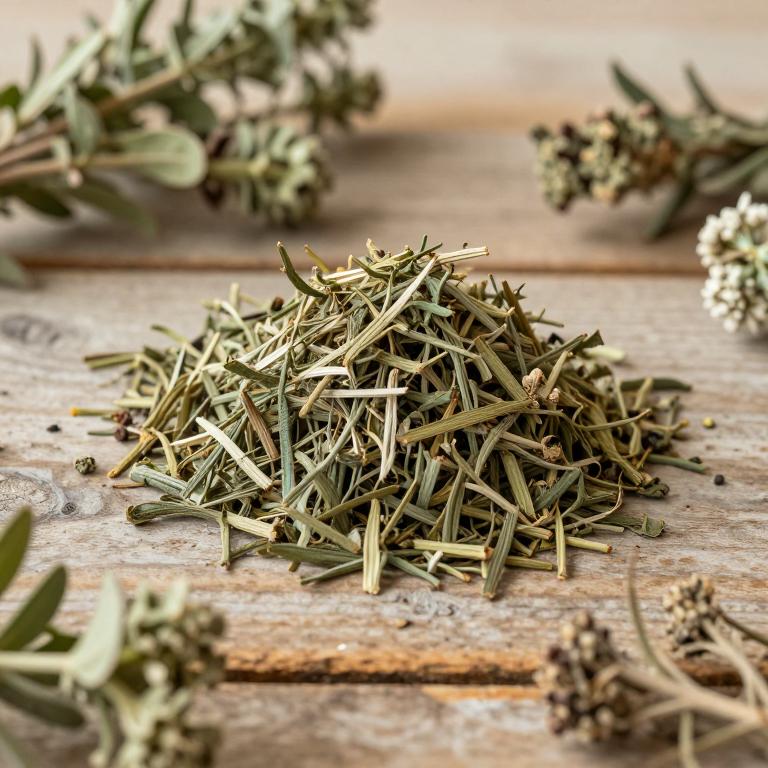
African-lettuce, scientifically known as Launaea taraxacifolia, is a versatile medicinal herb widely utilized in traditional African medicine. Renowned for its potent therapeutic properties, this plant is frequently employed to treat digestive issues, skin ailments, and inflammatory conditions, offering a natural remedy deeply rooted in indigenous healing practices and botanical wisdom.
Names and Synonyms
Common Names
- African-lettuce
- wild lettuce
- yanrin
Scientific Names
Accepted name
Launaea taraxacifoliaSynonyms
- Lactuca kotschyi
- Lactuca pentaphylla
- Sonchus pentaphyllus
- Sonchus serratus
Regional and Traditional Names
German:
- Löwenzahn-Dornlattich
French:
- laitue africaine
- lengue de vache
Sources: Wikidata, Catalogue of Life
Taxonomical Classification
This plant, Launaea taraxacifolia, belongs to the kingdom Plantae and the phylum Streptophyta. Within the class Equisetopsida and subclass Magnoliidae, it is classified under the order Asterales. Finally, it is a member of the family Asteraceae and is categorized under the genus Launaea.
| Rank | Classification |
|---|---|
| Kingdom | Plantae |
| Phylum | Streptophyta |
| Class | Equisetopsida |
| Subclass | Magnoliidae |
| Order | Asterales |
| Family | Asteraceae |
| Genus | Launaea |
Sources: The World Checklist of Vascular Plants (WCVP)
Distribution
This plant, Launaea taraxacifolia, exhibits a specific geographical distribution across several regions of the African continent. In Northern Africa, its presence is noted in the country of Morocco. Moving toward West Tropical Africa, the species can be found in Benin and Burkina. Furthermore, it extends its range into Ghana and the Ivory Coast. Together, these locations highlight the plant's presence across diverse West African landscapes.
| Region | Area |
|---|---|
| Northern Africa | Morocco |
| West Tropical Africa | Benin |
| West Tropical Africa | Burkina |
| West Tropical Africa | Ghana |
| West Tropical Africa | Ivory Coast |
| West Tropical Africa | Mauritania |
| West Tropical Africa | Nigeria |
| West Tropical Africa | Senegal |
| West Tropical Africa | Sierra Leone |
| West Tropical Africa | Togo |
Sources: The World Checklist of Vascular Plants (WCVP)
Botanical Identification
Life history
The life history of Launea taraxacifolia is characterized by a perennial lifecycle, allowing the plant to persist through multiple growing seasons. Structurally, it is classified as a hemicryptophyte, a life form where the perennating buds are located at the soil surface, protected by leaf litter or other organic matter during unfavorable periods. This hemicryptophytic nature ensures its survival and ability to regenerate annually from these ground-level buds, facilitating its long-term presence in its natural habitat.
- Life form :
- hemicryptophyte
- Lifecycle :
- perennial
Morphology
The morphology of Lauanaea taraxacifolia is characterized by its growth form as a non-woody herb. This terrestrial plant functions as an independent organism, neither acting as a parasite nor an epiphyte, and maintains a self-supporting structure without the need for climbing. In terms of stature, the plant exhibits a height that typically averages around 1 meter, with recorded measurements ranging from a minimum of approximately 0.61 meters to a maximum of about 1.22 meters.
- Climber :
- self-supporting
- Epiphyte :
- terrestrial
- Growth form :
- herb
- Parasite :
- independent
- Plant height max:
- 1.219214826 m
- Plant height mean:
- 1 m
- Plant height min:
- 0.609607413 m
- Woodiness :
- non-woody
Physiology
The physiology of Lauanaea taraxaciifolia is characterized by complex metabolic processes geared toward survival in varying environmental conditions, though it does not possess the specialized symbiotic relationship required to function as a nitrogen fixer. Unlike legumes that host rhizobia in root nodules to convert atmospheric nitrogen into bioavailable forms, this species relies on the uptake of nitrates and ammonium directly from the soil through its root system. Its physiological framework supports essential functions such as photosynthesis, transpiration, and nutrient assimilation, utilizing standard vegetative pathways to sustain growth and secondary metabolite production. Because it lacks the mechanism for nitrogen fixation (trait_1: no), its growth rate and nitrogen content are strictly contingent upon the existing nitrogen availability within its substrate.
- Nitrogen fixer :
- no
Sources: Global Inventory of Floras and Traits (GIFT)
Plant Parts
Launaea taraxacifolia has 1 reported plant parts identified across 3 scientific publications and several other databases that are studied for medicinal purposes. The most consistently reported plant part include leaf.
| Plant part | Supporting sources | Consensus |
|---|---|---|
| Leaf | 3 supporting sources | ★★☆☆☆ |
Leaf
- Data in brief
- Molecules (Basel, Switzerland)
- Evidence-based complementary and alternative medicine : eCAM
Chemicals
Launaea taraxacifolia has 9 reported phytochemicals identified across 3 scientific publications and several other databases. The most consistently reported chemicals include CHLOROGENIC ACID, Coumarins, Flavonoids, Glycosides, LYCOPENE.
| Chemical | Supporting sources | Consensus |
|---|---|---|
| CHLOROGENIC ACID | 1 supporting sources | ★☆☆☆☆ |
| Coumarins | 1 supporting sources | ★☆☆☆☆ |
| Flavonoids | 1 supporting sources | ★☆☆☆☆ |
| Glycosides | 1 supporting sources | ★☆☆☆☆ |
| LYCOPENE | 1 supporting sources | ★☆☆☆☆ |
| Tannins | 1 supporting sources | ★☆☆☆☆ |
| ascorbic acid | 1 supporting sources | ★☆☆☆☆ |
| caffeic acid | 1 supporting sources | ★☆☆☆☆ |
| triterpenoids | 1 supporting sources | ★☆☆☆☆ |
CHLOROGENIC ACID
- Molecules (Basel, Switzerland)
Coumarins
- Evidence-based complementary and alternative medicine : eCAM
Flavonoids
- Evidence-based complementary and alternative medicine : eCAM
Glycosides
- Evidence-based complementary and alternative medicine : eCAM
LYCOPENE
- Evidence-based complementary and alternative medicine : eCAM
Tannins
- Evidence-based complementary and alternative medicine : eCAM
ascorbic acid
- Evidence-based complementary and alternative medicine : eCAM
caffeic acid
- Molecules (Basel, Switzerland)
triterpenoids
- Evidence-based complementary and alternative medicine : eCAM
Activities
Launaea taraxacifolia has 2 reported activities identified across 3 scientific publications and several other databases. The most consistently reported activities include Antioxidant, Antiproliferative.
| Activity | Supporting sources | Consensus |
|---|---|---|
| Antioxidant | 1 supporting sources | ★☆☆☆☆ |
| Antiproliferative | 1 supporting sources | ★☆☆☆☆ |
Antioxidant
- Molecules (Basel, Switzerland)
Antiproliferative
- Omics : a journal of integrative biology
Conditions
Launaea taraxacifolia has 10 reported investigations on conditions identified across 3 scientific publications and several other databases. The most consistently reported conditions include cancer, arthritis, bacterial infections, cardiovascular diseases, diabetes mellitus.
| Condition | Supporting sources | Consensus |
|---|---|---|
| Cancer | 2 supporting sources | ★☆☆☆☆ |
| Arthritis | 1 supporting sources | ★☆☆☆☆ |
| Bacterial infections | 1 supporting sources | ★☆☆☆☆ |
| Cardiovascular diseases | 1 supporting sources | ★☆☆☆☆ |
| Diabetes mellitus | 1 supporting sources | ★☆☆☆☆ |
| Endocrine diseases | 1 supporting sources | ★☆☆☆☆ |
| Hypertension | 1 supporting sources | ★☆☆☆☆ |
| Malaria | 1 supporting sources | ★☆☆☆☆ |
| Metabolic diseases | 1 supporting sources | ★☆☆☆☆ |
| Respiratory diseases | 1 supporting sources | ★☆☆☆☆ |
Cancer
- Omics : a journal of integrative biology
- Evidence-based complementary and alternative medicine : eCAM
Arthritis
- Evidence-based complementary and alternative medicine : eCAM
Bacterial infections
- Evidence-based complementary and alternative medicine : eCAM
Cardiovascular diseases
- Evidence-based complementary and alternative medicine : eCAM
Diabetes mellitus
- Evidence-based complementary and alternative medicine : eCAM
Endocrine diseases
- Evidence-based complementary and alternative medicine : eCAM
Hypertension
- Evidence-based complementary and alternative medicine : eCAM
Malaria
- Evidence-based complementary and alternative medicine : eCAM
Metabolic diseases
- Evidence-based complementary and alternative medicine : eCAM
Respiratory diseases
- Evidence-based complementary and alternative medicine : eCAM
Preparations
Launaea taraxacifolia has 2 reported preparations identified across 3 scientific publications and several other databases. The most consistently reported preparations include Launaea taraxacifolia extract, leaves.
| Preparation | Supporting sources | Consensus |
|---|---|---|
| Launaea taraxacifolia extract | 1 supporting sources | ★☆☆☆☆ |
| Leaves | 1 supporting sources | ★☆☆☆☆ |
Launaea taraxacifolia extract
- Molecules (Basel, Switzerland)
Leaves
- Evidence-based complementary and alternative medicine : eCAM