Launaea nudicaulis
Launaea nudicaulis · Accepted scientific name
Scientific literature: Very Sparse (20 studies) · ★☆☆☆☆
, scientifically known as Launaea nudicaulis, is a versatile medicinal plant valued in traditional healing practices. Often found in tropical regions, this herb is recognized for its potent bioactive compounds. It is frequently utilized to treat inflammation, skin ailments, and digestive issues, offering significant therapeutic potential in natural medicine.
- Family
- Asteraceae
- Native range
- Europe
- Parts used
- Leaf
- Common names
- Not available
- Scientific synonyms
- Ammoseris Nudicaulis · Chondrilla Nudicaulis · 7 more
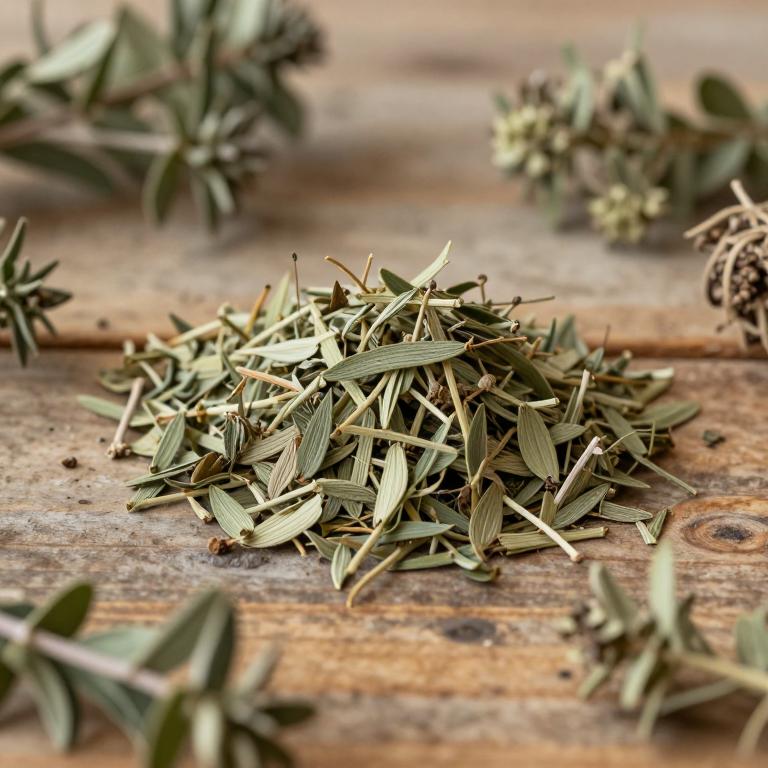
Names and Synonyms
Scientific Names
Accepted name
Launaea nudicaulisSynonyms
- Ammoseris nudicaulis
- Chondrilla nudicaulis
- Lactuca nudicaulis
- Rhabdotheca nudicaulis
- Zollikoferia nudicaulis
- Sonchus nudicaulis
- Atalanthus nudicaulis
- Lomatolepis nudicaulis
- Microrhynchus nudicaulis
Regional and Traditional Names
German:
- Nacktstängeliger Dornlattich
French:
- Launée à tiges nues
Sources: Wikidata, Catalogue of Life
Taxonomical Classification
This plant belongs to the kingdom Plantae and is classified under the phylum Streptophyta and class Equisetopsida. Within the subclass Magnoliidae, it is further organized into the order Asterales and the family Asteraceae. Finally, its taxonomic identity is defined by the genus Launaea.
| Rank | Classification |
|---|---|
| Kingdom | Plantae |
| Phylum | Streptophyta |
| Class | Equisetopsida |
| Subclass | Magnoliidae |
| Order | Asterales |
| Family | Asteraceae |
| Genus | Launaea |
Sources: The World Checklist of Vascular Plants (WCVP)
Distribution
This plant exhibits a broad distribution across several key Mediterranean regions. In Southwestern Europe, its presence is documented within the borders of Spain. Moving toward Southeastern Europe, the species can be found on the island of Sicilia. The plant also extends into Northern Africa, where it is established in Algeria. Furthermore, its range encompasses the North African territories of both Egypt and Libya.
| Region | Area |
|---|---|
| Southwestern Europe | Spain |
| Southeastern Europe | Sicilia |
| Northern Africa | Algeria |
| Northern Africa | Egypt |
| Northern Africa | Libya |
| Northern Africa | Morocco |
| Northern Africa | Tunisia |
| Macaronesia | Canary Is. |
| West Tropical Africa | Benin |
| West Tropical Africa | Mauritania |
Sources: The World Checklist of Vascular Plants (WCVP)
Botanical Identification
Ecology
The ecology of Launaea nudicaulis is characterized by a broad altitudinal distribution, allowing it to inhabit diverse topographical settings. This species is found across an elevational range that begins at sea level (0 m AMSL) and extends up to a maximum altitude of 1400 m AMSL. This wide vertical gradient suggests an ability to adapt to varying climatic conditions, ranging from lowland tropical environments to more temperate montane zones, which influences its availability across different ecological niches within its habitat.
- Elevational range max:
- 1400 m AMSL
- Elevational range min:
- 0 m AMSL
Life history
The life history of Launea nudicaulis is characterized by a perennial lifecycle, allowing the plant to persist through multiple growing seasons. As a therophyte, its life strategy relies on completing its development through a seasonal cycle, often focusing its energy on producing seeds or specialized structures that ensure survival during unfavorable environmental conditions before emerging again.
- Life form :
- therophyte
- Lifecycle :
- perennial
Morphology
The morphology of Launaeua nudicaulis is characterized by its growth form as a herb, manifesting as both a general herb and a specific forb. This plant is primarily terrestrial in its habitat, though it can occupy semiaquatic or aquatic environments. It exhibits a woody texture and maintains an erect shoot orientation, functioning as a self-supporting organism rather than a climber or epiphyte. As an independent species, it does not exhibit parasitic behavior. In terms of physical dimensions, the plant maintains a relatively low stature, with a height ranging from a minimum of 0.15 m to a maximum of 0.4 m.
- Aquatic :
- terrestrial
- Climber :
- self-supporting
- Epiphyte :
- terrestrial
- Growth form :
- herb
- Parasite :
- independent
- Plant height max:
- 0.4 m
- Plant height min:
- 0.15 m
- Shoot orientation :
- erect
- Woodiness :
- woody
Physiology
The physiology of Launea nudicaulis is characterized by distinct morphological adaptations that support its metabolic and structural functions. Its photosynthetic capacity is driven by a leaf form that is specifically pinnatipartite, a configuration that increases the surface area for gas exchange and light interception while potentially managing transpiration rates through its deeply lobed structure. The spatial distribution of these leaves follows an alternate arrangement along the stem, a phyllotaxy that optimizes light capture by reducing self-shading between successive leaf nodes as the plant grows. This combination of complex leaf dissection and strategic alternating positioning facilitates efficient energy production and resource allocation within the plant's physiological framework.
- Leaf arrangement :
- alternate
- Leaf form :
- pinnatipartite
Reproduction
The reproduction of Launea nudicaulis is characterized by a specific flowering phenology and specialized fruit morphology. The plant enters its flowering stage starting in March and concludes by April, though the flowering period can be highly variable throughout the year. During this time, it produces flowers that are distinctively yellow in color. Following pollination, the plant develops fruits classified as achenes, which typically measure between a minimum of 0.3 cm and a maximum of 0.45 cm in length. These fruits are indehiscent, meaning they do not split open at maturity to release seeds. For the spread of its offspring, the plant utilizes an anemochorous dispersal syndrome, relying on wind currents to transport its seeds to new locations.
- Dehiscence :
- indehiscent
- Dispersal syndrome :
- anemochorous
- Flower colour :
- yellow
- Flowering time :
- Mar
- Flowering time :
- Apr
- Fruit length max:
- 0.45 cm
- Fruit length min:
- 0.3 cm
- Fruit type :
- achene
Sources: Global Inventory of Floras and Traits (GIFT)
Plant Parts
Launaea nudicaulis has 1 reported plant parts identified across 1 scientific publications and several other databases that are studied for medicinal purposes. The most consistently reported plant part include leaf.
| Plant part | Supporting sources | Consensus |
|---|---|---|
| Leaf | 1 supporting sources | ★☆☆☆☆ |
Leaf
- Frontiers in microbiology
Chemicals
Launaea nudicaulis has 10 reported phytochemicals identified across 1 scientific publications and several other databases. The most consistently reported chemicals include 7-Acetyl-6-ethyl-1,1,4,4-tetramethyltetralin, DOTRIACONTANE, Fatty acids, Flavonoids, Hexadecanoic acid.
| Chemical | Supporting sources | Consensus |
|---|---|---|
| 7-Acetyl-6-ethyl-1,1,4,4-tetramethyltetralin | 1 supporting sources | ★☆☆☆☆ |
| DOTRIACONTANE | 1 supporting sources | ★☆☆☆☆ |
| Fatty acids | 1 supporting sources | ★☆☆☆☆ |
| Flavonoids | 1 supporting sources | ★☆☆☆☆ |
| Hexadecanoic acid | 1 supporting sources | ★☆☆☆☆ |
| ISOPROPYL MYRISTATE | 1 supporting sources | ★☆☆☆☆ |
| Saponins | 1 supporting sources | ★☆☆☆☆ |
| Steroids | 1 supporting sources | ★☆☆☆☆ |
| Tannins | 1 supporting sources | ★☆☆☆☆ |
| ascorbic acid | 1 supporting sources | ★☆☆☆☆ |
7-Acetyl-6-ethyl-1,1,4,4-tetramethyltetralin
- Frontiers in microbiology
DOTRIACONTANE
- Frontiers in microbiology
Fatty acids
- Molecules (Basel, Switzerland)
Flavonoids
- Molecules (Basel, Switzerland)
Hexadecanoic acid
- Frontiers in microbiology
ISOPROPYL MYRISTATE
- Frontiers in microbiology
Saponins
- Frontiers in microbiology
Steroids
- Frontiers in microbiology
Tannins
- Frontiers in microbiology
ascorbic acid
- Pakistan journal of pharmaceutical sciences
Activities
Launaea nudicaulis has 2 reported activities identified across 1 scientific publications and several other databases. The most consistently reported activities include Antibacterial, Anticancer.
| Activity | Supporting sources | Consensus |
|---|---|---|
| Antibacterial | 1 supporting sources | ★☆☆☆☆ |
| Anticancer | 1 supporting sources | ★☆☆☆☆ |
Antibacterial
- Frontiers in microbiology
Anticancer
- Frontiers in microbiology
Conditions
Launaea nudicaulis has 5 reported investigations on conditions identified across 1 scientific publications and several other databases. The most consistently reported conditions include Pseudomonas aeruginosa, blood glucose, diabetic complications, oxidative stress, weight loss.
| Condition | Supporting sources | Consensus |
|---|---|---|
| Pseudomonas aeruginosa | 1 supporting sources | ★☆☆☆☆ |
| Blood glucose | 1 supporting sources | ★☆☆☆☆ |
| Diabetic complications | 1 supporting sources | ★☆☆☆☆ |
| Oxidative stress | 1 supporting sources | ★☆☆☆☆ |
| Weight loss | 1 supporting sources | ★☆☆☆☆ |
Pseudomonas aeruginosa
- Frontiers in microbiology
Blood glucose
- Molecules (Basel, Switzerland)
Diabetic complications
- Molecules (Basel, Switzerland)
Oxidative stress
- Molecules (Basel, Switzerland)
Weight loss
- Molecules (Basel, Switzerland)
Preparations
Launaea nudicaulis has 2 reported preparations identified across 1 scientific publications and several other databases. The most consistently reported preparations include ethanolic extract, extracts.
| Preparation | Supporting sources | Consensus |
|---|---|---|
| Ethanolic extract | 1 supporting sources | ★☆☆☆☆ |
| Extracts | 1 supporting sources | ★☆☆☆☆ |
Ethanolic extract
- Molecules (Basel, Switzerland)
Extracts
- Archiv fur experimentelle Veterinarmedizin