bitter-lettuce
Launaea cornuta · Accepted scientific name
Scientific literature: Very Sparse (3 studies) · ★☆☆☆☆
Bitter-lettuce, scientifically known as Launaea cornuta, is a resilient herbaceous plant widely utilized in traditional medicine across Asia. Renowned for its distinct bitter profile, it possesses significant pharmacological properties, including anti-inflammatory and antioxidant effects. This versatile botanical is frequently studied for its potential therapeutic benefits in managing various ailments.
- Family
- Asteraceae
- Native range
- Africa
- Parts used
- Flower
- Common names
- Bitter-Lettuce
- Scientific synonyms
- Launaea Courtetiana · Launaea Farinulenta · 7 more
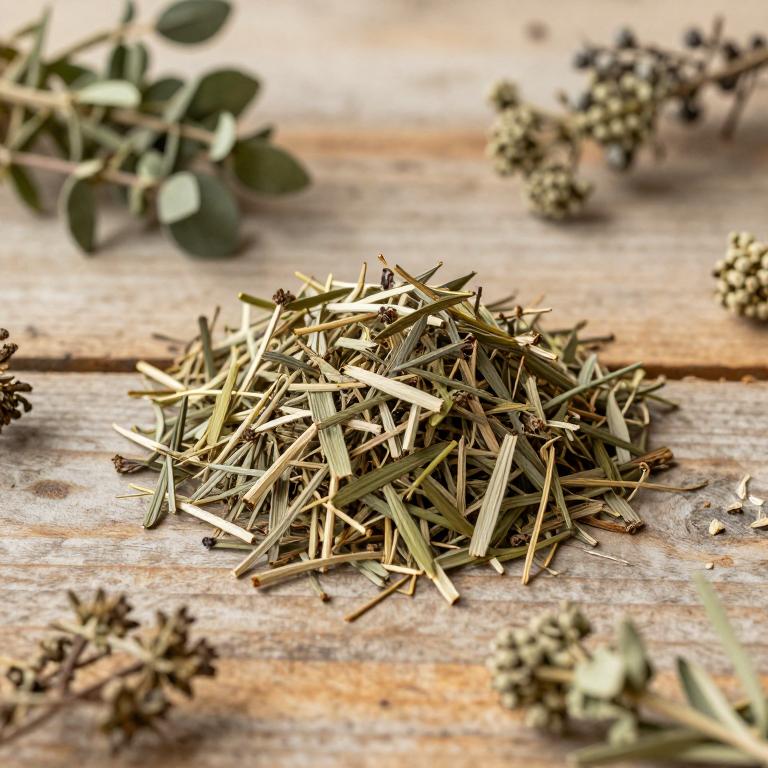
Names and Synonyms
Common Names
- bitter-lettuce
Scientific Names
Accepted name
Launaea cornutaSynonyms
- Launaea courtetiana
- Launaea farinulenta
- Launaea virgata
- Lactuca farinulenta
- Launaea exauriculata
- Prenanthes somaliensis
- Sonchus cornutus
- Sonchus exauriculatus
- Sonchus kabarensis
Regional and Traditional Names
French:
- laitue amère
Sources: Wikidata, Catalogue of Life
Taxonomical Classification
This plant belongs to the kingdom Plantae and the phylum Streptophyta, falling under the class Equisetopsida and subclass Magnoliidae. It is further classified within the order Asterales and the family Asteraceae. Finally, it is identified by its specific genus, Launaea.
| Rank | Classification |
|---|---|
| Kingdom | Plantae |
| Phylum | Streptophyta |
| Class | Equisetopsida |
| Subclass | Magnoliidae |
| Order | Asterales |
| Family | Asteraceae |
| Genus | Launaea |
Sources: The World Checklist of Vascular Plants (WCVP)
Distribution
This plant exhibits a specific geographical distribution spanning several regions across the African continent. In West Tropical Africa, its presence is documented within the borders of Nigeria. Moving into West-Central Tropical Africa, the species is found in the Central African Republic and Cameroon. Its range also extends further south to include the nations of Burundi and Rwanda. Consequently, the distribution of Launea cornuta is concentrated within these diverse tropical environments.
| Region | Area |
|---|---|
| West Tropical Africa | Nigeria |
| West-Central Tropical Africa | Burundi |
| West-Central Tropical Africa | Central African Republic |
| West-Central Tropical Africa | Cameroon |
| West-Central Tropical Africa | Rwanda |
| West-Central Tropical Africa | DR Congo |
| Northeast Tropical Africa | Chad |
| Northeast Tropical Africa | Djibouti |
| Northeast Tropical Africa | Eritrea |
| Northeast Tropical Africa | Ethiopia |
Sources: The World Checklist of Vascular Plants (WCVP)
Botanical Identification
Life history
The life history of Launaea cornuta is characterized by its classification as a perennial plant, allowing it to persist through multiple growing seasons. Its biological structure and survival strategies are defined by its life forms, manifesting as both a hemicryptophyte and a therophyte. As a hemicryptophyte, it maintains its perennially renewing buds at or just below the soil surface, often protected by leaf litter or organic matter, while its therophyte characteristics indicate a capacity to complete its reproductive cycle through ephemeral growth stages, often relying on seeds to persist through unfavorable environmental conditions.
- Life form :
- hemicryptophyte
- Life form :
- therophyte
- Lifecycle :
- perennial
Morphology
The morphology of Launaeae cornuta is characterized by a growth form consisting of an herb, specifically classified as a herb and a forb. The plant typically reaches a mean height of approximately 1.073 meters. It is a terrestrial species, functioning as a self-supporting organism rather than a climber, and it lives as an independent entity without parasitic tendencies. While its woodiness is described as variable, it maintains a consistent terrestrial habit, neither acting as an epiphyte nor requiring aquatic or semiaquatic environments for its development.
- Aquatic :
- terrestrial
- Climber :
- self-supporting
- Epiphyte :
- terrestrial
- Growth form :
- herb
- Parasite :
- independent
- Plant height mean:
- 1.07307160866667 m
- Woodiness :
- variable
Physiology
The physiology of Launaea cornuta is characterized by specialized metabolic processes that facilitate survival in arid and semi-arid environments, primarily through efficient water management and nutrient acquisition. As a member of the Asteraceae family, its physiological framework involves complex photosynthetic pathways optimized to minimize transpiration while maximizing carbon assimilation under high thermal stress. Regarding its interaction with soil nutrients, the plant does not exhibit the capacity for biological nitrogen fixation; specifically, it is not a nitrogen fixer (trait_1: no), meaning it lacks the symbiotic relationship with diazotrophic bacteria, such as Rhizobium, typically found in leguminous species to convert atmospheric nitrogen into usable forms. Instead, its nutrient uptake relies heavily on the efficient absorption of mineral nitrogen directly from the soil substrate via an extensive root system adapted to low-moisture conditions. This reliance on soil-available nitrogen, combined with its drought-resistant physiological adaptations, defines its growth patterns and ecological niche.
- Nitrogen fixer :
- no
Reproduction
The reproduction of Launaea cornuta is driven by a combination of biotic and abiotic mechanisms, primarily characterized by a biotic pollination syndrome. The plant relies on insects for the transfer of pollen, facilitating the reproductive cycle through these biological agents. Furthermore, the species is capable of self-fertilization, which ensures reproductive success even in the absence of diverse pollinators. Once fertilization is achieved, the dispersal of seeds follows an anemochorous syndrome, meaning the seeds are primarily dispersed by the wind. This dual reliance on insect-mediated pollination and wind-driven dispersal allows the plant to effectively colonize its environment and maintain its population density.
- Dispersal syndrome :
- anemochorous
- Pollination syndrome :
- insect
- Pollination syndrome :
- biotic
- Self fertilization :
- present
Sources: Global Inventory of Floras and Traits (GIFT)
Plant Parts
Launaea cornuta has 1 reported plant parts identified across 1 scientific publications and several other databases that are studied for medicinal purposes. The most consistently reported plant part include flower.
| Plant part | Supporting sources | Consensus |
|---|---|---|
| Flower | 1 supporting sources | ★☆☆☆☆ |
Flower
- Zeitschrift fur Naturforschung. C, Journal of biosciences
Chemicals
Launaea cornuta has 1 reported phytochemicals identified across 1 scientific publications and several other databases. The most consistently reported chemicals include Flavonoids.
| Chemical | Supporting sources | Consensus |
|---|---|---|
| Flavonoids | 1 supporting sources | ★☆☆☆☆ |
Flavonoids
- Journal of ethnopharmacology
Conditions
Launaea cornuta has 1 reported investigations on conditions identified across 1 scientific publications and several other databases. The most consistently reported conditions include malaria.
| Condition | Supporting sources | Consensus |
|---|---|---|
| Malaria | 1 supporting sources | ★☆☆☆☆ |
Malaria
- Journal of ethnopharmacology
Preparations
Launaea cornuta has 4 reported preparations identified across 1 scientific publications and several other databases. The most consistently reported preparations include Aqueous and organic extracts, aqueous extracts, essential oil, organic extracts.
| Preparation | Supporting sources | Consensus |
|---|---|---|
| Aqueous and organic extracts | 1 supporting sources | ★☆☆☆☆ |
| Aqueous extracts | 1 supporting sources | ★☆☆☆☆ |
| Essential oil | 1 supporting sources | ★☆☆☆☆ |
| Organic extracts | 1 supporting sources | ★☆☆☆☆ |
Aqueous and organic extracts
- Journal of ethnopharmacology
Aqueous extracts
- Journal of ethnopharmacology
Essential oil
- Zeitschrift fur Naturforschung. C, Journal of biosciences
Organic extracts
- Journal of ethnopharmacology