Larrea nitida
Larrea nitida · Accepted scientific name
Scientific literature: Very Sparse (9 studies) · ★☆☆☆☆
Larrea nitida, scientifically known as Larrea nitida, is a resilient shrub native to arid regions. Renowned for its medicinal properties, this plant is traditionally utilized in various cultures to treat inflammatory conditions and skin ailments. Its unique chemical composition offers significant potential for pharmacological research and natural healing practices.
- Family
- Zygophyllaceae
- Native range
- Southern America
- Parts used
- Not available
- Common names
- Not available
- Scientific synonyms
- Inga Balsamica · Larrea Balsamica · 1 more
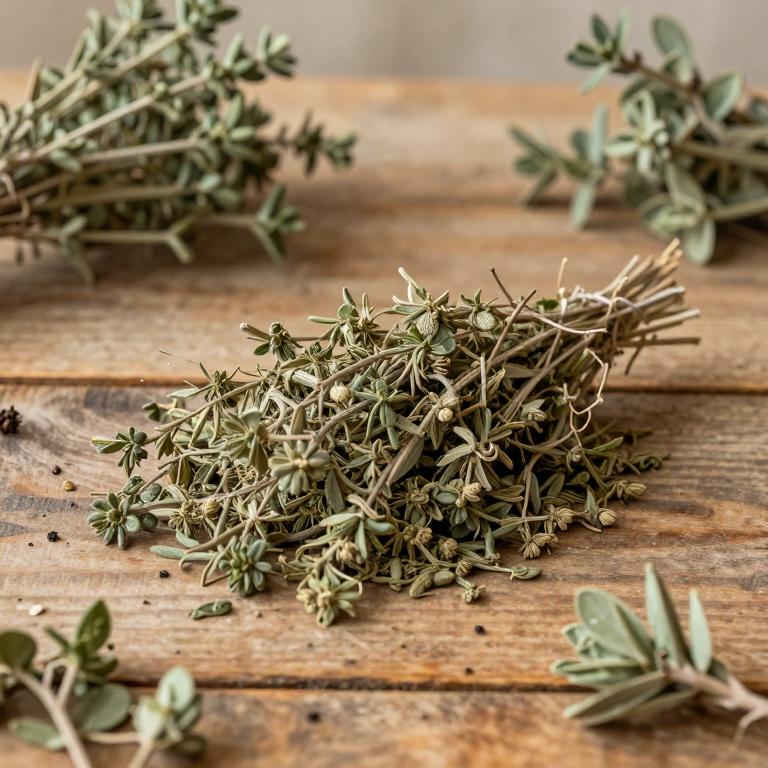
Names and Synonyms
Scientific Names
Accepted name
Larrea nitidaSynonyms
- Inga balsamica
- Larrea balsamica
- Mimosa balsamica
Regional and Traditional Names
Spanish:
- Jarilla crespa
Sources: Wikidata, Catalogue of Life
Taxonomical Classification
This plant belongs to the kingdom Plantae and the phylum Streptophyta, falling under the class Equisetopsida and subclass Magnoliidae. Within the order Zygophyllales, it is classified under the family Zygophyllaceae. Specifically, it is identified by the genus Larrea.
| Rank | Classification |
|---|---|
| Kingdom | Plantae |
| Phylum | Streptophyta |
| Class | Equisetopsida |
| Subclass | Magnoliidae |
| Order | Zygophyllales |
| Family | Zygophyllaceae |
| Genus | Larrea |
Sources: The World Checklist of Vascular Plants (WCVP)
Distribution
This plant exhibits a diverse geographical range across the southern regions of South America. It can be found extensively throughout Argentina, spanning the northeast, south, and northwest territories. Additionally, its distribution extends into the Chilean landscape. Specifically, the species is located within both central and northern Chile. Together, these locations define the primary habitat for Larrea nitida.
| Region | Area |
|---|---|
| Southern South America | Argentina Northeast |
| Southern South America | Argentina South |
| Southern South America | Argentina Northwest |
| Southern South America | Chile Central |
| Southern South America | Chile North |
Sources: The World Checklist of Vascular Plants (WCVP)
Botanical Identification
Ecology
The ecology of Larrea nitiida is characterized by an extensive altitudinal distribution, allowing it to inhabit a diverse array of landscapes across a broad vertical gradient. This species demonstrates remarkable environmental plasticity, occupying ecological niches ranging from sea level up to an elevation of 3400 m AMSL. This vast elevational range suggests an ability to adapt to varying thermal regimes, atmospheric pressures, and moisture availability, facilitating its presence in both lowland tropical or subtropical environments and higher-altitude montane zones. Such a wide distribution profile indicates that the plant can withstand significant fluctuations in temperature and varying levels of solar radiation, making it a resilient component of its native ecosystems across diverse topographic profiles.
- Elevational range max:
- 3400 m AMSL
- Elevational range min:
- 0 m AMSL
Life history
The life history of Larrea nitida is characterized by a perennial lifecycle, allowing the individual to persist in its environment over many years. As a long-lived woody species, it establishes itself through initial growth phases before settling into a stable, enduring existence. This perennial nature enables the plant to withstand seasonal fluctuations and invest in structural longevity, contributing to its sustained presence within its ecological niche.
- Lifecycle :
- perennial
Morphology
The morphology of Larrea nitida is characterized by a woody growth form, functioning primarily as a self-supporting shrub. As a terrestrial species, it does not exhibit aquatic or semiaquatic tendencies, nor does it function as an epiphyte. The plant is an independent organism, lacking any parasitic nature, and it maintains a stable, self-supporting structure rather than adopting a climber, vine, or liana habit.
- Aquatic :
- terrestrial
- Climber :
- self-supporting
- Epiphyte :
- terrestrial
- Growth form :
- shrub
- Parasite :
- independent
- Woodiness :
- woody
Sources: Global Inventory of Floras and Traits (GIFT)
Chemicals
Larrea nitida has 4 reported phytochemicals identified across 0 scientific publications and several other databases. The most consistently reported chemicals include 2',4'-Dihydroxychalcone, Lignans, NORDIHYDROGUAIARETIC ACID, nordihydroguaiaretic acid (ndga).
| Chemical | Supporting sources | Consensus |
|---|---|---|
| 2',4'-Dihydroxychalcone | 1 supporting sources | ★☆☆☆☆ |
| Lignans | 1 supporting sources | ★☆☆☆☆ |
| NORDIHYDROGUAIARETIC ACID | 1 supporting sources | ★☆☆☆☆ |
| nordihydroguaiaretic acid (ndga) | 1 supporting sources | ★☆☆☆☆ |
2',4'-Dihydroxychalcone
- Journal of ethnopharmacology
Lignans
- Journal of cosmetic dermatology
NORDIHYDROGUAIARETIC ACID
- Journal of ethnopharmacology
nordihydroguaiaretic acid (ndga)
- Food and chemical toxicology : an international journal published for the British Industrial Biological Research Association
Conditions
Larrea nitida has 4 reported investigations on conditions identified across 0 scientific publications and several other databases. The most consistently reported conditions include Dermatophytes, Schizosaccharomyces pombe, vulvovaginal candidiasis, yeasts.
| Condition | Supporting sources | Consensus |
|---|---|---|
| Dermatophytes | 1 supporting sources | ★☆☆☆☆ |
| Schizosaccharomyces pombe | 1 supporting sources | ★☆☆☆☆ |
| Vulvovaginal candidiasis | 1 supporting sources | ★☆☆☆☆ |
| Yeasts | 1 supporting sources | ★☆☆☆☆ |
Dermatophytes
- Food and chemical toxicology : an international journal published for the British Industrial Biological Research Association
Schizosaccharomyces pombe
- Phytomedicine : international journal of phytotherapy and phytopharmacology
Vulvovaginal candidiasis
- Carbohydrate polymers
Yeasts
- Food and chemical toxicology : an international journal published for the British Industrial Biological Research Association
Preparations
Larrea nitida has 1 reported preparations identified across 0 scientific publications and several other databases. The most consistently reported preparations include LnE.
| Preparation | Supporting sources | Consensus |
|---|---|---|
| Lne | 1 supporting sources | ★☆☆☆☆ |
Lne
- Phytomedicine : international journal of phytotherapy and phytopharmacology