Larrea divaricata
Larrea divaricata · Accepted scientific name
Scientific literature: Very Sparse (46 studies) · ★☆☆☆☆
, scientifically known as Larrea divaricata, is a resilient, evergreen shrub native to the arid regions of Mexico and South America. Commonly referred to as Chaca, this medicinal plant is highly valued in traditional herbalism for its potent antioxidant, anti-inflammatory, and antimicrobial properties, used widely to treat various ailments.
- Family
- Zygophyllaceae
- Native range
- Southern America
- Parts used
- Flower · Leaf
- Common names
- Not available
- Scientific synonyms
- Covillea Divaricata · Larrea Monticellii · 4 more
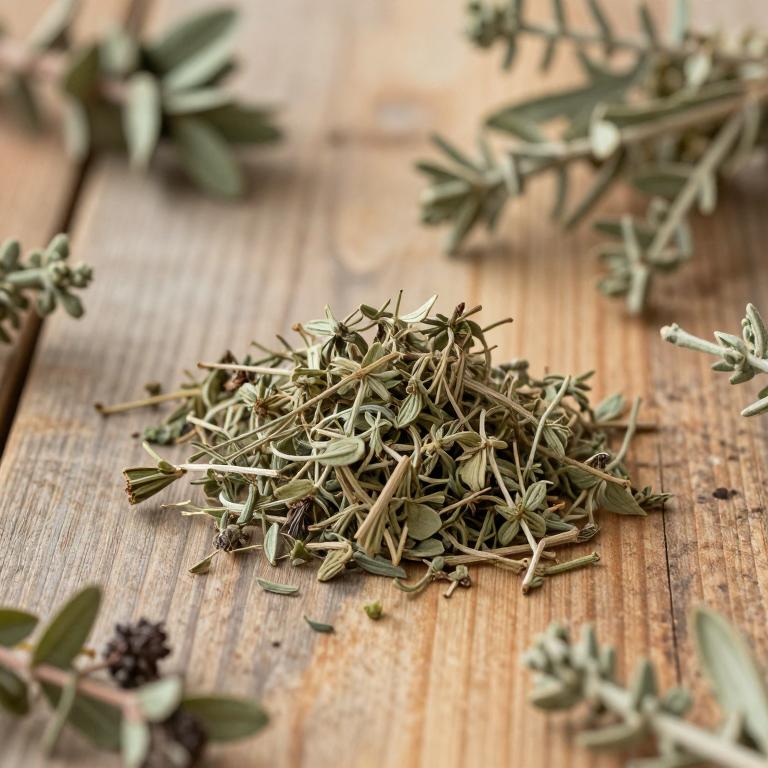
Names and Synonyms
Scientific Names
Accepted name
Larrea divaricataSynonyms
- Covillea divaricata
- Larrea monticellii
- Larrea divaricata f. viscosa
- Larrea divaricata f. subsericea
- Neoschroetera divaricata
- Schroeterella divaricata
Regional and Traditional Names
Spanish:
- jarilla
- Jarilla hembra
Sources: Wikidata, Catalogue of Life
Taxonomical Classification
This plant belongs to the kingdom Plantae and the phylum Streptophyta, falling under the class Equisetopsida and subclass Magnoliidae. Within the order Zygophyllales, it is classified under the family Zygophyllaceae. Specifically, Larrea divaricata is identified by its genus, Larrea.
| Rank | Classification |
|---|---|
| Kingdom | Plantae |
| Phylum | Streptophyta |
| Class | Equisetopsida |
| Subclass | Magnoliidae |
| Order | Zygophyllales |
| Family | Zygophyllaceae |
| Genus | Larrea |
Sources: The World Checklist of Vascular Plants (WCVP)
Distribution
This plant is widely distributed across several regions of the South American continent. In Western South America, its presence is noted in both Bolivia and Peru. Moving toward the southern part of the continent, it can be found throughout various parts of Argentina. Specifically, its range covers the Northeast, Northwest, and South regions of the country. This extensive coverage demonstrates the plant's ability to thrive in diverse South American environments.
| Region | Area |
|---|---|
| Western South America | Bolivia |
| Western South America | Peru |
| Southern South America | Argentina Northeast |
| Southern South America | Argentina South |
| Southern South America | Argentina Northwest |
| Southern South America | Chile Central |
| Southern South America | Chile North |
Sources: The World Checklist of Vascular Plants (WCVP)
Botanical Identification
Ecology
The ecology of Larrea divaricata is characterized by its remarkable adaptability to diverse and often harsh environmental conditions across arid and semi-arid landscapes. It thrives within a broad altitudinal gradient, occupying a vertical range that extends from sea level (0 m AMSL) up to elevations of 3000 m AMSL. This wide elevational tolerance allows the species to inhabit various life zones, ranging from low-lying desert scrub to higher-altitude montane shrublands. The plant is typically found in well-drained, sandy, or rocky soils where it plays a structural role in ecosystem formation, often acting as a nurse plant for other species. Its distribution is closely tied to precipitation patterns and temperature fluctuations, enabling it to persist in environments subject to intense solar radiation and periodic droughts.
- Elevational range max:
- 3000 m AMSL
- Elevational range min:
- 0 m AMSL
Life history
The life history of Larrea divaricata is characterized by its status as a perennial species, allowing it to establish long-term presence within its arid and semi-arid habitats. As a perennial, the plant does not complete its life cycle in a single season but instead undergoes continuous growth and development over many years, often surviving through prolonged periods of drought. This long-lived strategy enables the plant to endure environmental fluctuations and invest energy into a robust, woody structure that can withstand harsh climatic conditions. Throughout its extended lifespan, the plant undergoes seasonal cycles of vegetative growth and reproductive phases, contributing to the stability of its ecosystem over time.
- Lifecycle :
- perennial
Morphology
The morphology of Larrea divaricata is characterized by its growth form as a woody shrub, which is entirely self-supporting rather than acting as a climber, liana, or vine. As a terrestrial species, it does not exhibit aquatic or semiaquatic tendencies, nor does it function as an epiphyte (whether holoepiphyte, hemiepiphyte, or facultative) or a parasite, maintaining an independent life cycle. This plant reaches a maximum height of approximately 4 meters, developing a robust, woody structure that defines its physical presence in its natural habitat.
- Aquatic :
- terrestrial
- Climber :
- self-supporting
- Epiphyte :
- terrestrial
- Growth form :
- shrub
- Parasite :
- independent
- Plant height max:
- 4 m
- Woodiness :
- woody
Physiology
The physiology of Larrea divaricata is characterized by specialized adaptations to arid and semi-arid environments, primarily driven by its metabolic efficiency and water-use strategies. The plant utilizes a C3 photosynthetic pathway, which, while less water-efficient than C4 or CAM pathways in extreme heat, is supported by structural modifications that mitigate transpirational loss. To compensate for the inherent vulnerabilities of the C3 pathway in dry climates, the species exhibits high physiological plasticity, including the ability to regulate stomatal conductance tightly in response to soil moisture availability. Its metabolic processes are further supported by a robust secondary metabolism, producing high concentrations of phenolic compounds and resins that protect cellular structures from oxidative stress and intense solar radiation. Furthermore, the plant maintains osmotic adjustment capabilities, allowing it to sustain turgor pressure and continue carbon fixation even under significant water deficit, ensuring survival in fluctuating hygrometric conditions.
- Photosynthetic pathway :
- C3
Reproduction
The reproduction of Larrea divaricata is characterized by the production of specialized seeds that play a critical role in its dispersal and establishment within its native environment. These seeds exhibit a highly consistent physical profile, with a measured seed mass that does not vary across the observed samples. Specifically, the seed mass remains constant at a mean value of 0.0024 g, which is reflected in both the maximum and minimum recorded values of 0.0024 g. This uniformity in seed mass suggests a highly standardized reproductive strategy, ensuring that each propagule carries a precise and predictable amount of nutrient reserves to facilitate germination and early seedling development.
- Seed mass mean:
- 0.0024 g
Sources: Global Inventory of Floras and Traits (GIFT)
Plant Parts
Larrea divaricata has 2 reported plant parts identified across 2 scientific publications and several other databases that are studied for medicinal purposes. The most consistently reported plant part include flower, leaf.
| Plant part | Supporting sources | Consensus |
|---|---|---|
| Flower | 1 supporting sources | ★☆☆☆☆ |
| Leaf | 1 supporting sources | ★☆☆☆☆ |
Flower
- Journal of ethnopharmacology
Leaf
- Journal of ethnopharmacology
Chemicals
Larrea divaricata has 18 reported phytochemicals identified across 2 scientific publications and several other databases. The most consistently reported chemicals include NORDIHYDROGUAIARETIC ACID, 2',4'-Dihydroxychalcone, CATECHIN, CHLOROGENIC ACID, CINNAMIC ACID.
| Chemical | Supporting sources | Consensus |
|---|---|---|
| NORDIHYDROGUAIARETIC ACID | 3 supporting sources | ★★☆☆☆ |
| 2',4'-Dihydroxychalcone | 1 supporting sources | ★☆☆☆☆ |
| CATECHIN | 1 supporting sources | ★☆☆☆☆ |
| CHLOROGENIC ACID | 1 supporting sources | ★☆☆☆☆ |
| CINNAMIC ACID | 1 supporting sources | ★☆☆☆☆ |
| Lignans | 1 supporting sources | ★☆☆☆☆ |
| NDG | 1 supporting sources | ★☆☆☆☆ |
| NDGA | 1 supporting sources | ★☆☆☆☆ |
| SYRINGIC ACID | 1 supporting sources | ★☆☆☆☆ |
| Sinapyl alcohol | 1 supporting sources | ★☆☆☆☆ |
NORDIHYDROGUAIARETIC ACID
- Phytochemical analysis : PCA
- Journal of ethnopharmacology
- The Journal of pharmacy and pharmacology
2',4'-Dihydroxychalcone
- Journal of ethnopharmacology
CATECHIN
- Electrophoresis
CHLOROGENIC ACID
- Electrophoresis
CINNAMIC ACID
- Electrophoresis
Lignans
- Journal of cosmetic dermatology
NDG
- Phytochemical analysis : PCA
NDGA
- Plant science : an international journal of experimental plant biology
SYRINGIC ACID
- Electrophoresis
Sinapyl alcohol
- Plant science : an international journal of experimental plant biology
Activities
Larrea divaricata has 2 reported activities identified across 2 scientific publications and several other databases. The most consistently reported activities include Antioxidant, Antimicrobial.
| Activity | Supporting sources | Consensus |
|---|---|---|
| Antioxidant | 2 supporting sources | ★☆☆☆☆ |
| Antimicrobial | 1 supporting sources | ★☆☆☆☆ |
Antioxidant
- Journal of ethnopharmacology
- Phytochemical analysis : PCA
Antimicrobial
- Revista da Sociedade Brasileira de Medicina Tropical
Conditions
Larrea divaricata has 13 reported investigations on conditions identified across 2 scientific publications and several other databases. The most consistently reported conditions include tuberculosis, Staphylococcus aureus, arteriosclerosis, asthma, cancer.
| Condition | Supporting sources | Consensus |
|---|---|---|
| Tuberculosis | 2 supporting sources | ★☆☆☆☆ |
| Staphylococcus aureus | 1 supporting sources | ★☆☆☆☆ |
| Arteriosclerosis | 1 supporting sources | ★☆☆☆☆ |
| Asthma | 1 supporting sources | ★☆☆☆☆ |
| Cancer | 1 supporting sources | ★☆☆☆☆ |
| Candidiasis | 1 supporting sources | ★☆☆☆☆ |
| Gastrointestinal disorders | 1 supporting sources | ★☆☆☆☆ |
| Infections | 1 supporting sources | ★☆☆☆☆ |
| Inflammation | 1 supporting sources | ★☆☆☆☆ |
| Lymphoma | 1 supporting sources | ★☆☆☆☆ |
Tuberculosis
- Anais da Academia Brasileira de Ciencias
- The Journal of pharmacy and pharmacology
Staphylococcus aureus
- Journal of ethnopharmacology
Arteriosclerosis
- Plant science : an international journal of experimental plant biology
Asthma
- Plant science : an international journal of experimental plant biology
Cancer
- Plant science : an international journal of experimental plant biology
Candidiasis
- Journal of pharmaceutical and biomedical analysis
Gastrointestinal disorders
- Journal of ethnopharmacology
Infections
- Immunopharmacology and immunotoxicology
Inflammation
- Plant science : an international journal of experimental plant biology
Lymphoma
- Phytomedicine : international journal of phytotherapy and phytopharmacology
Preparations
Larrea divaricata has 6 reported preparations identified across 2 scientific publications and several other databases. The most consistently reported preparations include crude extracts, decoction, dry extracts, ethanolic extracts, extracts.
| Preparation | Supporting sources | Consensus |
|---|---|---|
| Crude extracts | 1 supporting sources | ★☆☆☆☆ |
| Decoction | 1 supporting sources | ★☆☆☆☆ |
| Dry extracts | 1 supporting sources | ★☆☆☆☆ |
| Ethanolic extracts | 1 supporting sources | ★☆☆☆☆ |
| Extracts | 1 supporting sources | ★☆☆☆☆ |
| Infusion | 1 supporting sources | ★☆☆☆☆ |
Crude extracts
- The Journal of pharmacy and pharmacology
Decoction
- Journal of ethnopharmacology
Dry extracts
- Carbohydrate polymers
Ethanolic extracts
- Journal of ethnopharmacology
Extracts
- Electrophoresis
Infusion
- Journal of ethnopharmacology