European stickseed
Lappula squarrosa · Accepted scientific name
Scientific literature: Very Sparse (2 studies) · ★☆☆☆☆
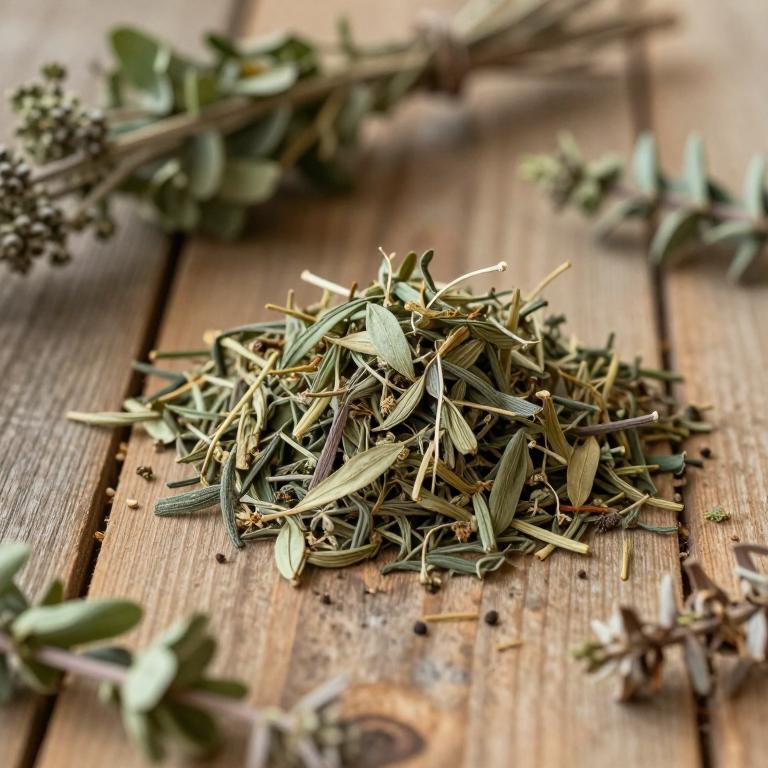
European stickseed, scientifically known as Lappula squarrosa, is a perennial herb belonging to the Boraginaceae family. Characterized by its tiny, hooked hairs that cling to clothing, this plant is traditionally utilized in folk medicine. It is studied for its potential bioactive properties, particularly regarding its anti-inflammatory and antimicrobial activities.
Names and Synonyms
Common Names
- bristly sheepburr
- bristly stickseed
- bristly-fruit stickweed
- two-row stickweed
- Bur Forget-Me-Not
- bluebur
- bur-forget-me-not
- Blue-bur
- two-rowed stickseed
Scientific Names
Accepted name
Lappula squarrosaSynonyms
- Lappula echinata var. erecta
- Lappula consanguinea
- Rochelia lappula
- Echinospermum lappula var. squarrosum
- Echinospermum squarrosum
- Echinospermum lappula var. squarrosum
- Echinospermum lappula subsp. squarrosum
- Lappula fremontii
- Lappula consanguinea var. cupuliformis
- Lappula erecta
- Lappula echinata
- Echinospermum lanceolatum
- Lappula squarrosa var. erecta
- Echinospermum costae
- Echinospermum consanguineum
- Lappula myosotis
- Echinospermum fabrei
- Echinospermum fremontii
- Echinospermum obtusifolium
- Echinospermum ispahanicum
- Echinospermum lappula
- Echinospermum lappula var. consanguineum
- Lappula echinata var. consanguinea
- Echinospermum vulgare
- Cynoglossospermum consanguineum
- Echinospermum pedunculatum
- Cynoglossospermum lappula
- Echinospermum alpinum
- Echinospermum canescens var. angustifolium
- Cynoglossum lappula
- Echinospermum canescens var. longifolium
- Lappula echinata var. grandiflora
- Echinospermum casanense
- Echinospermum casanicum
- Echinospermum lappula var. glaucescens
- Echinospermum lappula var. virescens
- Myosotis squarrosa
- Myosotis echinosperma
- Myosotis lappula
- Echinospermum lappula var. longifolium
- Echinospermum lappula var. pedicellatum
Regional and Traditional Names
German:
- Kletten-Igelsame
- Artengruppe Kletten-Igelsame
- Kletten-Igelsame
- Stechender Igelsame
French:
- bardanette
- bardanette squarreuse
- bardanette épineuse
- bardenette hérissée
- bardanette hérissée
- Echinosperme rugueux
- Bardanette faux myosotis
Sources: Wikidata, Catalogue of Life
Taxonomical Classification
This plant belongs to the kingdom Plantae and is classified under the phylum Streptophyta and class Equisetopsida. Within the subclass Magnoliidae, it is organized under the order Boraginales and the family Boraginaceae. Finally, it is identified by its specific genus, Lappula.
| Rank | Classification |
|---|---|
| Kingdom | Plantae |
| Phylum | Streptophyta |
| Class | Equisetopsida |
| Subclass | Magnoliidae |
| Order | Boraginales |
| Family | Boraginaceae |
| Genus | Lappula |
Sources: The World Checklist of Vascular Plants (WCVP)
Distribution
This plant exhibits a specific geographical distribution across several northern European regions. It can be found growing in the natural landscapes of Denmark. Additionally, its presence is noted throughout the territory of Finland. The species also inhabits parts of Great Britain and Ireland. Finally, its range extends into the northern reaches of Norway.
| Region | Area |
|---|---|
| Northern Europe | Denmark |
| Northern Europe | Finland |
| Northern Europe | Great Britain |
| Northern Europe | Ireland |
| Northern Europe | Norway |
| Northern Europe | Sweden |
| Middle Europe | Austria |
| Middle Europe | Belgium |
| Middle Europe | Czechia-Slovakia |
| Middle Europe | Germany |
Sources: The World Checklist of Vascular Plants (WCVP)
Botanical Identification
Ecology
The ecology of Lappula squarrosa is characterized by its presence in diverse environments, ranging from disturbed human landscapes to natural open terrains. It frequently inhabits crop fields, old fields, roadsides, and ruderal sites, while also thriving in steppe ecosystems and stony places. This species exhibits a broad altitudinal distribution, with an elevational range that spans from a minimum of 800 m AMSL to a maximum of 3200 m AMSL, maintaining a mean elevation of approximately 1500 m AMSL.
- Elevational range max:
- 3200 m AMSL
- Elevational range mean:
- 1500 m AMSL
- Elevational range min:
- 800 m AMSL
- Habitat :
- crop fields, old fields, roadsides, ruderal sites, steppe, stony places
Genetics
The genetics of Lappula squarrosa are characterized by a fundamental chromosomal arrangement where the baseline haploid number is represented by the ploidy level $n$. As a member of the Boraginaceae family, its genomic architecture is defined by this specific set of chromosomes, which serves as the genetic blueprint for its reproductive development and phenotypic expression. The inheritance patterns within the species are governed by this haploid state during gametogenesis, ensuring the stability of the species' genetic lineage through sexual reproduction. This chromosomal foundation influences the expression of various secondary metabolites and morphological traits, providing the underlying genetic framework that dictates the plant's biological responses to its environment.
- Ploidy :
- n
Life history
The life history of Lappula squarrosa is characterized by an annual lifecycle, meaning it completes its entire developmental process from germination to seed production within a single growing season. As a therophyte, the plant survives unfavorable periods in the form of seeds, which remain dormant until environmental conditions become suitable for rapid growth. Its physiological structure is consistent with this life form, as it lacks persistent above-ground or underground woody organs, instead focusing its energy on a quick vegetative phase followed by reproduction. Throughout its active period, the plant maintains an evergreen nature, retaining its foliage to maximize photosynthetic efficiency during its brief existence.
- Deciduousness :
- evergreen
- Life form :
- therophyte
- Lifecycle :
- annual
Morphology
The morphology of Lappula squarrosa is characterized by its growth form as a non-woody herb and forb. This terrestrial species exhibits an erect shoot orientation and is a self-supporting plant, functioning as an independent organism rather than a climber or a parasite. It does not possess epiphytic tendencies, remaining strictly terrestrial in its habitat. In terms of stature, the plant typically reaches a mean height of 0.454 m, though individual specimens may vary in size, ranging from a minimum height of 0.1 m to a maximum height of 0.8 m.
- Aquatic :
- terrestrial
- Climber :
- self-supporting
- Epiphyte :
- terrestrial
- Growth form :
- herb
- Growth form :
- forb
- Parasite :
- independent
- Plant height max:
- 0.8 m
- Plant height mean:
- 0.454 m
- Plant height min:
- 0.1 m
- Shoot orientation :
- erect
- Woodiness :
- non-woody
Physiology
The physiology of Lappula squarrosa is characterized by a C3 photosynthetic pathway, indicating a reliance on standard carbon fixation processes typical of many temperate herbaceous species. As a non-carnivorous plant, it derives all necessary nutrients from the soil rather than through the capture of prey. Its foliar morphology is defined by relatively narrow, linear leaves, with a mean width of 0.45 cm ranging from a minimum of 0.3 cm to a maximum of 0.6 cm. The leaf length varies significantly, exhibiting a mean length of 3.5 cm, with individual leaves ranging from a minimum of 2 cm to a maximum of 5 cm. These dimensions contribute to a mean leaf size of 6.93 cm². Furthermore, the plant exhibits a mean Specific Leaf Area (SLA) of 304.1 cm²/g, reflecting its leaf mass per area and its physiological strategy for light interception and resource allocation.
- Carnivory :
- non-carnivorous
- Leaf length max:
- 5 cm
- Leaf length mean:
- 3.5 cm
- Leaf length min:
- 2 cm
- Leaf size mean:
- 6.93 cm²
- Leaf width max:
- 0.6 cm
- Leaf width mean:
- 0.45 cm
- Leaf width min:
- 0.3 cm
- Photosynthetic pathway :
- C3
- Specific Leaf Area (SLA) mean:
- 304.1 cm²/g
Reproduction
The reproduction of Lappula squarrosa is characterized by sexual processes through bisexual flowers, as asexual reproduction is absent in this species. The flowering period typically begins in June and concludes in July, featuring inflorescences that range in length from a minimum of 0.07 m to a maximum of 0.25 m. The pollination strategy is biotic, specifically utilizing an insect pollination syndrome to facilitate fertilization, which is supported by the presence of self-fertilization capabilities. Following successful pollination, the plant produces fruits with a mean length of 0.35 cm, ranging from a minimum of 0.3 cm to a maximum of 0.4 cm. The resulting seeds are quite small, with a mean mass of 0.00155 g and a mass range spanning from 0.00155 g to 0.0018 g. Dispersal is achieved via a zoochorous syndrome, specifically through epizoochory, meaning the seeds are dispersed by attaching to animals.
- Dispersal syndrome :
- zoochorous
- Dispersal syndrome :
- epizoochorous
- Flowering time :
- Jun
- Flowering time :
- Jul
- Fruit length max:
- 0.4 cm
- Fruit length mean:
- 0.35 cm
- Fruit length min:
- 0.3 cm
- Inflorescence length max:
- 0.25 m
- Inflorescence length min:
- 0.07 m
- Pollination syndrome :
- insect
- Pollination syndrome :
- biotic
- Reproduction asexual :
- absent
- Reproduction sexual :
- bisexual
- Seed mass max:
- 0.0018 g
- Seed mass mean:
- 0.00155 g
- Self fertilization :
- present
Sources: Global Inventory of Floras and Traits (GIFT)
Plant Parts
Lappula squarrosa has 1 reported plant parts identified across 1 scientific publications and several other databases that are studied for medicinal purposes. The most consistently reported plant part include seed.
| Plant part | Supporting sources | Consensus |
|---|---|---|
| Seed | 1 supporting sources | ★☆☆☆☆ |
Seed
- Biomedical & environmental mass spectrometry
Chemicals
Lappula squarrosa has 1 reported phytochemicals identified across 1 scientific publications and several other databases. The most consistently reported chemicals include gamma-Linolenic acid.
| Chemical | Supporting sources | Consensus |
|---|---|---|
| gamma-Linolenic acid | 1 supporting sources | ★☆☆☆☆ |
gamma-Linolenic acid
- Biomedical & environmental mass spectrometry
Preparations
Lappula squarrosa has 1 reported preparations identified across 1 scientific publications and several other databases. The most consistently reported preparations include seed oil.
| Preparation | Supporting sources | Consensus |
|---|---|---|
| Seed oil | 1 supporting sources | ★☆☆☆☆ |
Seed oil
- Biomedical & environmental mass spectrometry